Why Botanical Tattoos Age Beautifully | Fine Line Floral Tattoos Amsterdam
Why Botanical Tattoos Age Beautifully as a Style
Nature Never Goes Out of Fashion
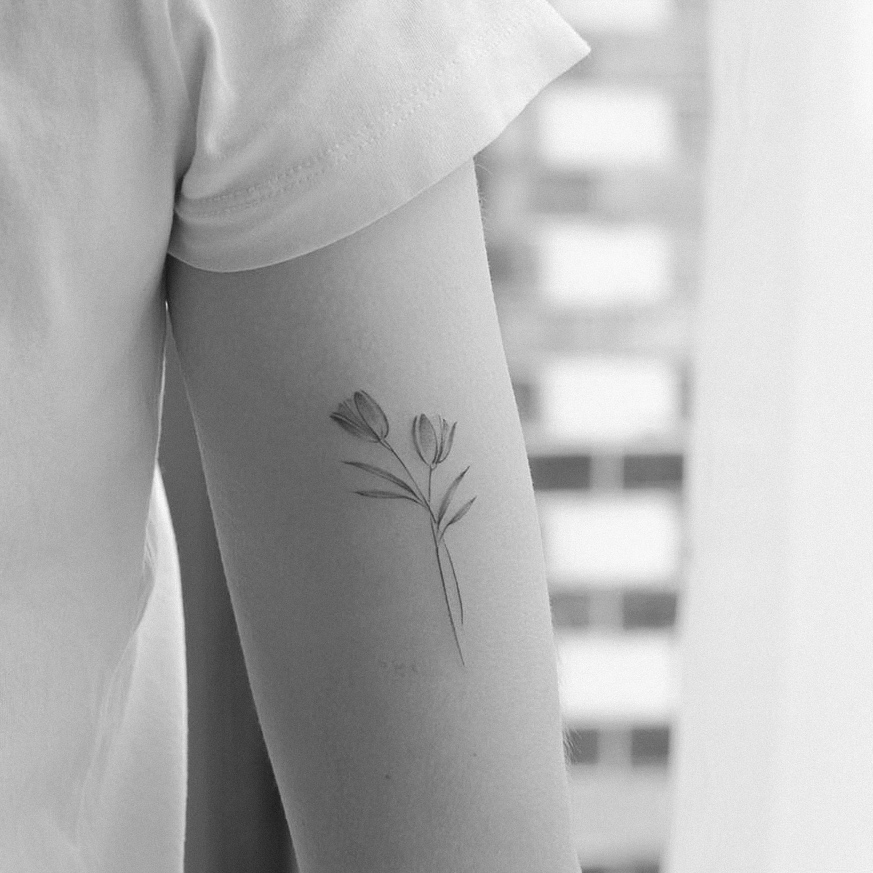
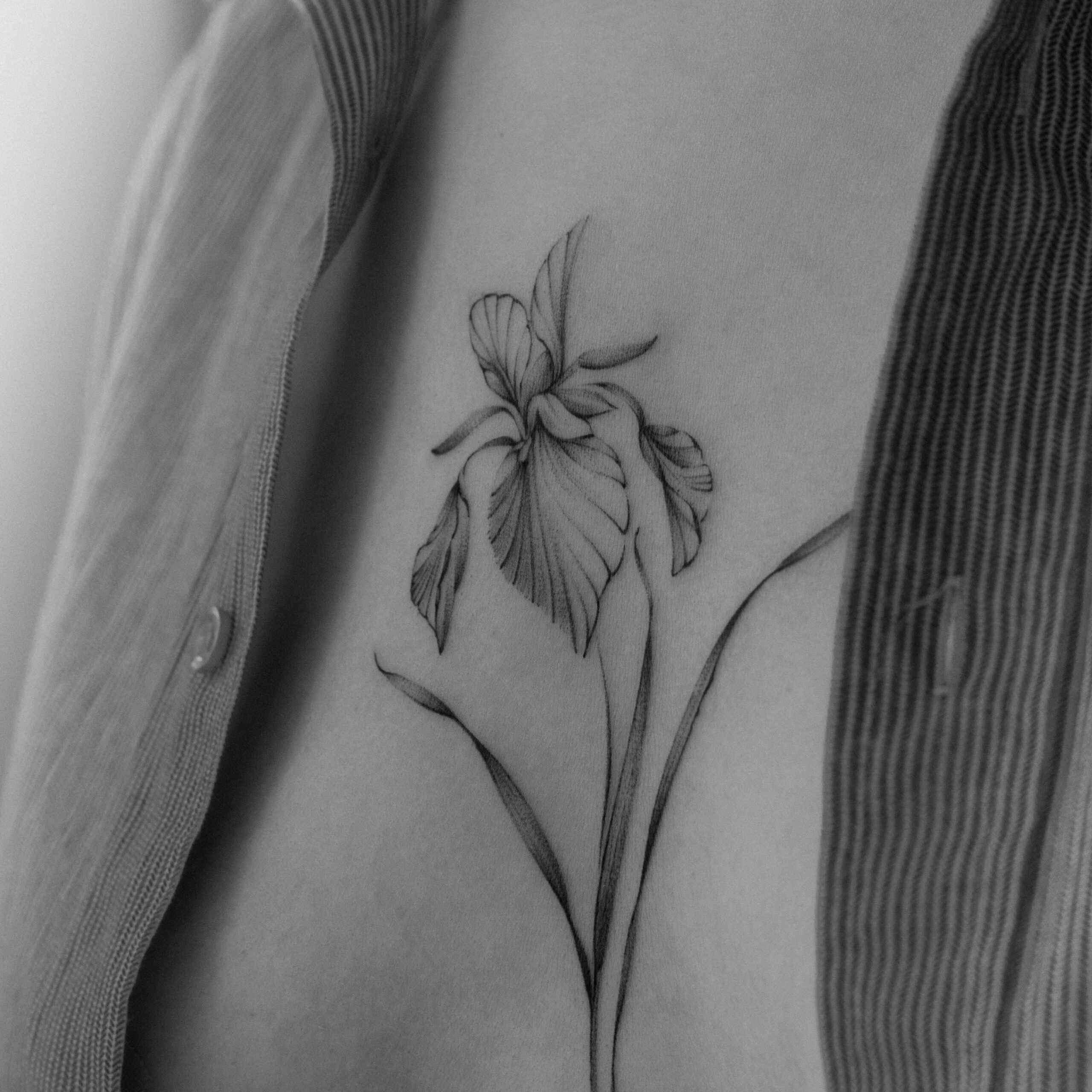
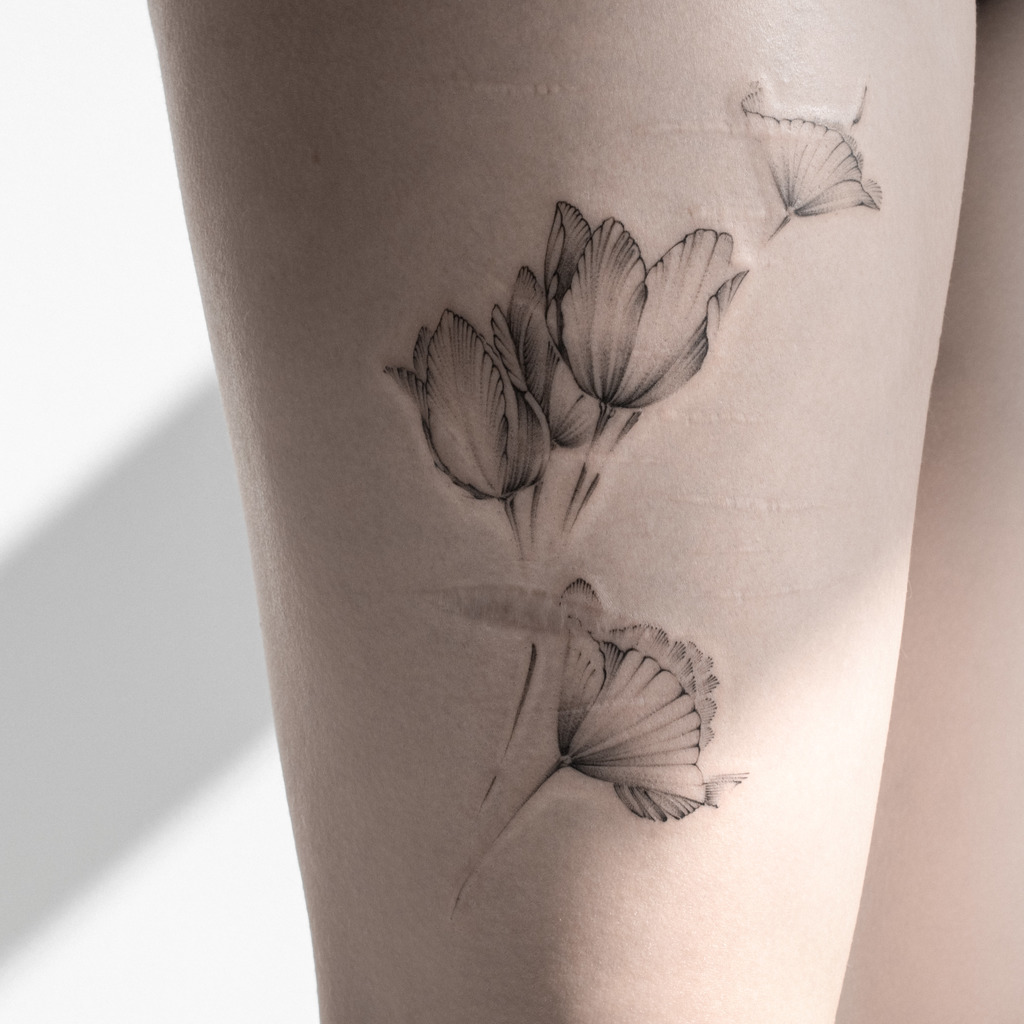
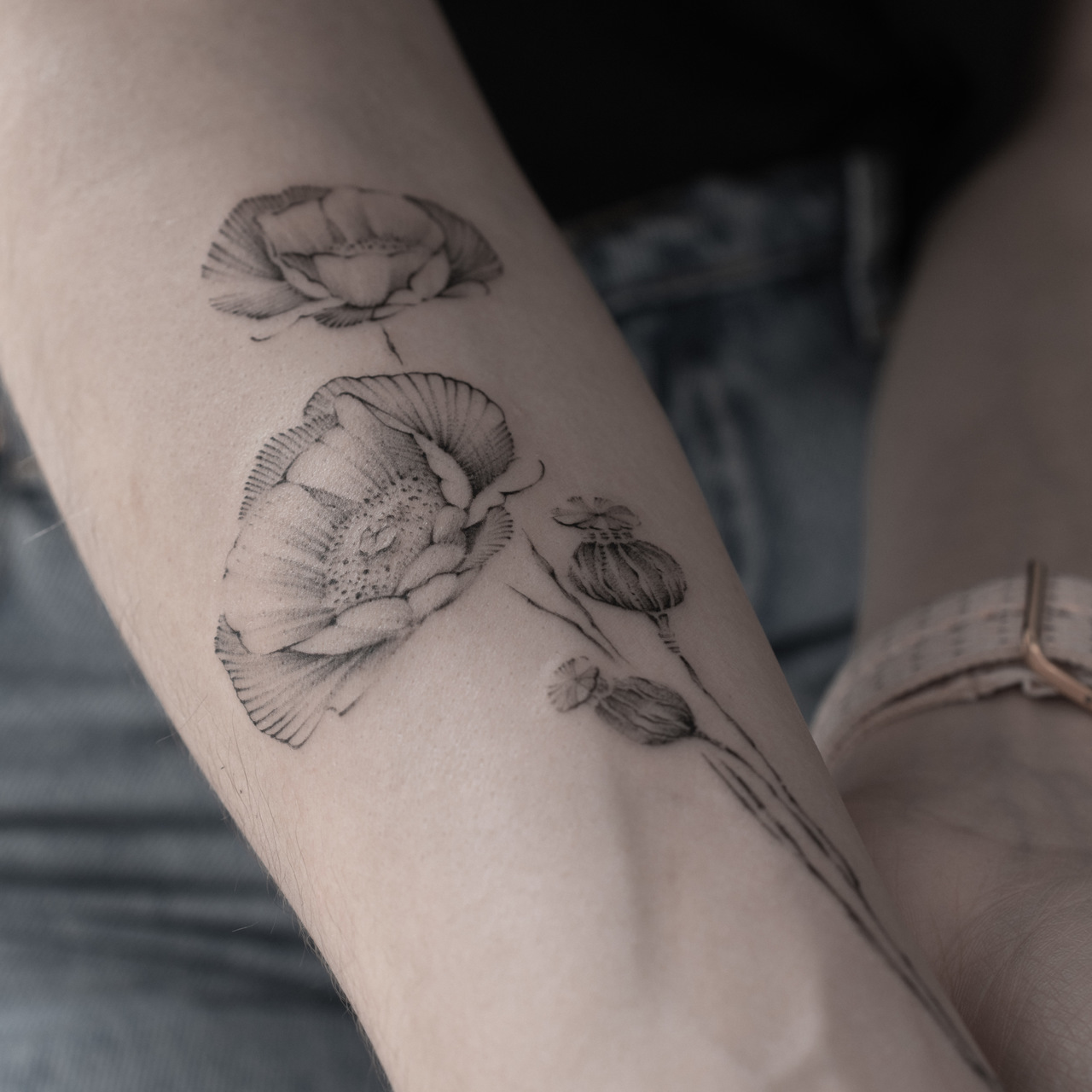
Some tattoo styles are easy to place in time. You can often look at a design and immediately recognise the decade in which it became popular. Fashion changes, aesthetics evolve, and what once felt new can eventually become closely associated with a particular moment in history. Botanical tattoos are different. Whether you look at historical botanical illustrations, Japanese woodblock prints, Art Nouveau posters, or contemporary fine line tattooing, flowers and plants have remained a constant source of artistic inspiration. While the way artists interpret them continues to evolve, the subject itself never loses its relevance. Perhaps this is because nature does not follow trends. A rose is no less beautiful today than it was two hundred years ago. The elegant structure of a lily, the movement of a branch, or the delicate shape of a fern leaf are not inventions of modern design—they are forms that have existed for centuries.
This timeless quality is one of the reasons botanical tattoos continue to feel as fresh today as they did many years ago. Rather than reflecting a temporary fashion, they reflect something far more enduring: our relationship with the natural world. At Vadelma Tattoo, our private tattoo studio in Amsterdam, botanical tattooing is approached through the principles of observation, composition, and balance. Instead of asking what is currently popular, we ask a different question: Will this tattoo still feel beautiful many years from now?
.
Timeless Design Begins with Nature
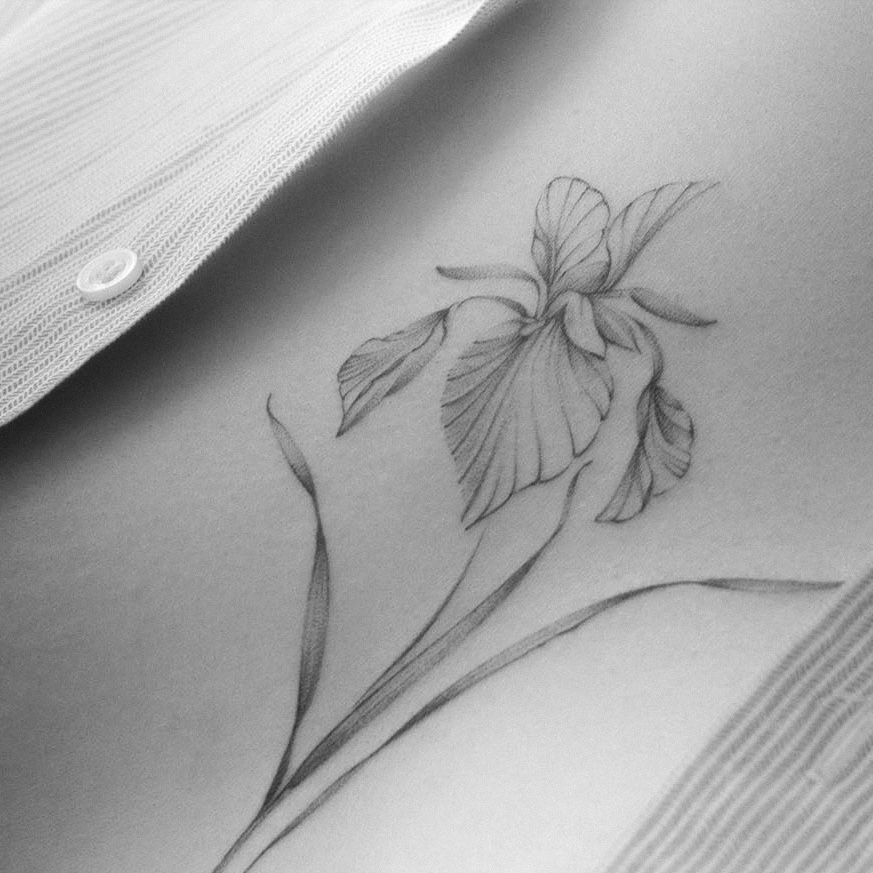
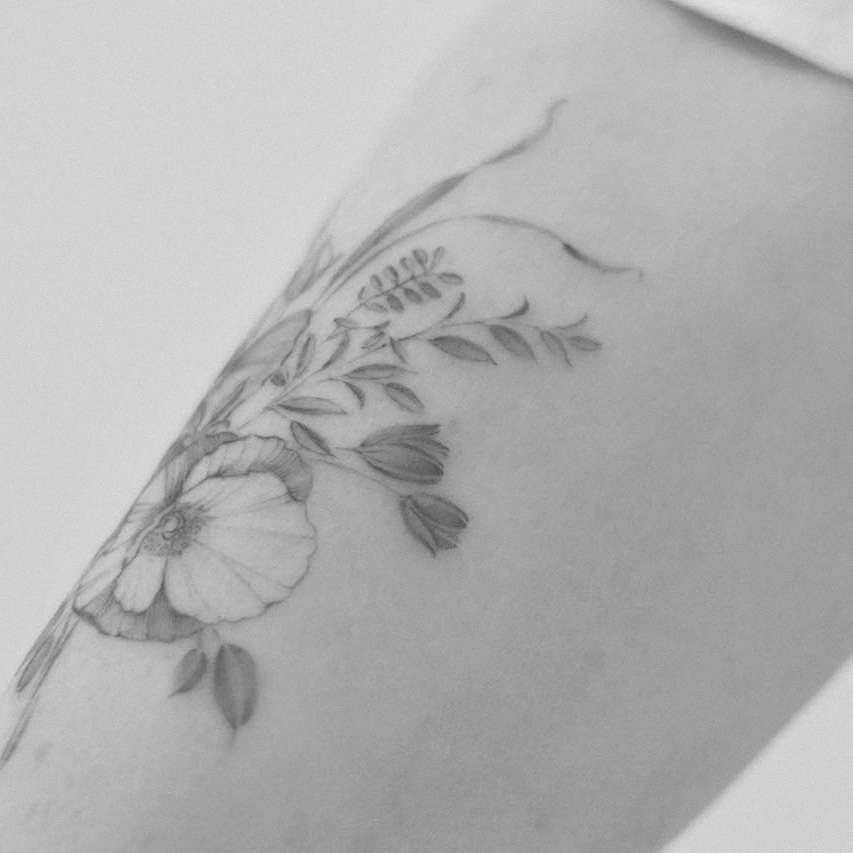
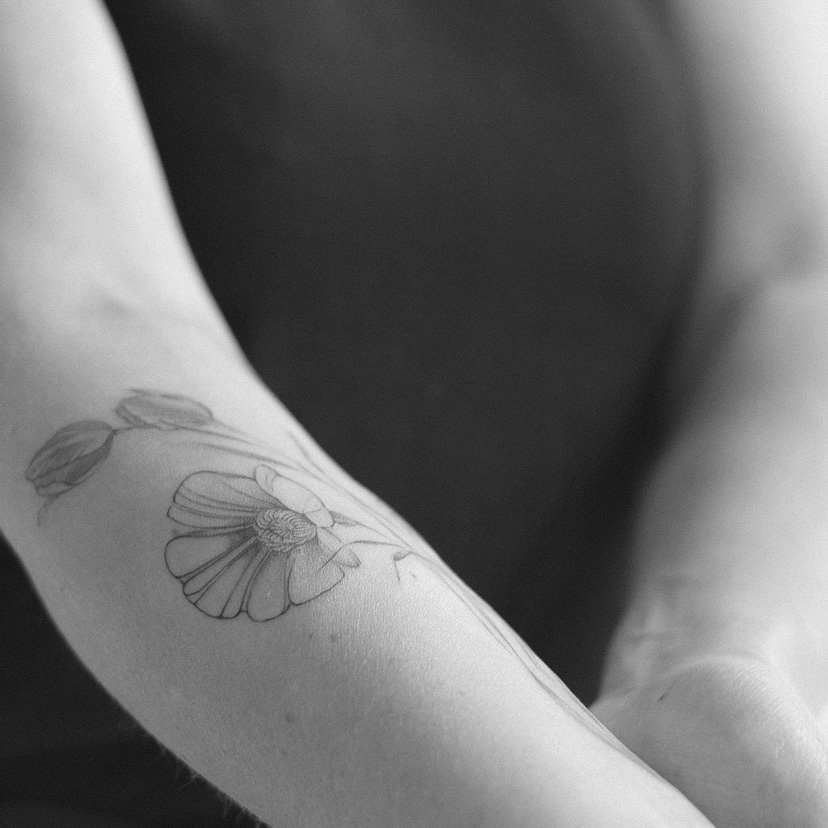
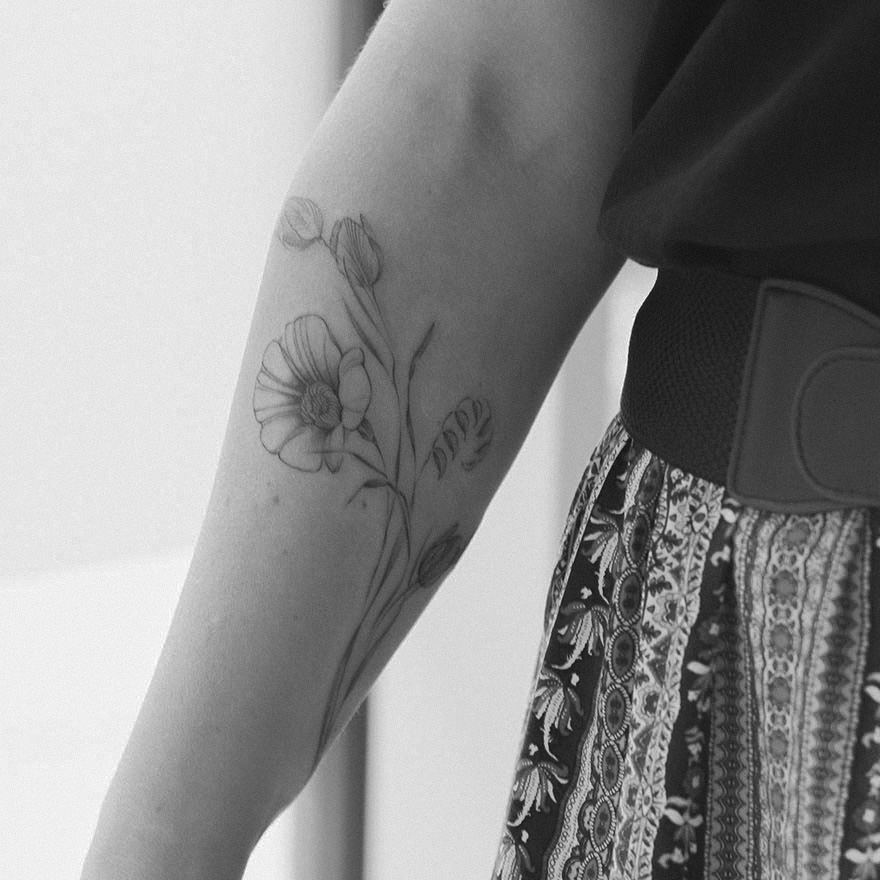
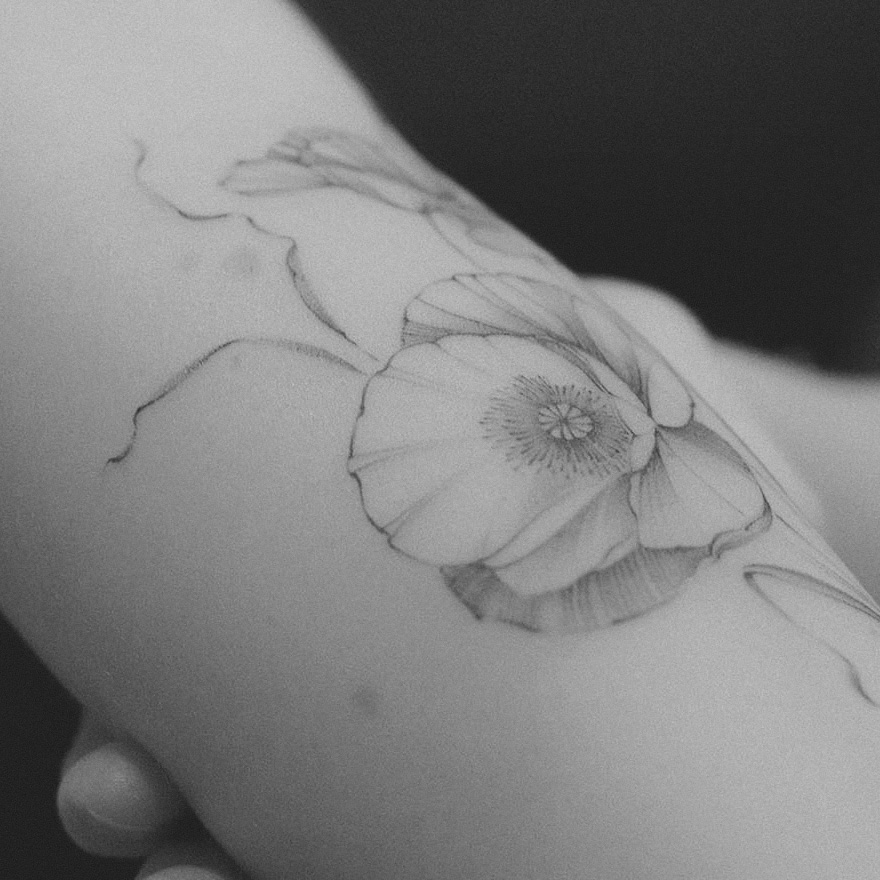
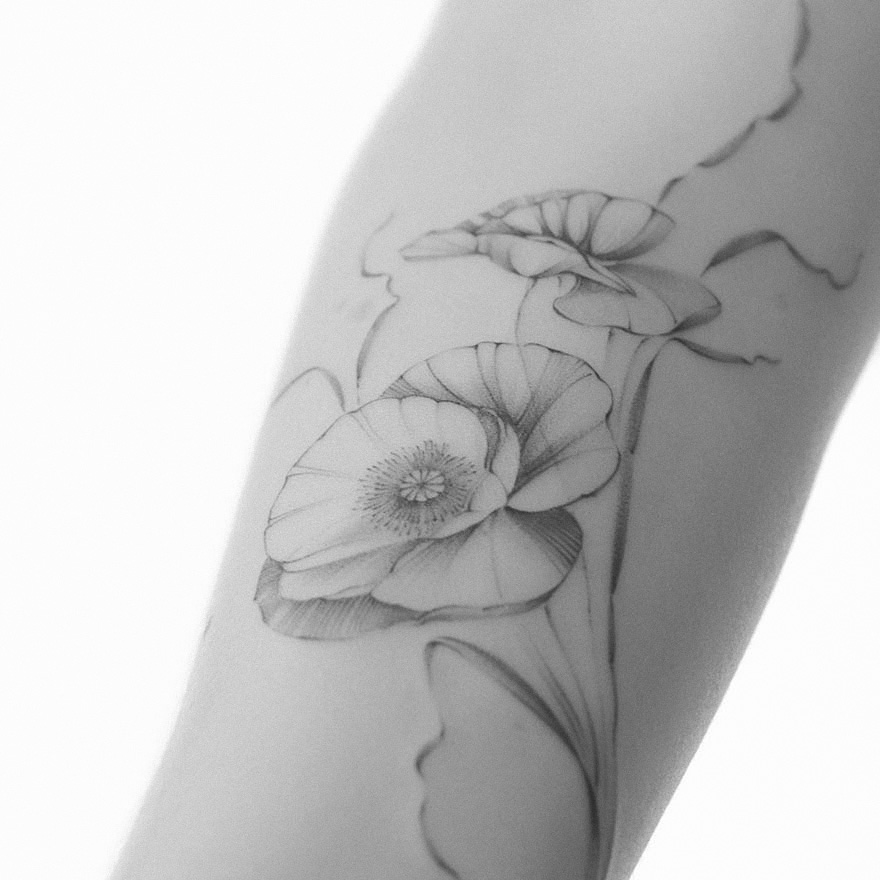
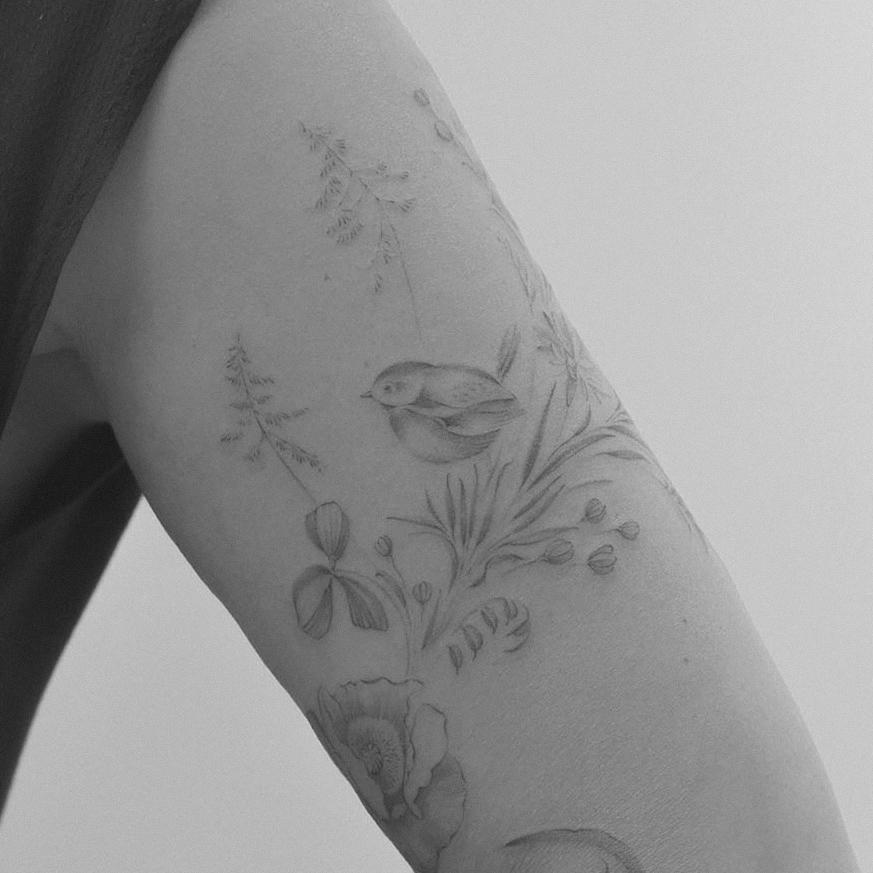
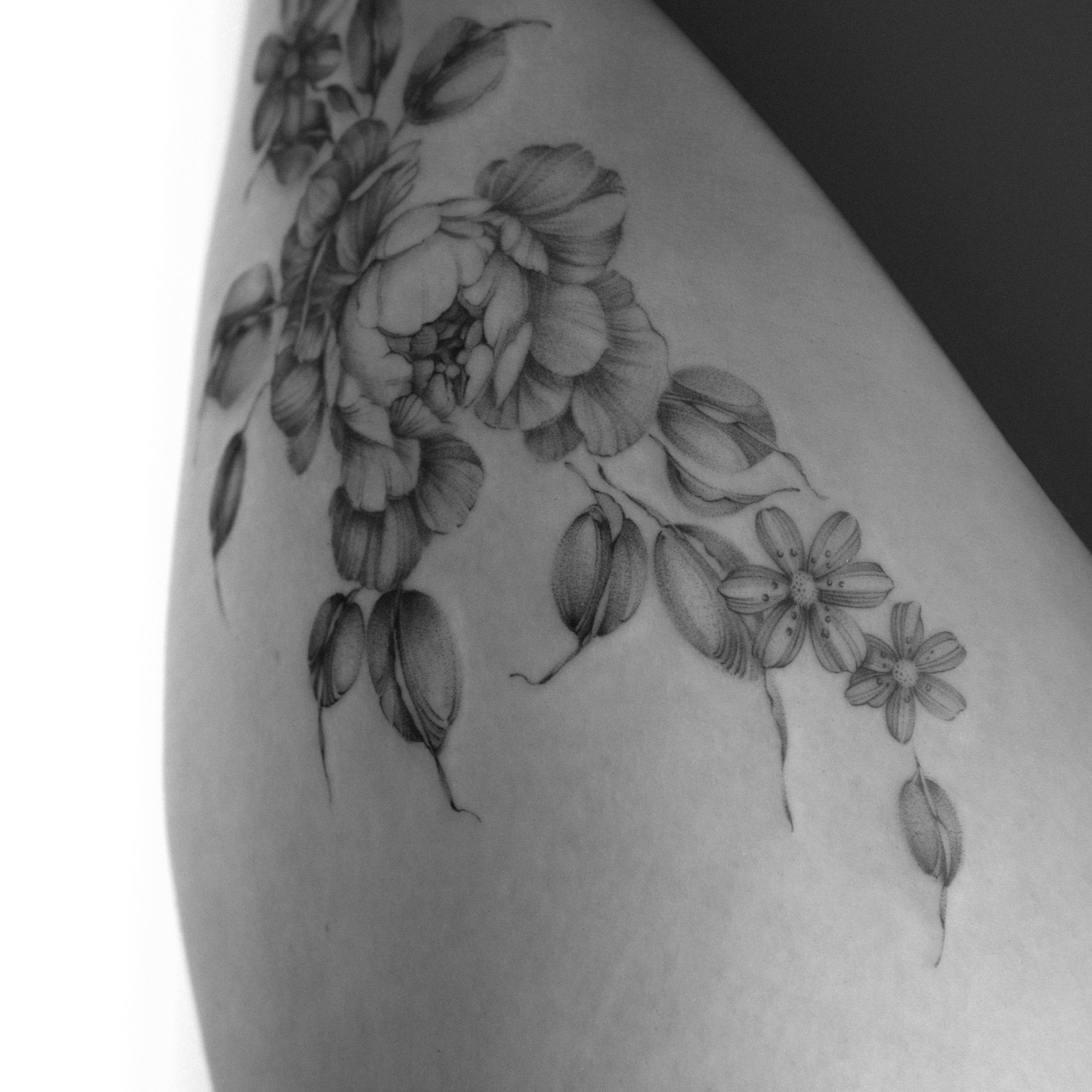
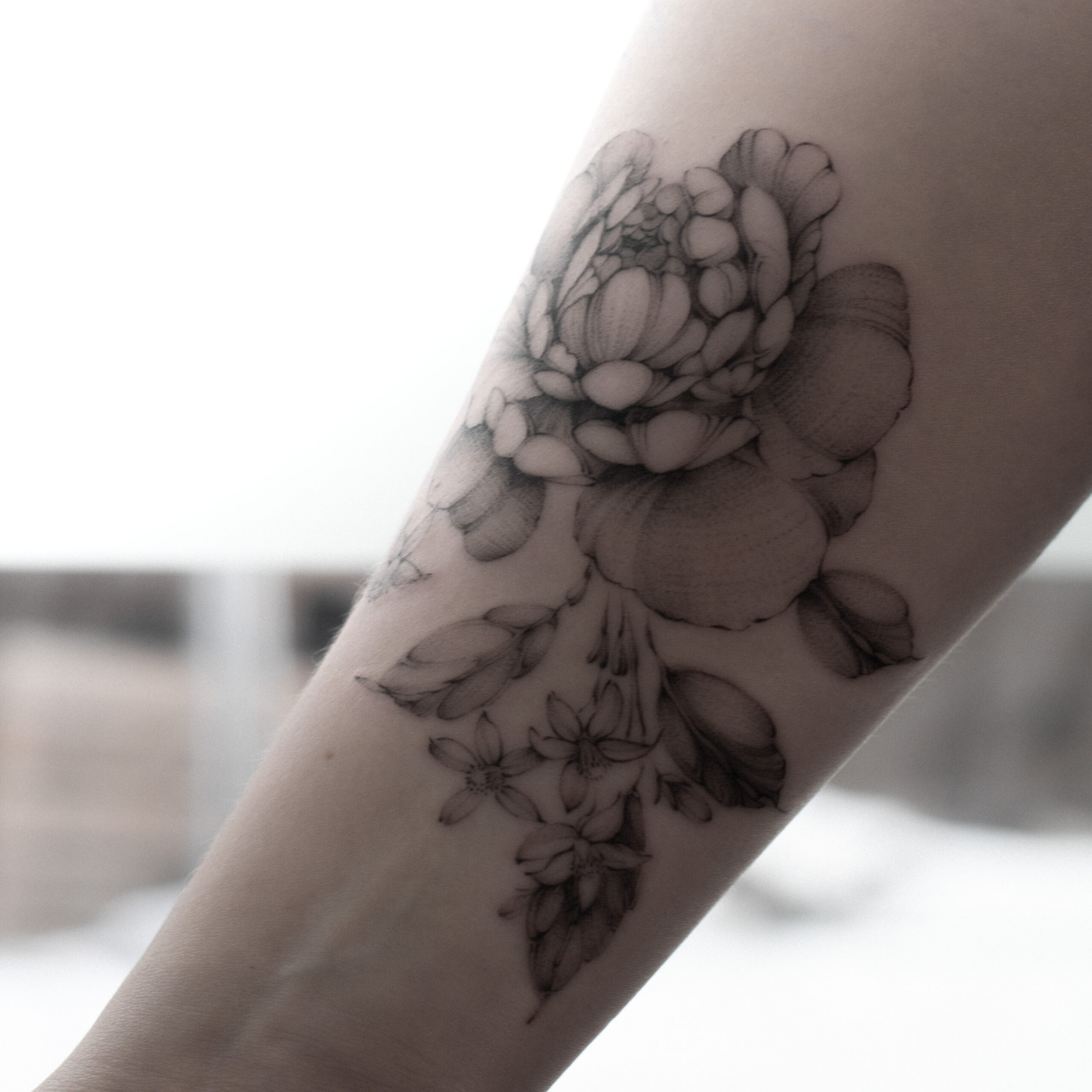
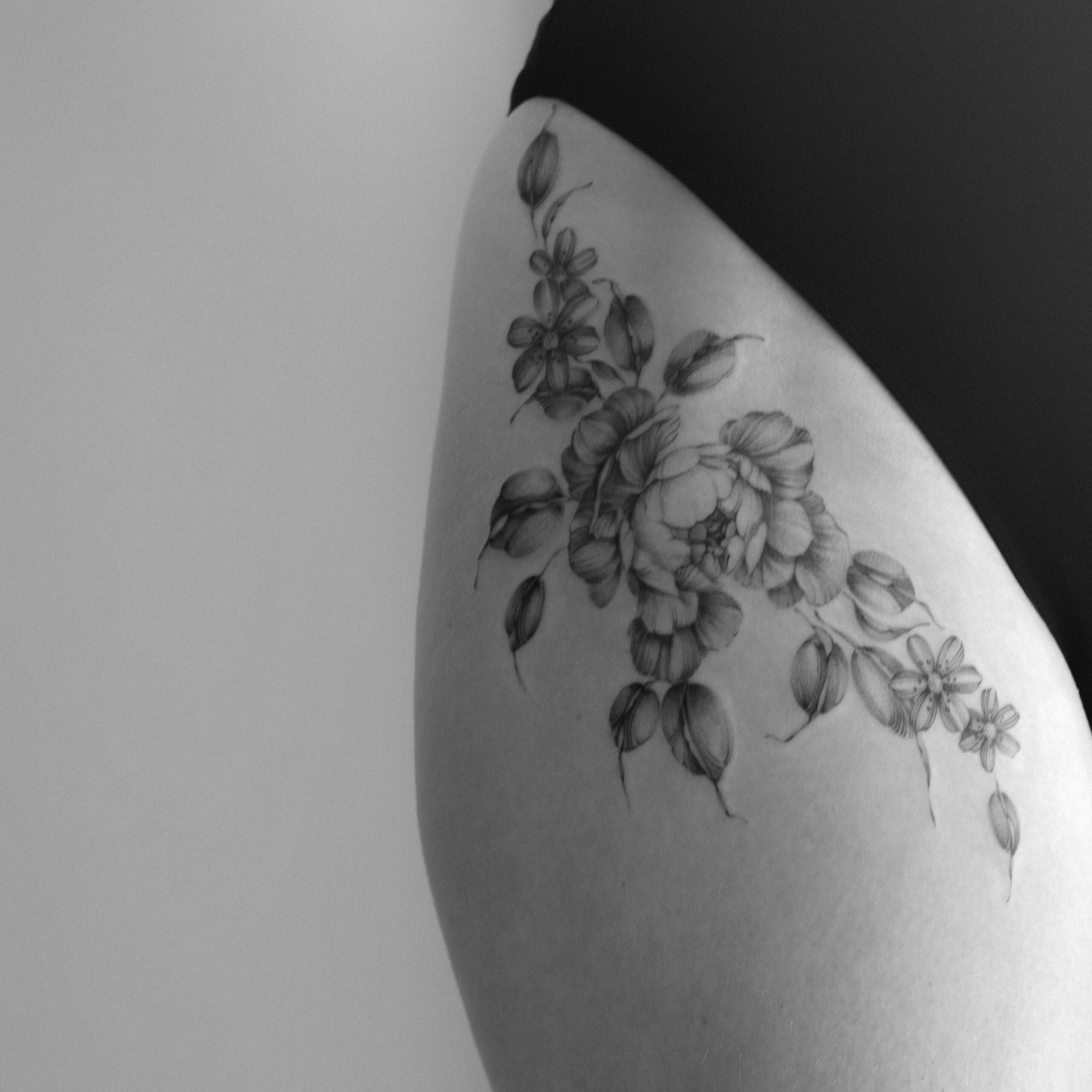
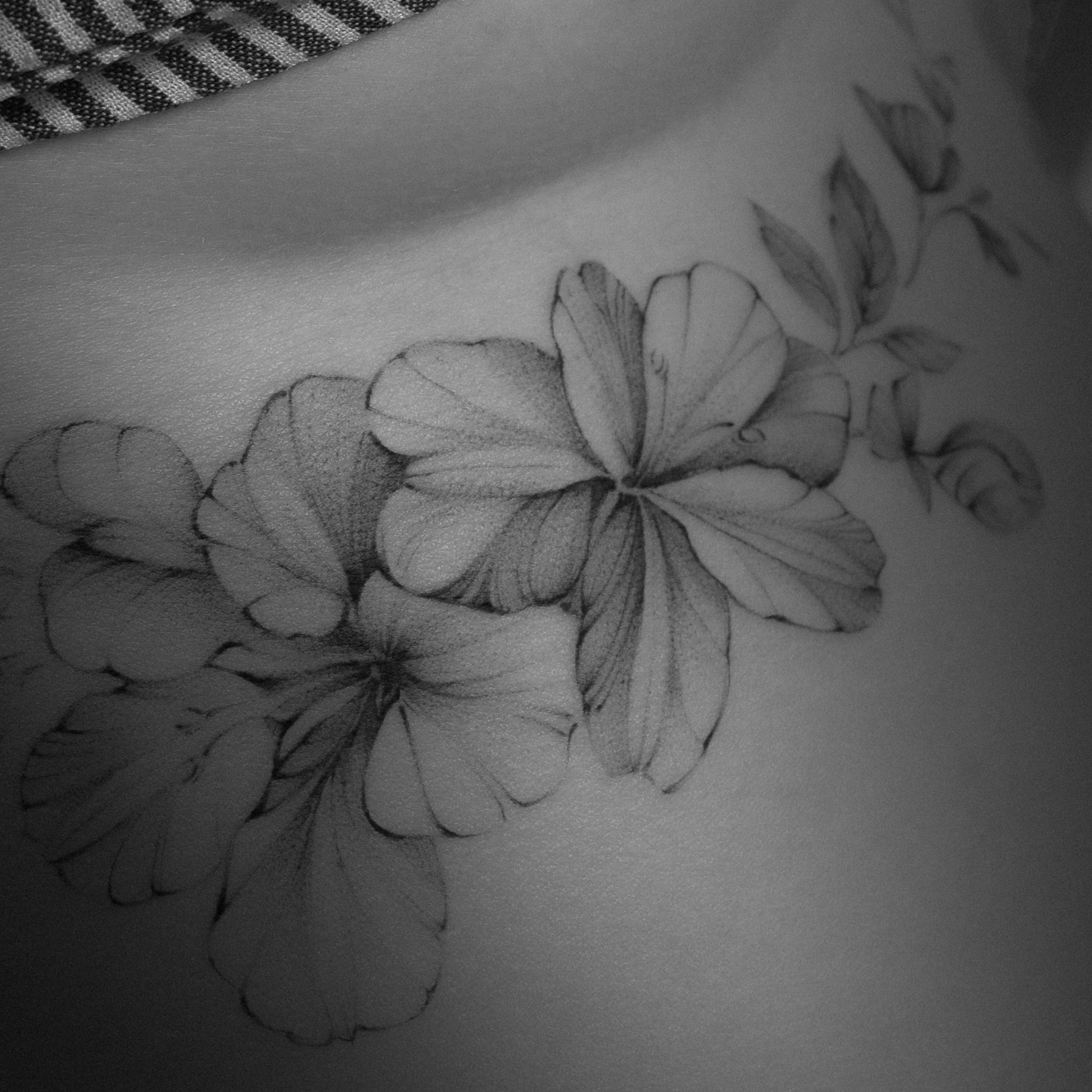
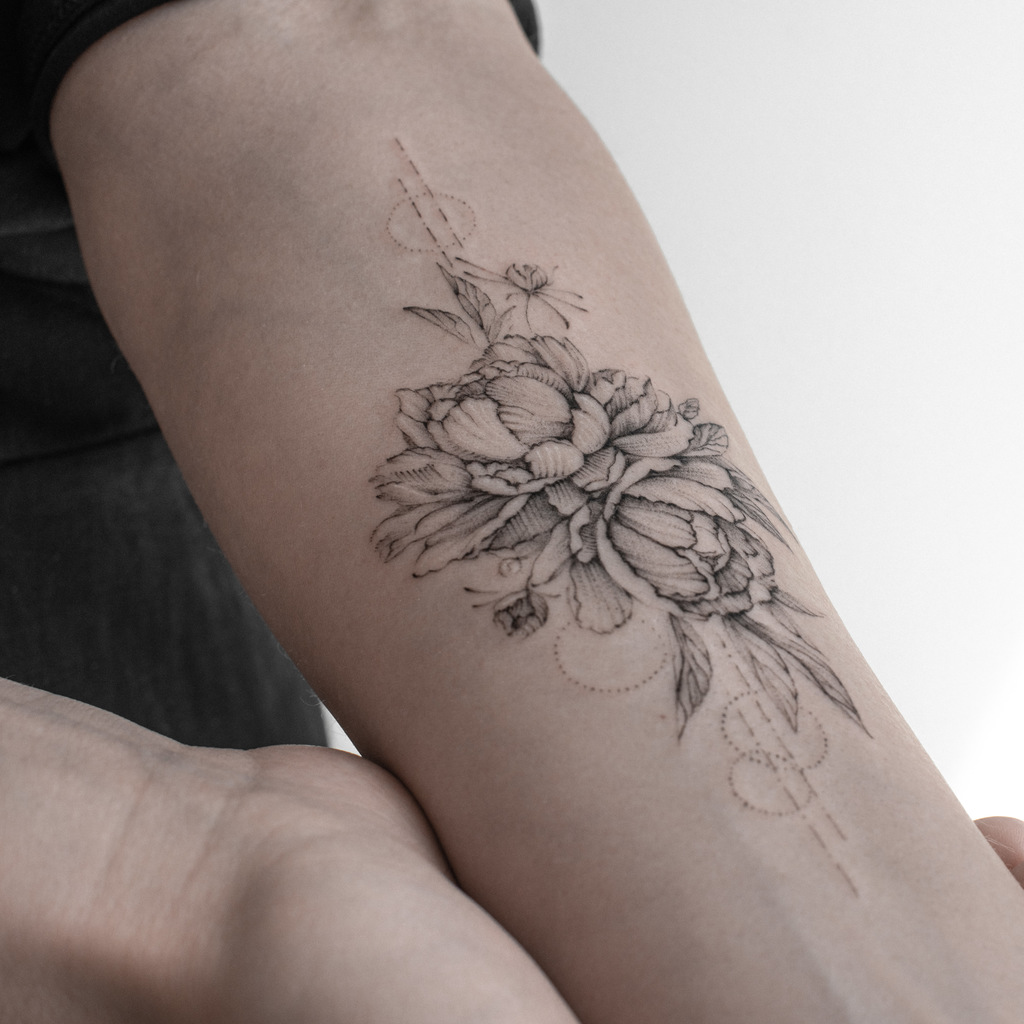
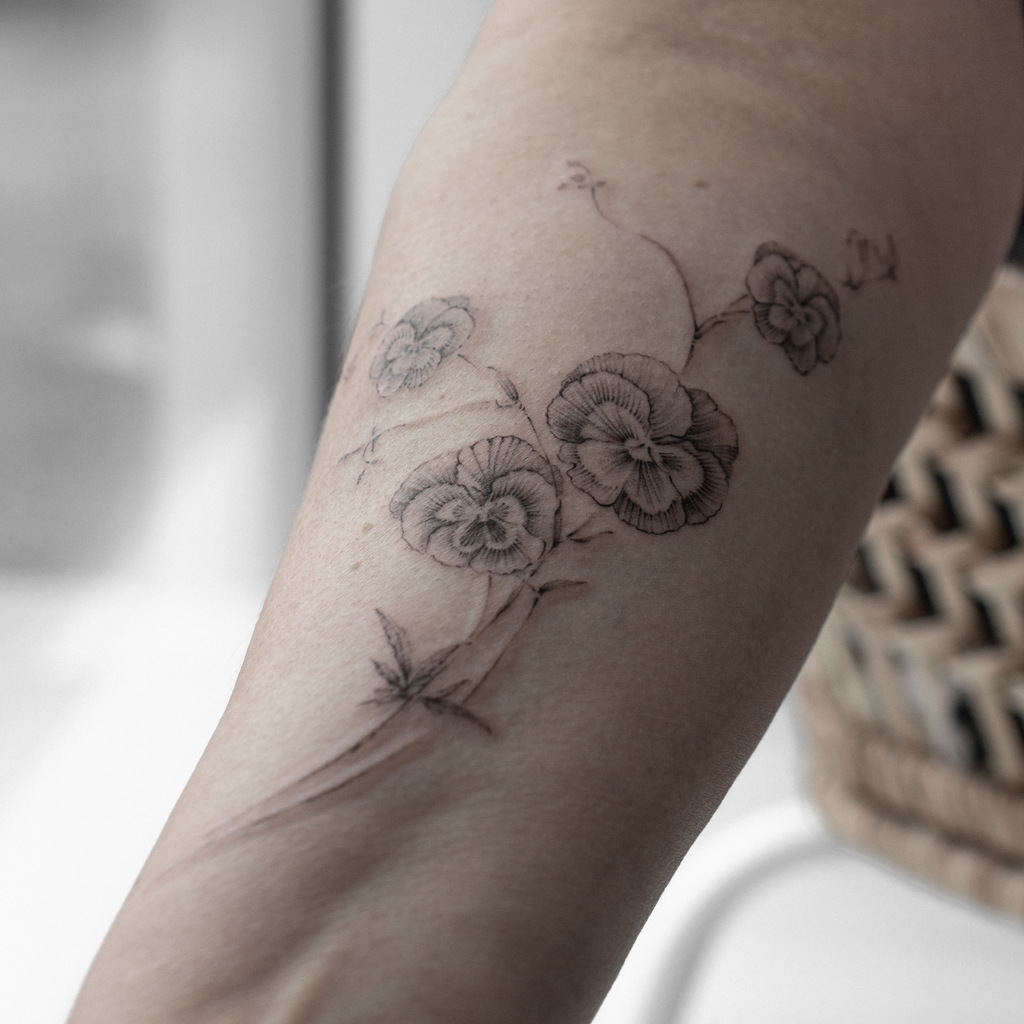
Good design often follows the same principles that exist in nature. Architects study proportion. Painters study light. Designers study balance. Botanical artists study the extraordinary variety of natural forms that have evolved over millions of years. This is why flowers translate so naturally into tattooing. Every plant already possesses its own rhythm. Leaves rarely grow in perfectly straight lines. Branches bend, flowers open towards the light, and stems create movement rather than rigid symmetry. These organic characteristics make botanical compositions feel comfortable on the body because they naturally complement its curves instead of fighting against them. Unlike geometric objects, plants are inherently flexible in their visual language. They can wrap around an arm, follow the line of a collarbone, or flow gently along the forearm without appearing forced. Nature has already solved many of the compositional challenges that artists face. The role of the tattoo artist is not to improve nature, but to understand it.
.
Botanical Tattoos Feel Alive
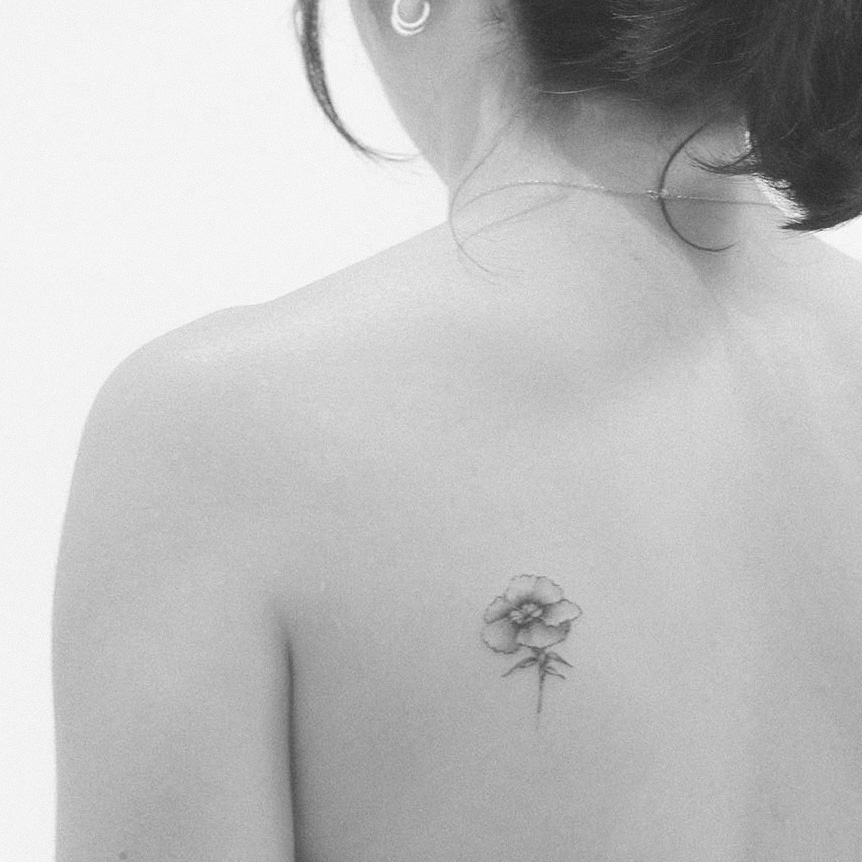
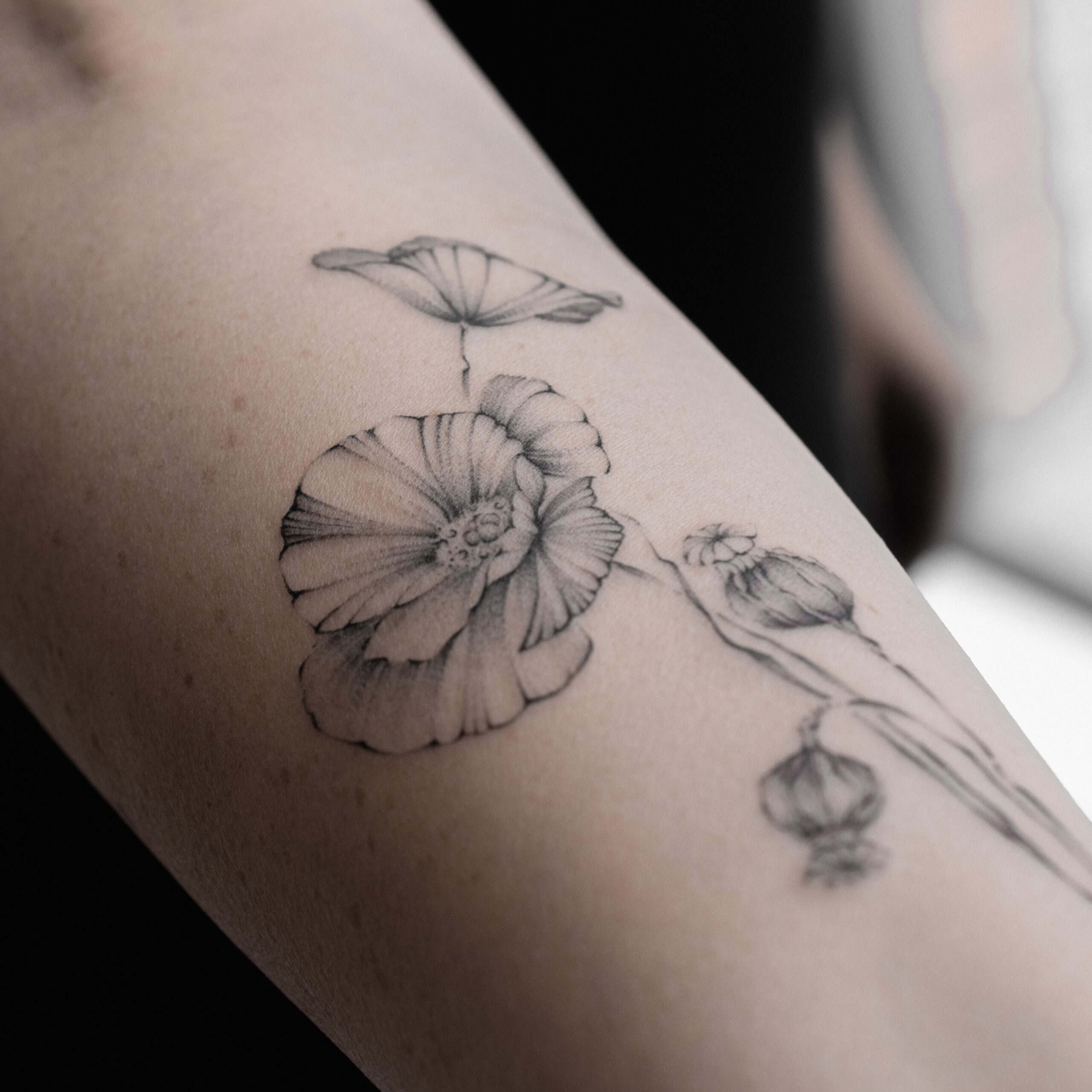
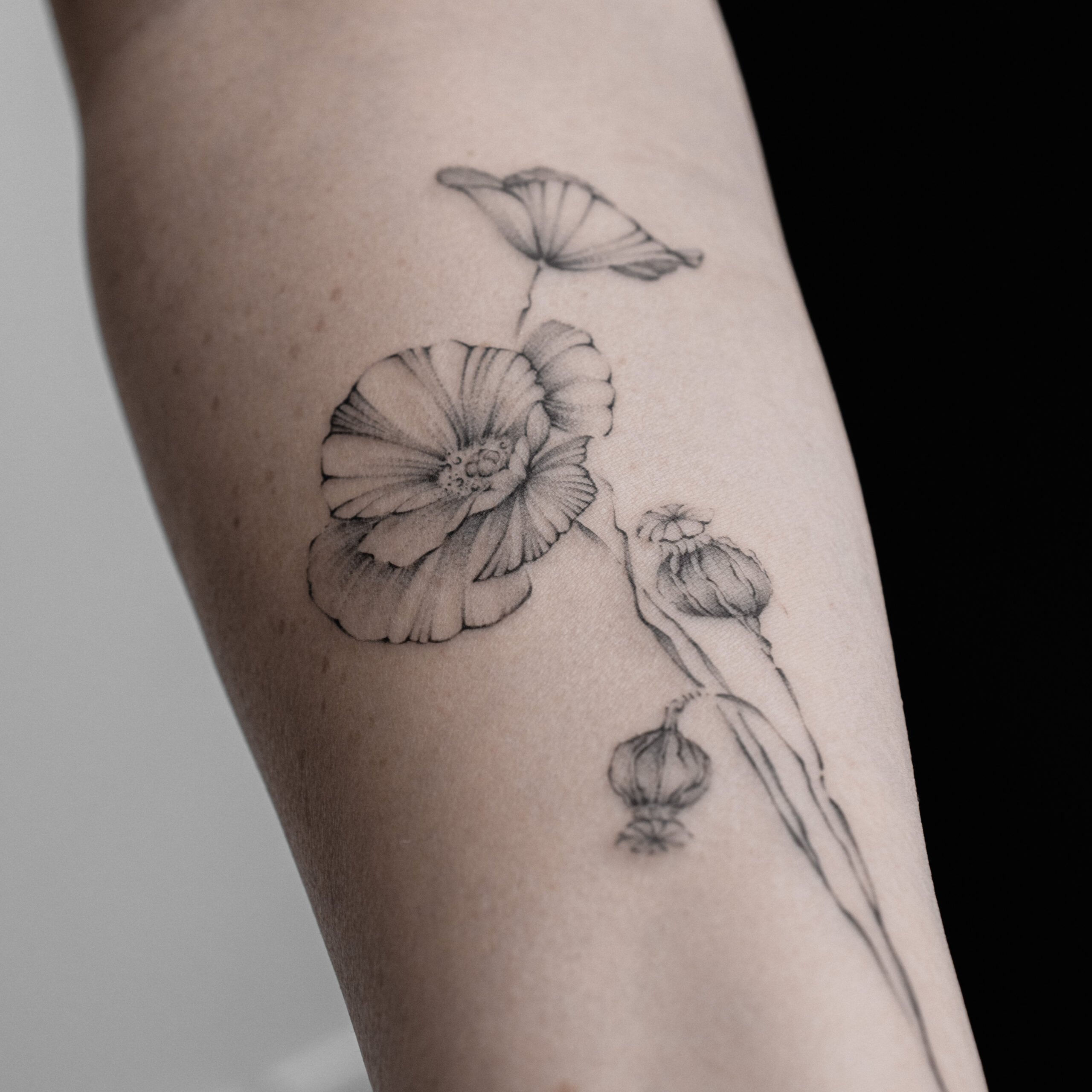
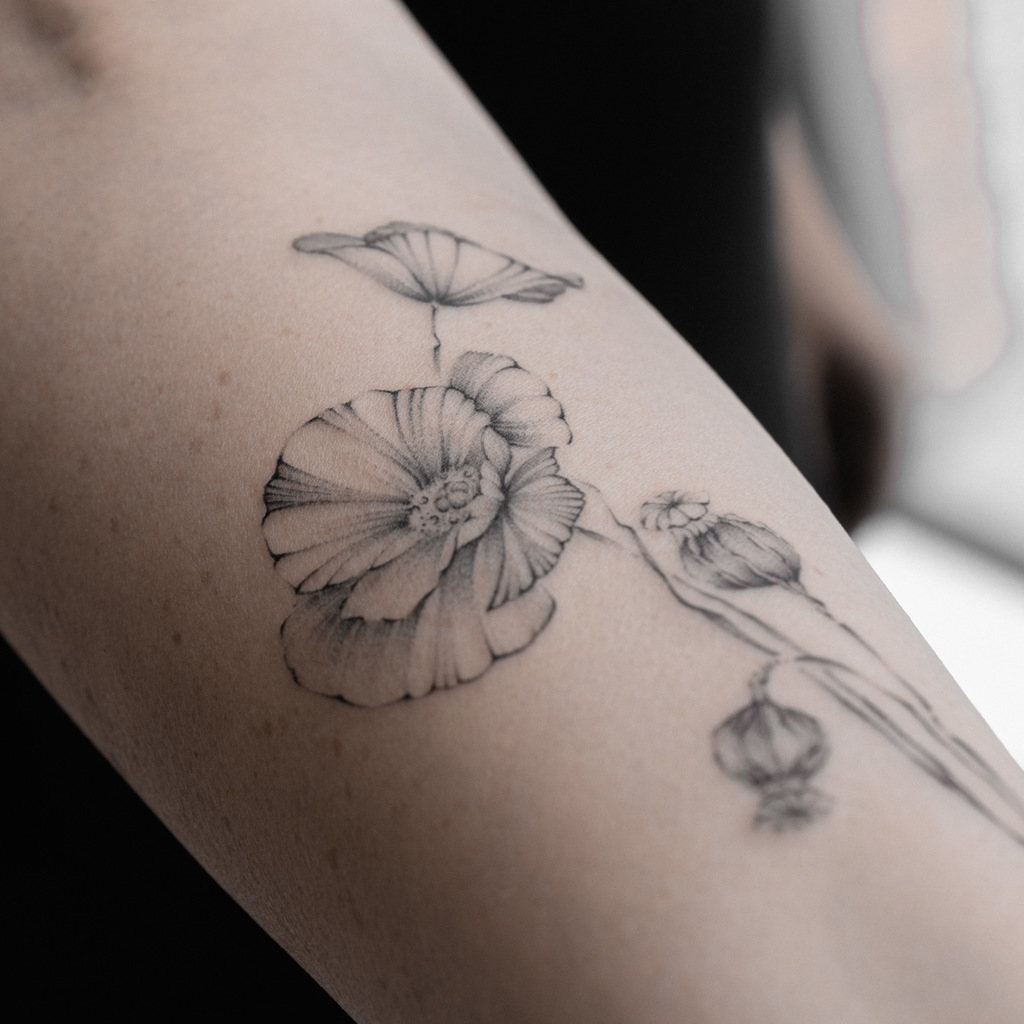
One of the reasons people continue to connect with botanical tattoos is that they rarely feel static. Even though the tattoo itself never moves, the composition often creates a subtle sense of life. A branch seems to grow. A flower appears to open. Leaves create direction. The eye naturally follows the movement throughout the composition. This quality is difficult to describe, but immediately recognisable when a botanical tattoo has been thoughtfully designed. Rather than existing as isolated objects placed onto the skin, botanical elements often become part of the body’s own movement. As muscles shift and arms bend, the composition continues to feel natural because it was designed with those movements in mind. This relationship between artwork and anatomy is one of the defining characteristics of successful botanical tattooing. If you are interested in understanding how placement influences the overall appearance of a tattoo, you may also enjoy reading our article Tattoo PLACEMENT : How the Right Location Can Transform a Design, where we explore why the body itself becomes an important part of every composition.
.
Fine Line and Botanical Illustration
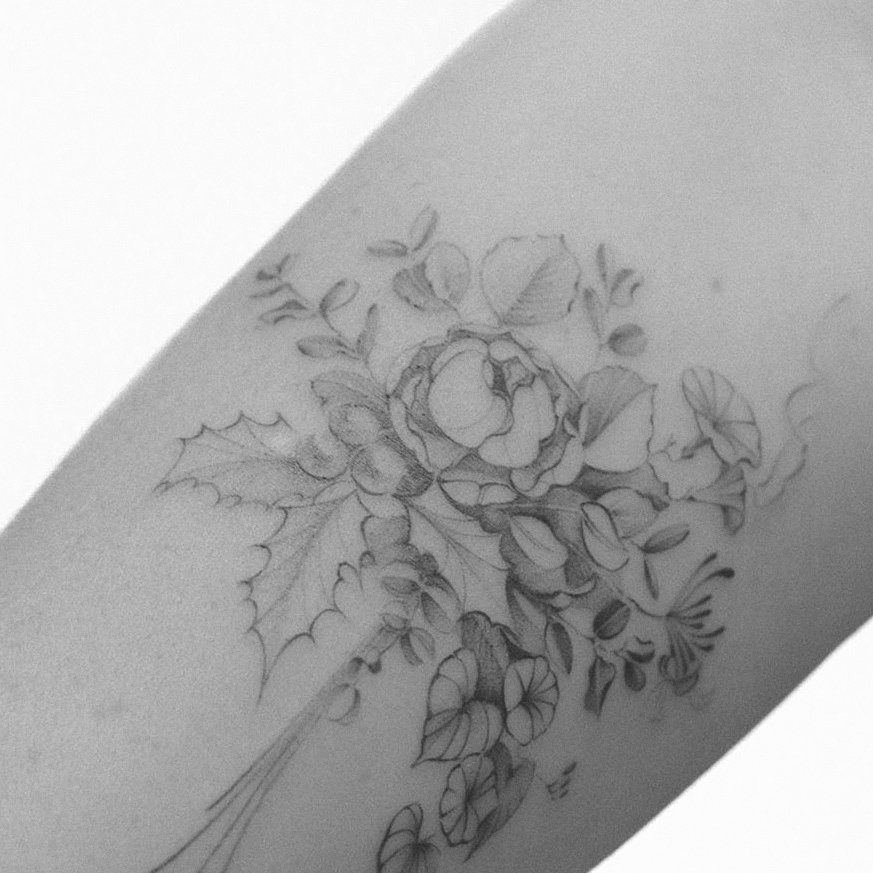
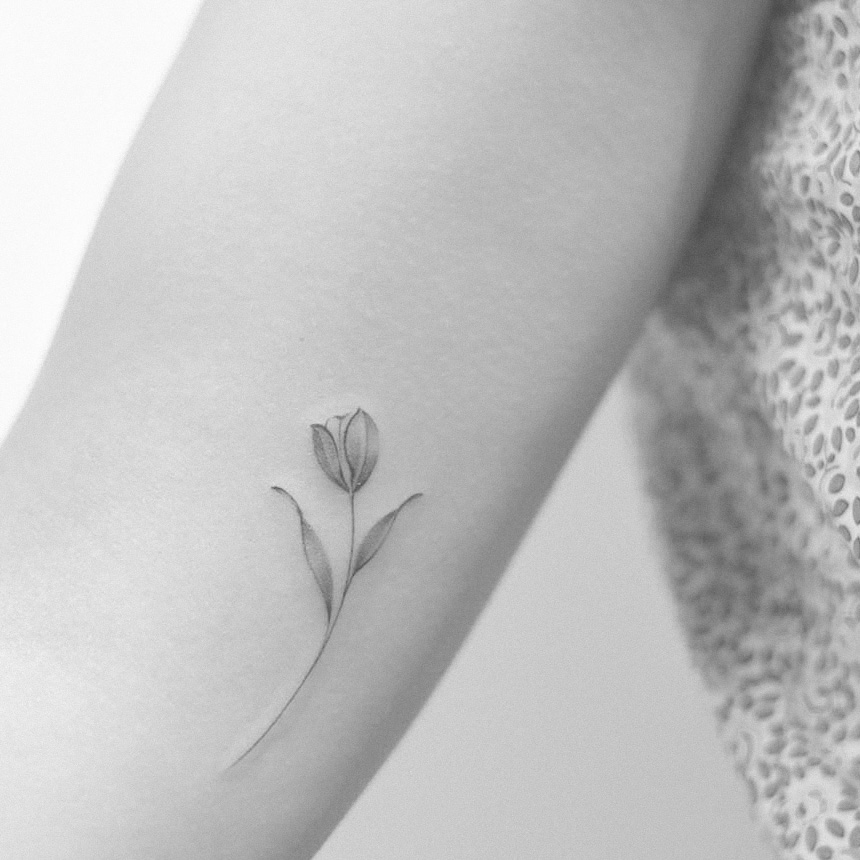
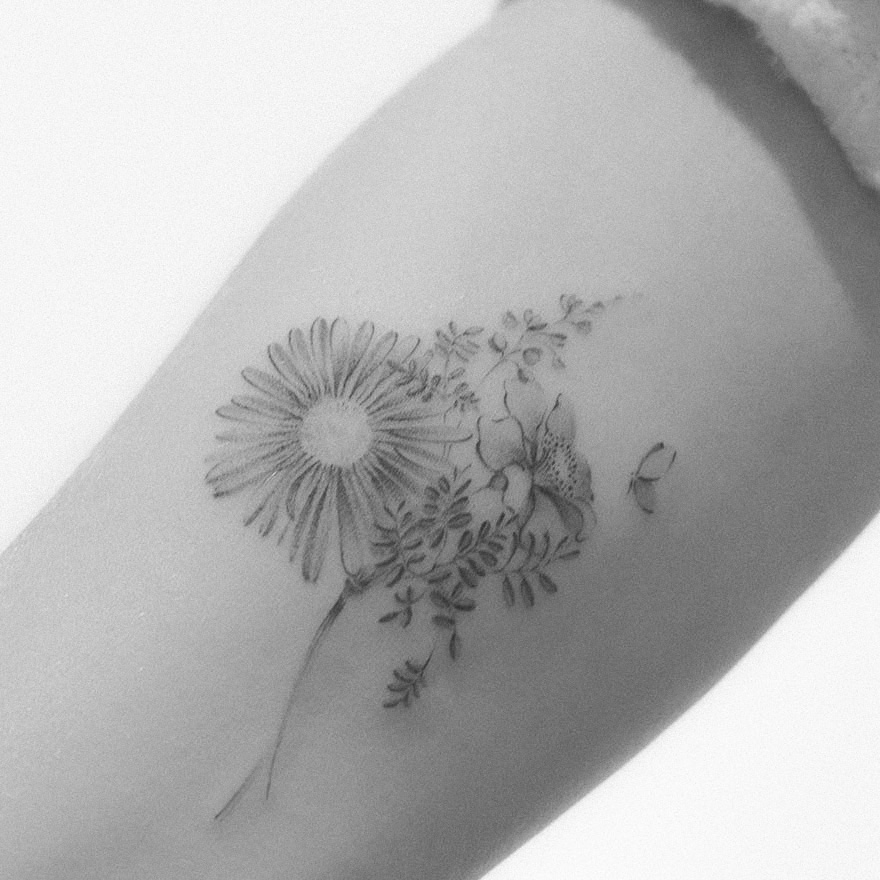
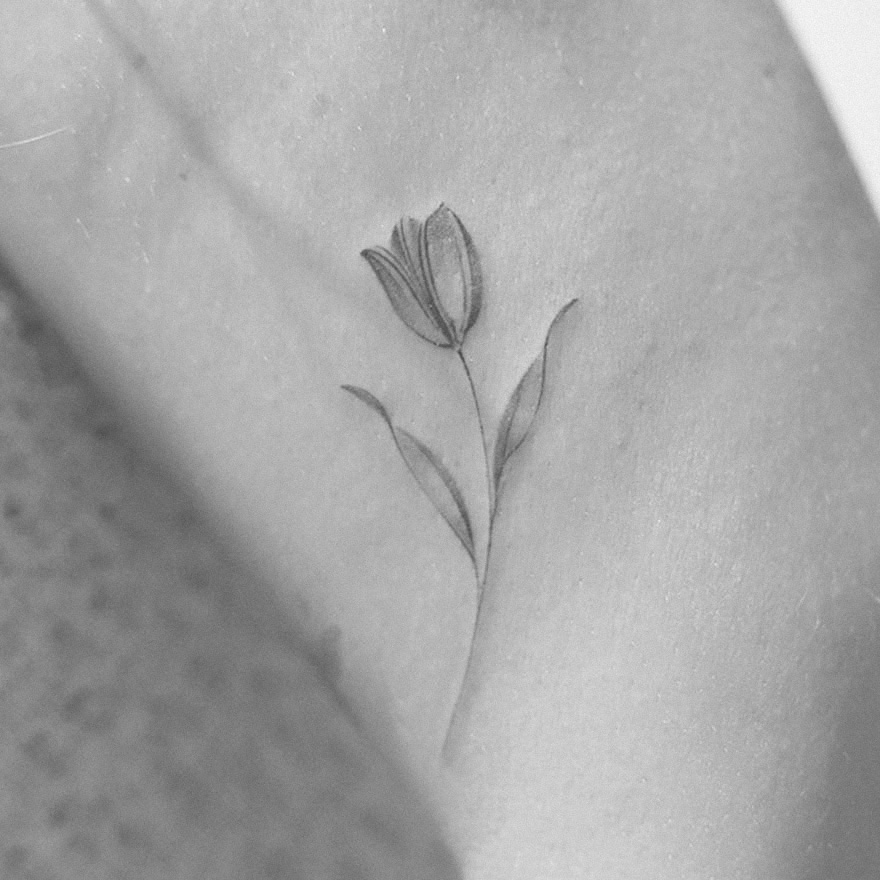
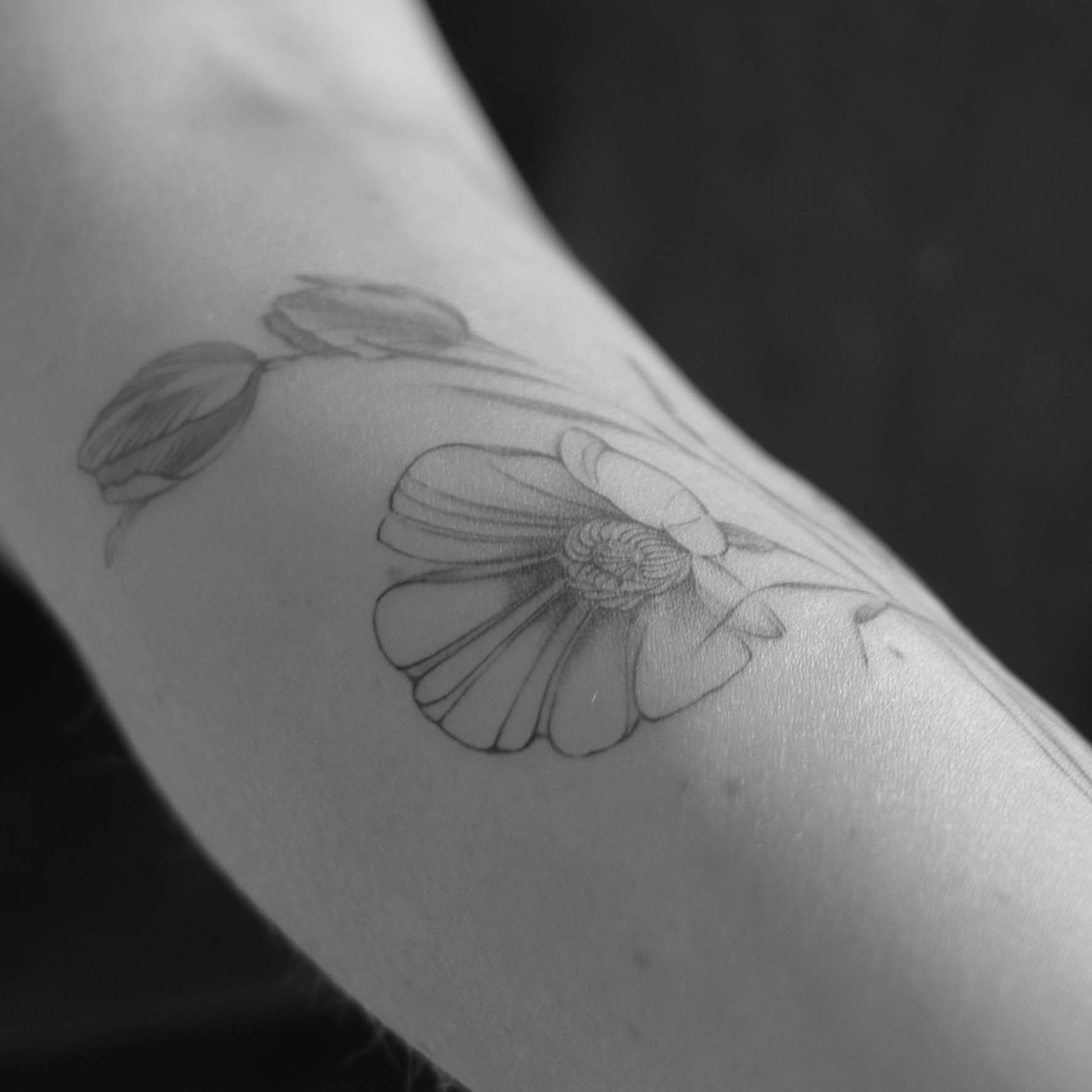
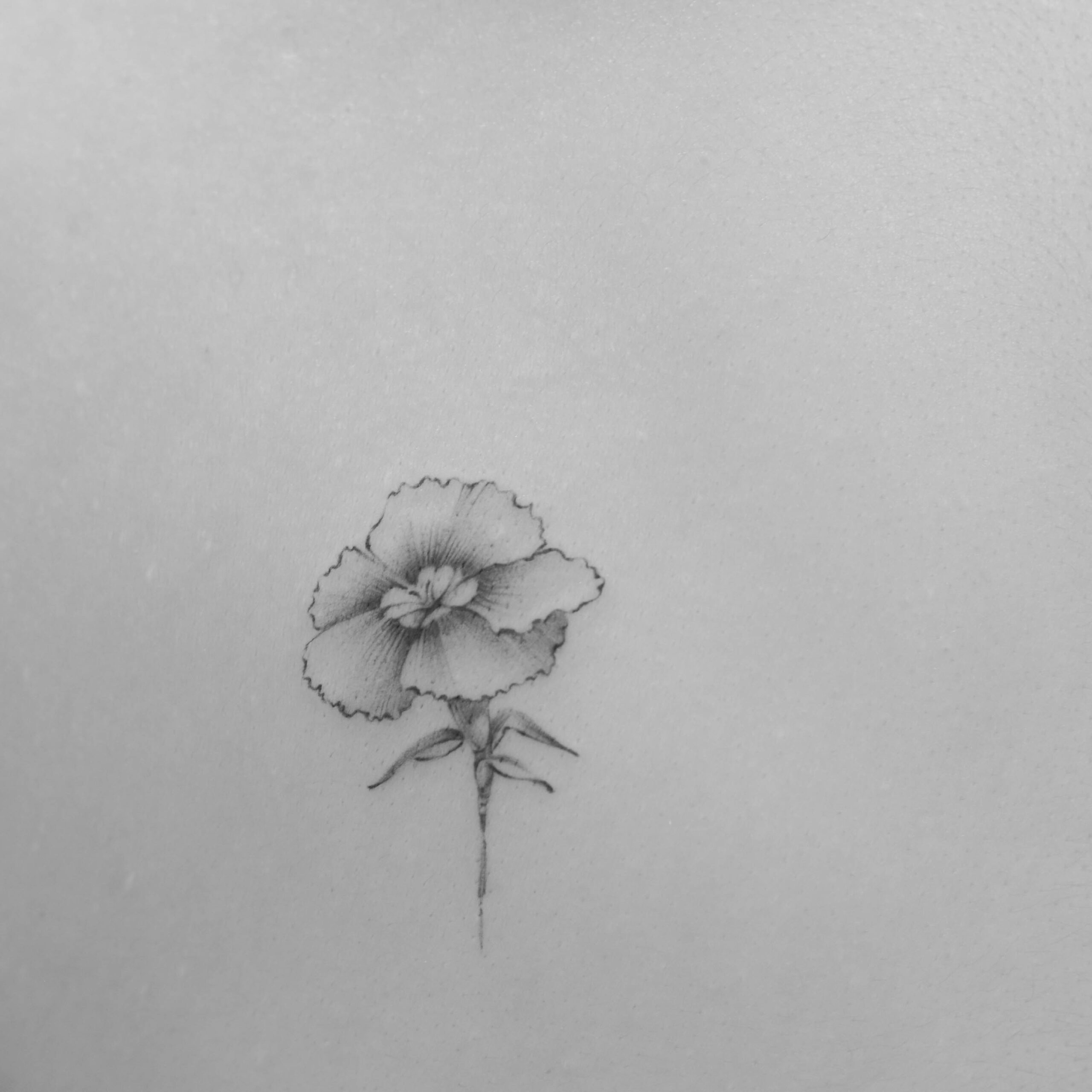
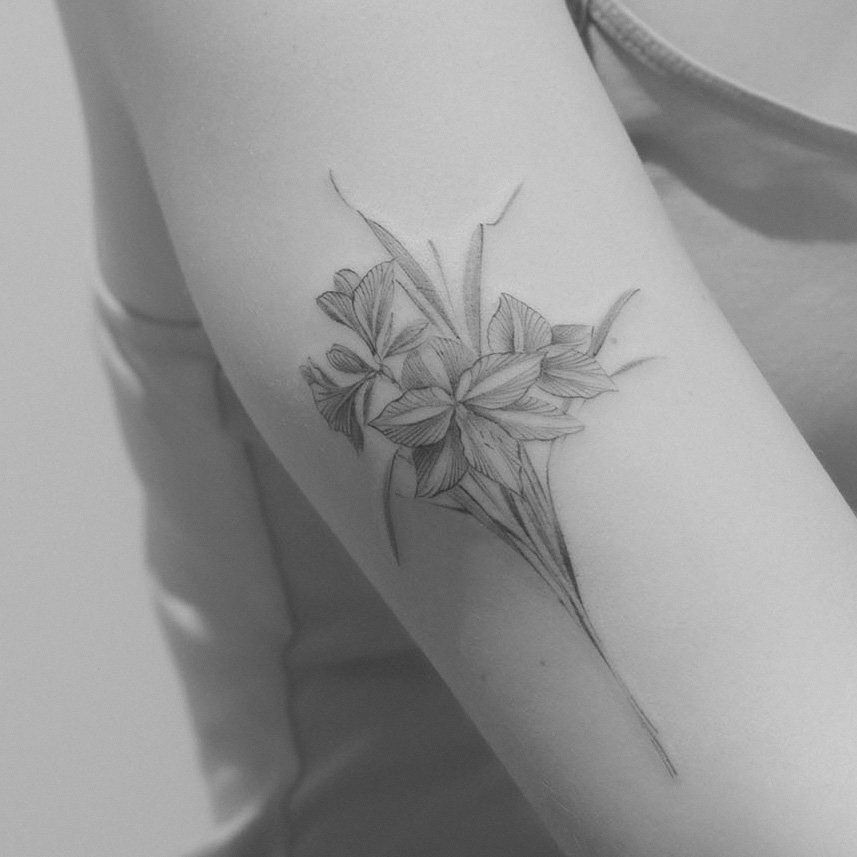
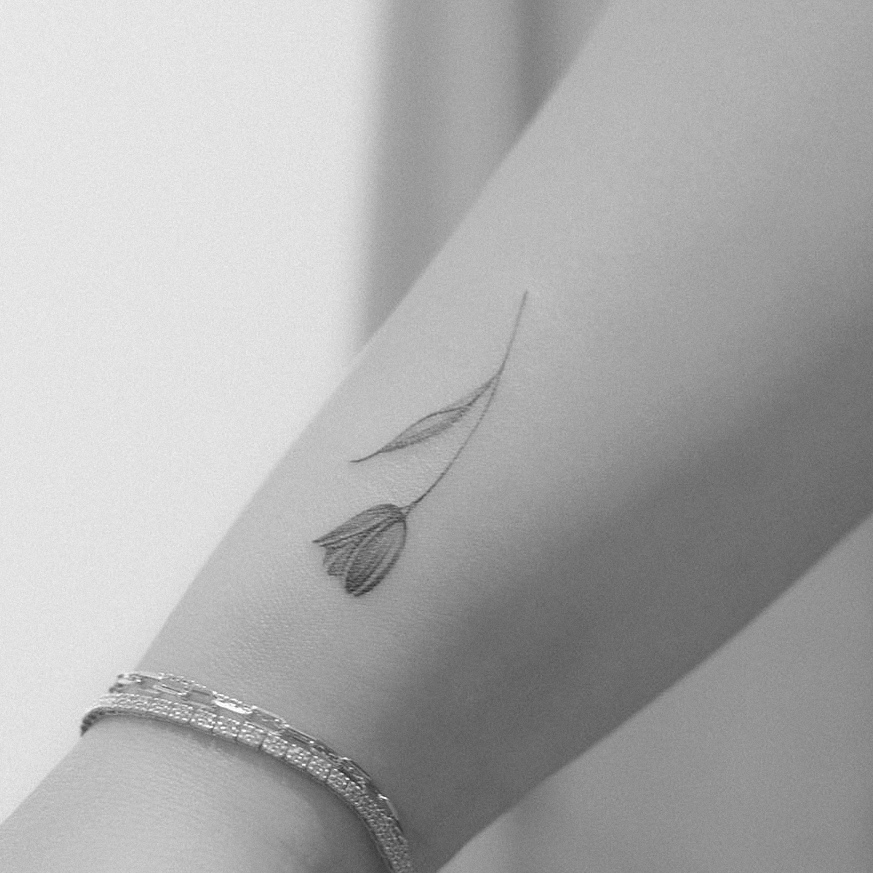
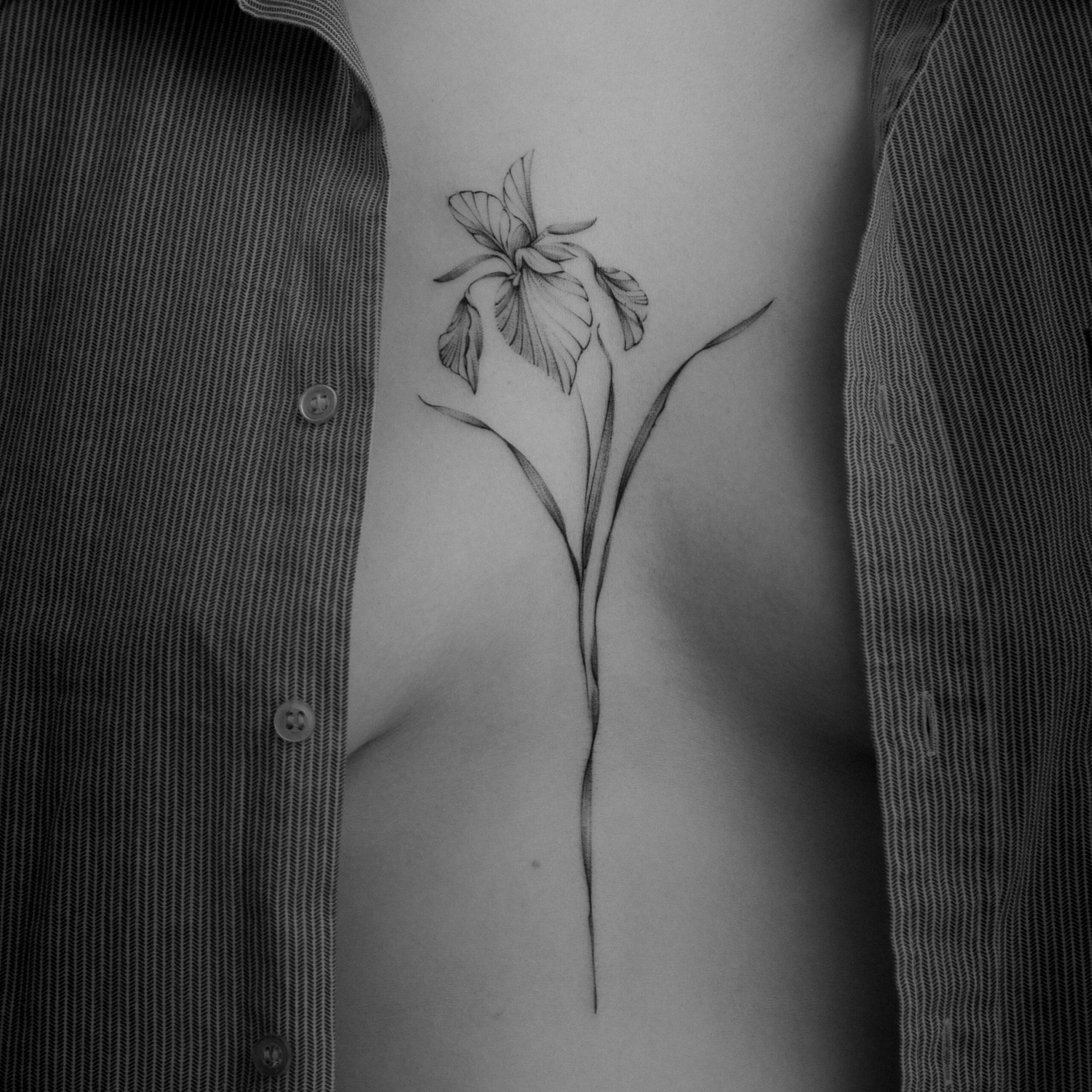
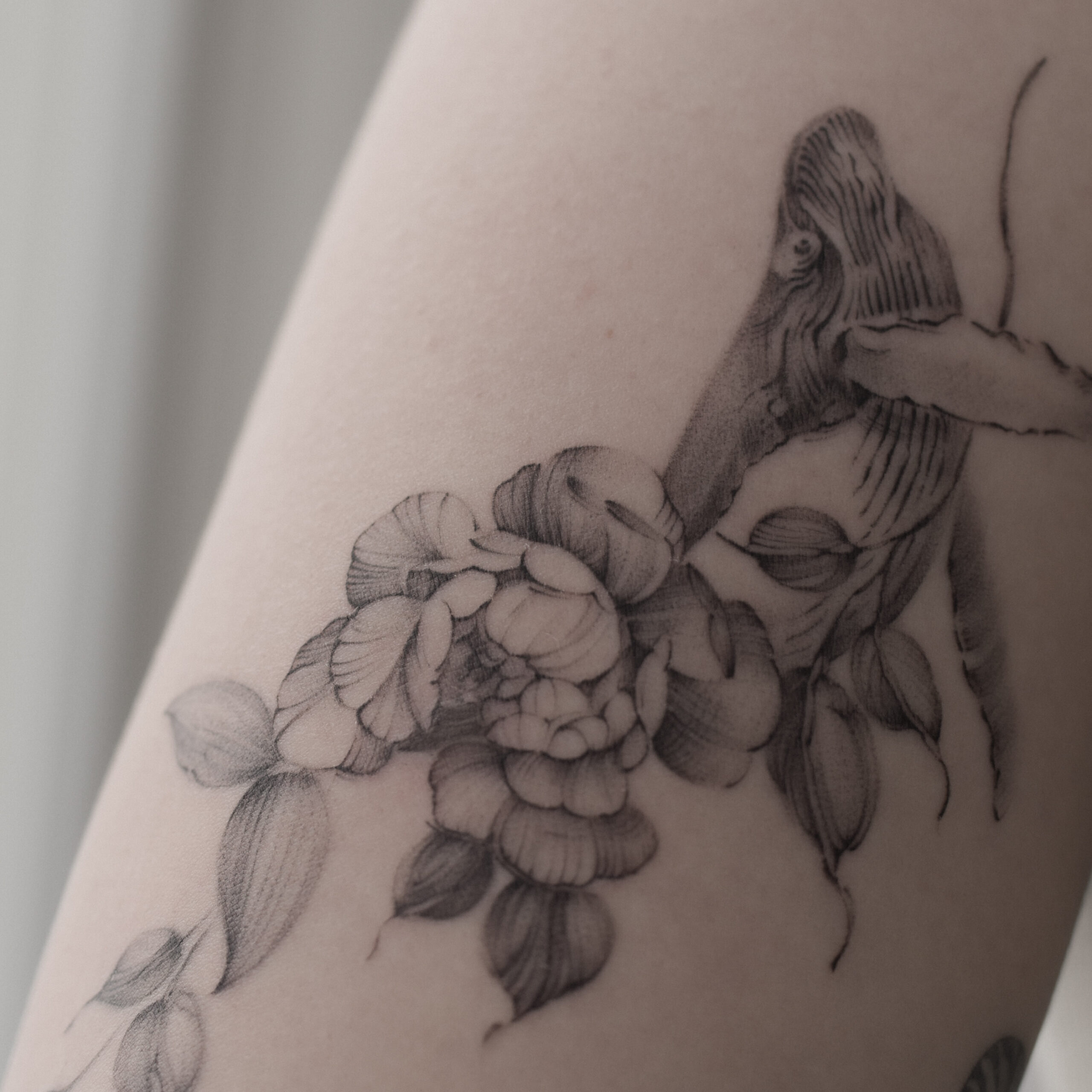
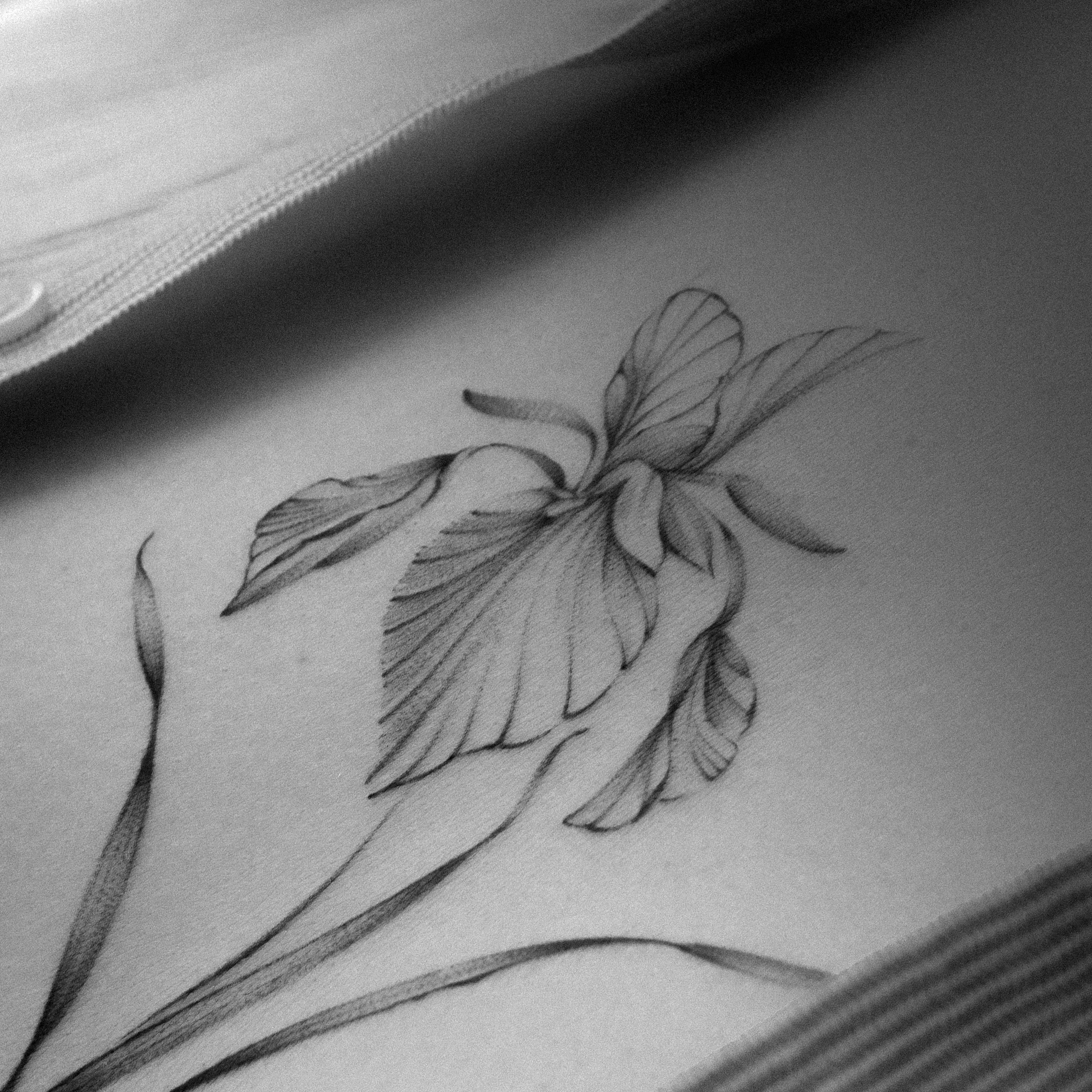
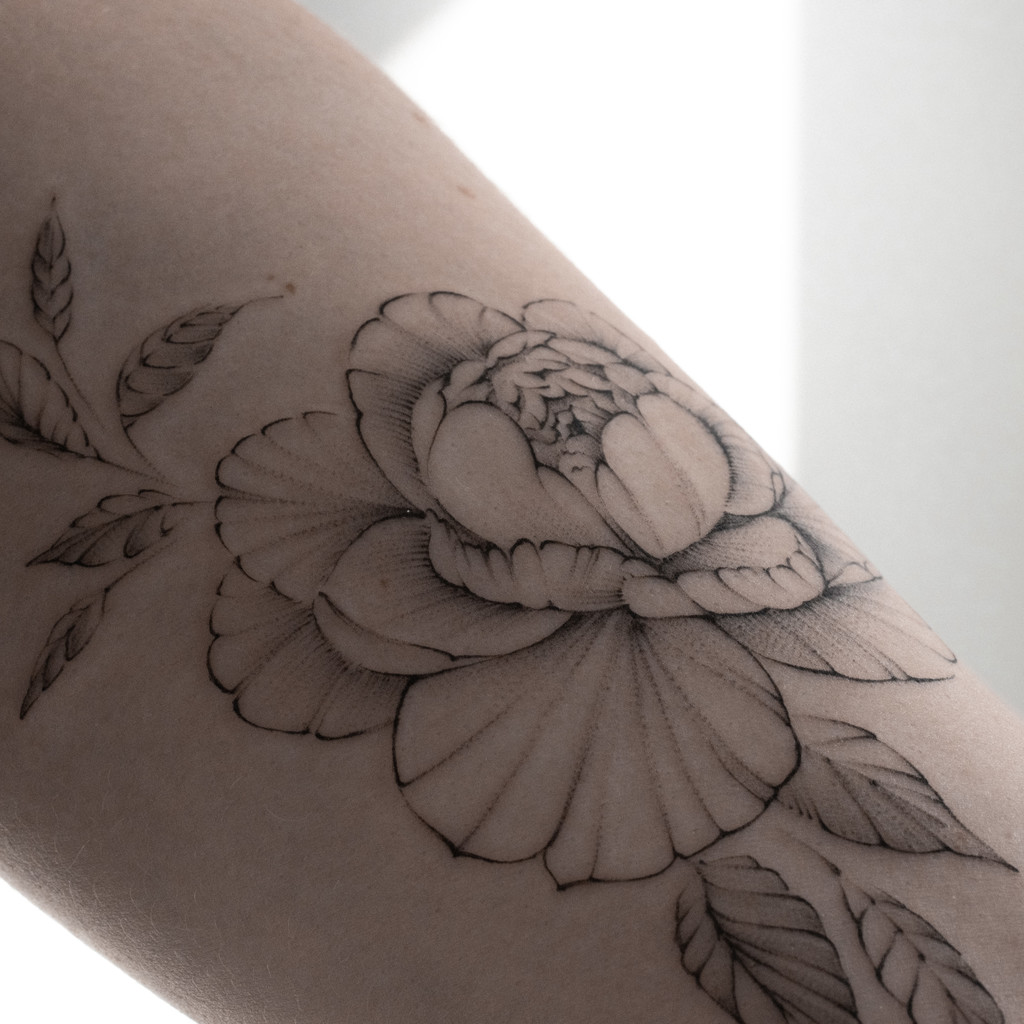
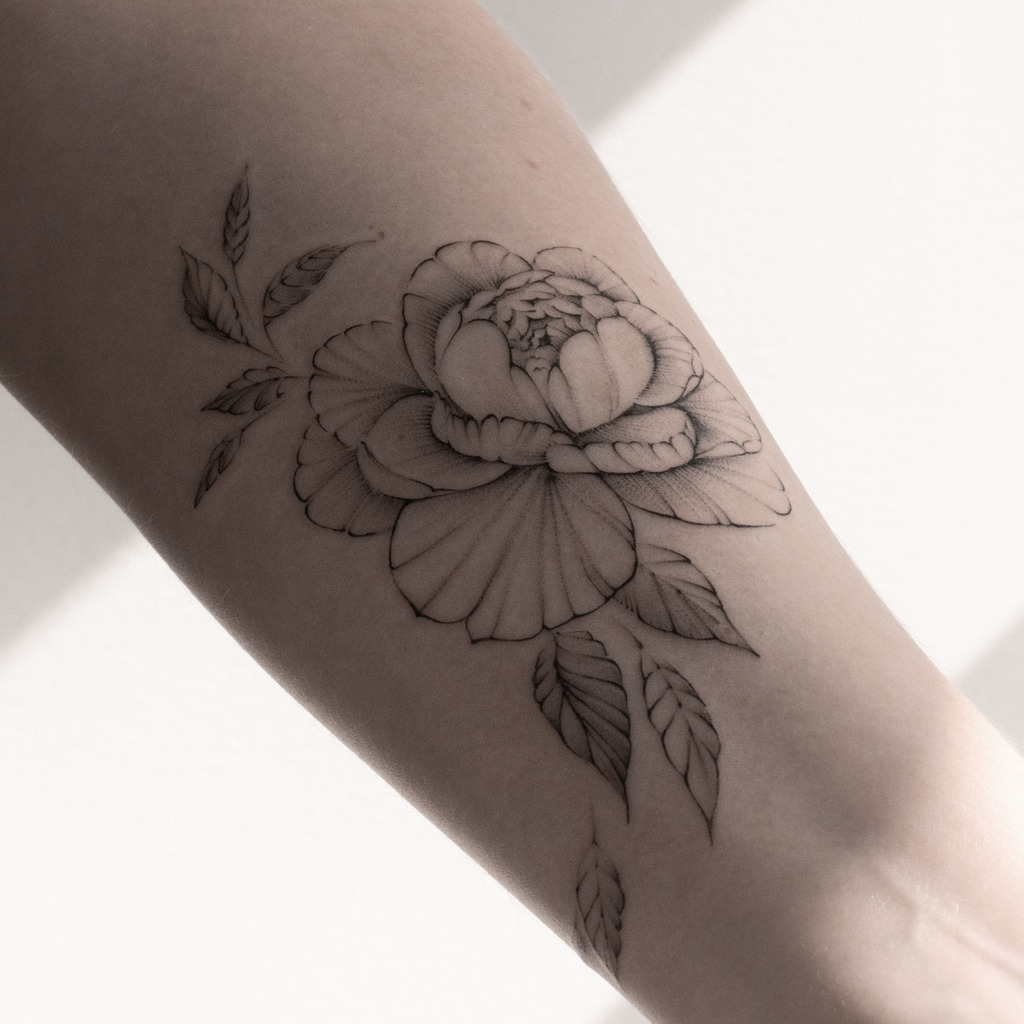
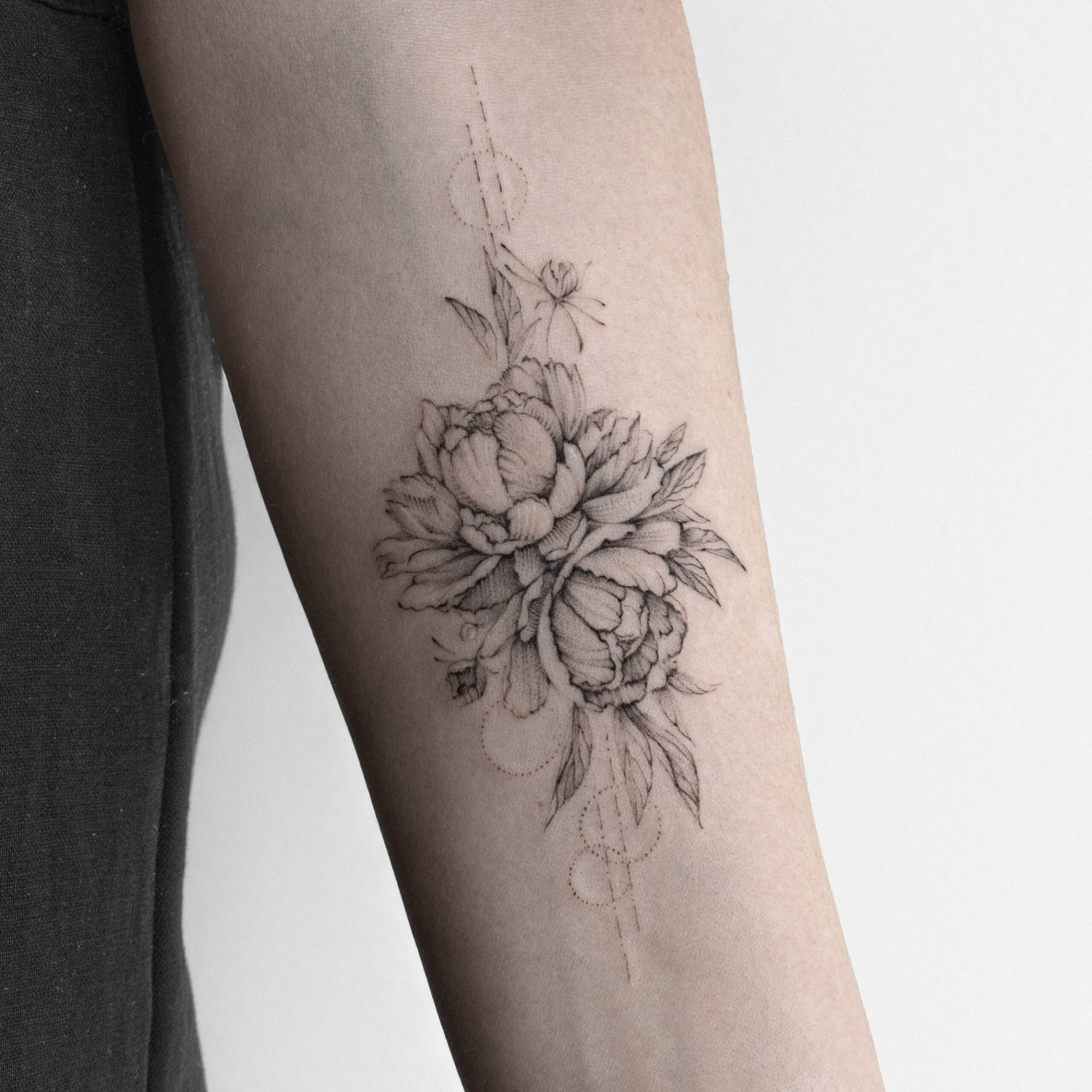
It is no coincidence that fine line tattooing and botanical subjects complement each other so well. Botanical illustration has always depended on observation rather than exaggeration. Historically, botanical artists documented plants with extraordinary precision. Their objective was not only to create beautiful drawings but also to understand structure, proportion, texture, and the subtle relationships between different parts of the plant. Many of those same principles continue to guide contemporary fine line tattooing. Rather than relying on heavy outlines or dense black areas, fine line botanical tattoos create depth through carefully controlled line work, spacing, and contrast. Every petal, every leaf, and every stem contributes to the overall composition without overwhelming it. The result is often an artwork that feels light, elegant, and highly detailed at the same time. This does not mean botanical tattoos should become excessively intricate. In fact, one of the most important skills is knowing when not to add another detail. Restraint is often what allows the beauty of the natural form to remain visible.nIf you would like to learn more about this philosophy, our article Fine Line Tattoos in Amsterdam: Where PRECISION meets Timeless Design explores why simplicity and precision often create stronger results than unnecessary complexity.
.
Looking Beyond Trends
Social media has changed the way many people discover tattoo styles. Every year introduces new aesthetics, new techniques, and new visual trends that quickly spread across the world. Some remain influential. Others disappear almost as quickly as they appeared. Botanical tattoos have certainly evolved alongside these changes, but their popularity has never depended on a single trend. People chose floral tattoos long before Instagram existed. They admired botanical illustrations long before digital art. They collected pressed flowers, painted gardens, and studied plants long before photography made documentation effortless. This continuity is important. It reminds us that botanical tattooing belongs to a much longer artistic tradition. Rather than being defined by current fashion, it continues to evolve while remaining connected to centuries of artistic observation. This is one of the reasons many people who choose botanical tattoos are not simply looking for something fashionable. They are looking for something that still feels meaningful years from now. If this idea resonates with you, you may also enjoy our article The Difference Between a Tattoo TREND and Personal Style, where we explore how lasting design often begins by looking beyond temporary fashion.
.
Why Botanical Tattoos Feel Personal Without Saying Too Much
One of the remarkable qualities of botanical tattoos is their ability to carry meaning without demanding attention. Unlike symbols with universally recognised interpretations, flowers and plants often allow space for personal reflection. A single flower may remind one person of childhood summers, another of someone they loved, and someone else of a place they once called home. This openness is part of their lasting appeal. A botanical tattoo does not need an explanation to remain meaningful. It can tell a story quietly, becoming something deeply personal rather than something created to be understood by everyone else. For many people, that subtlety is exactly what makes the design feel timeless.
.
Choosing the Right Plant Is About More Than Symbolism
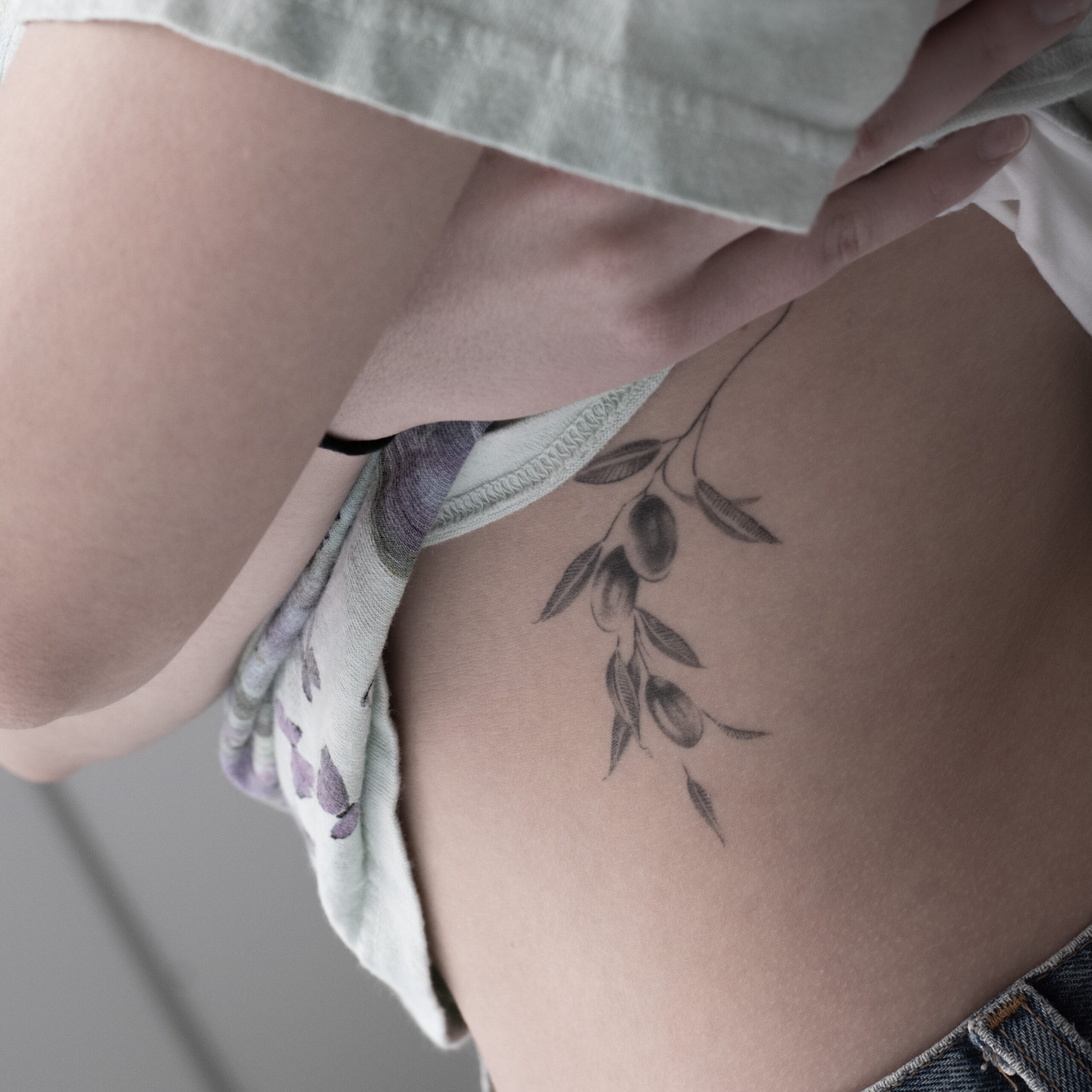
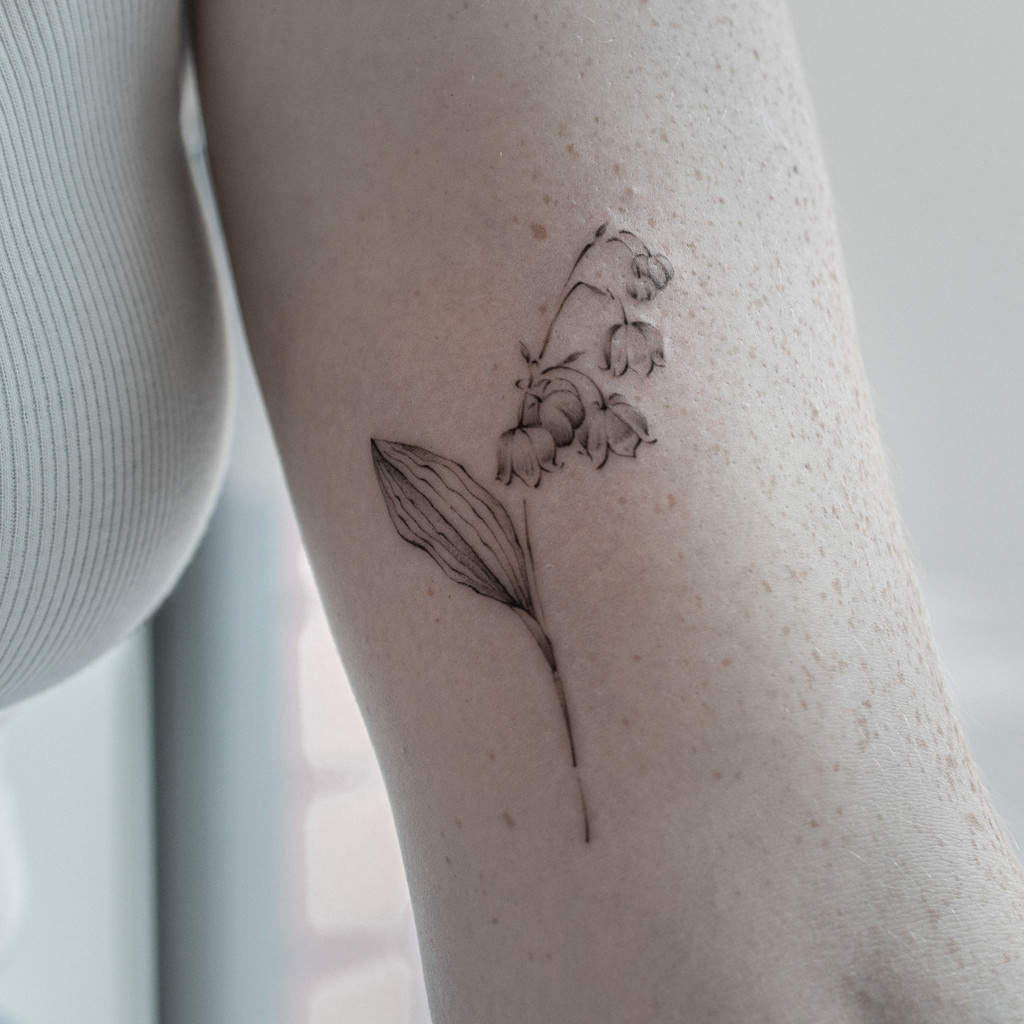
People often ask which flower has the “best” meaning. The truth is that there is rarely a single correct answer. Traditional symbolism can certainly be inspiring. Roses have long represented love, lilies are often associated with renewal, lavender with calm, and olive branches with peace. These historical meanings can provide a beautiful starting point. But the strongest botanical tattoos usually come from something more personal. Perhaps it is the flower that grew outside your grandparents’ house. Perhaps it reminds you of a journey, a season of life, or someone important. Sometimes you simply admire the elegance of its shape. That is enough. A tattoo does not need to justify its existence through symbolism alone. Beauty itself can be a meaningful reason. At Vadelma Tattoo, conversations often begin with these personal connections rather than with predefined meanings. The goal is to create something that belongs to you—not simply something copied from a list of symbolic flowers.
.
The Importance of Composition
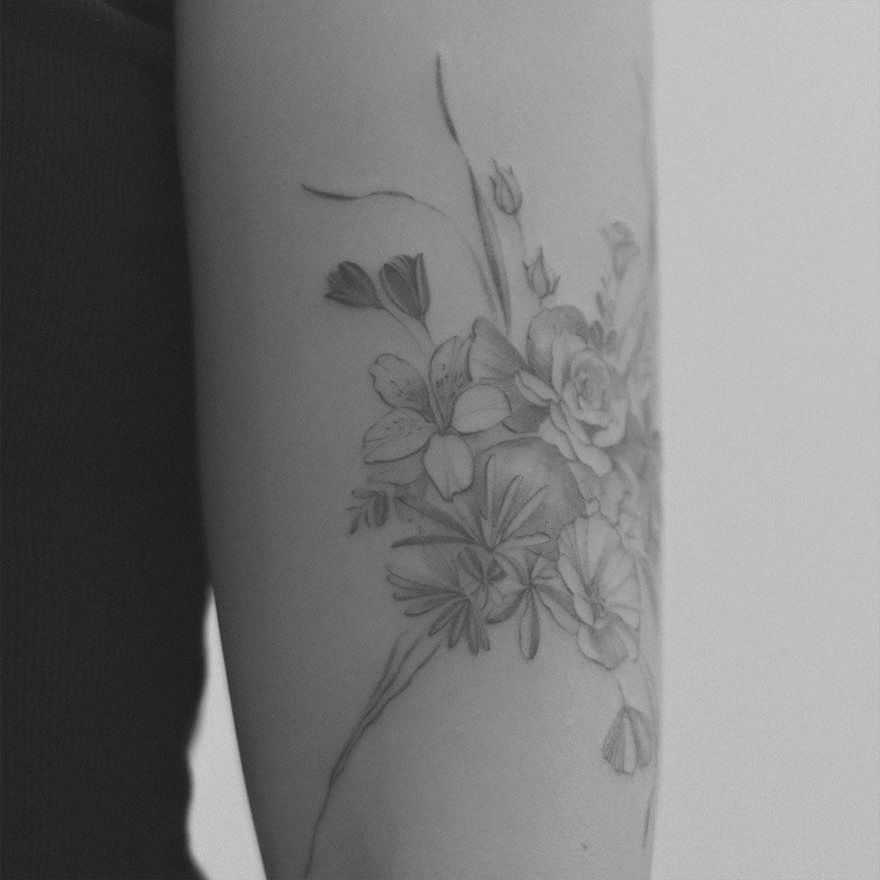
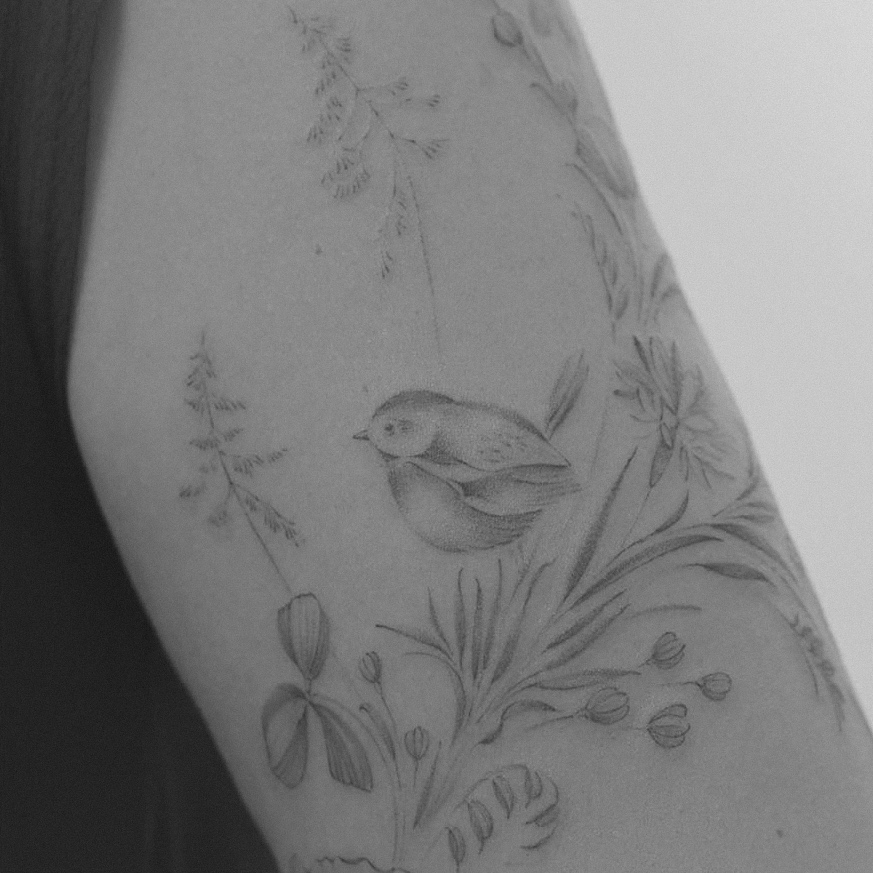
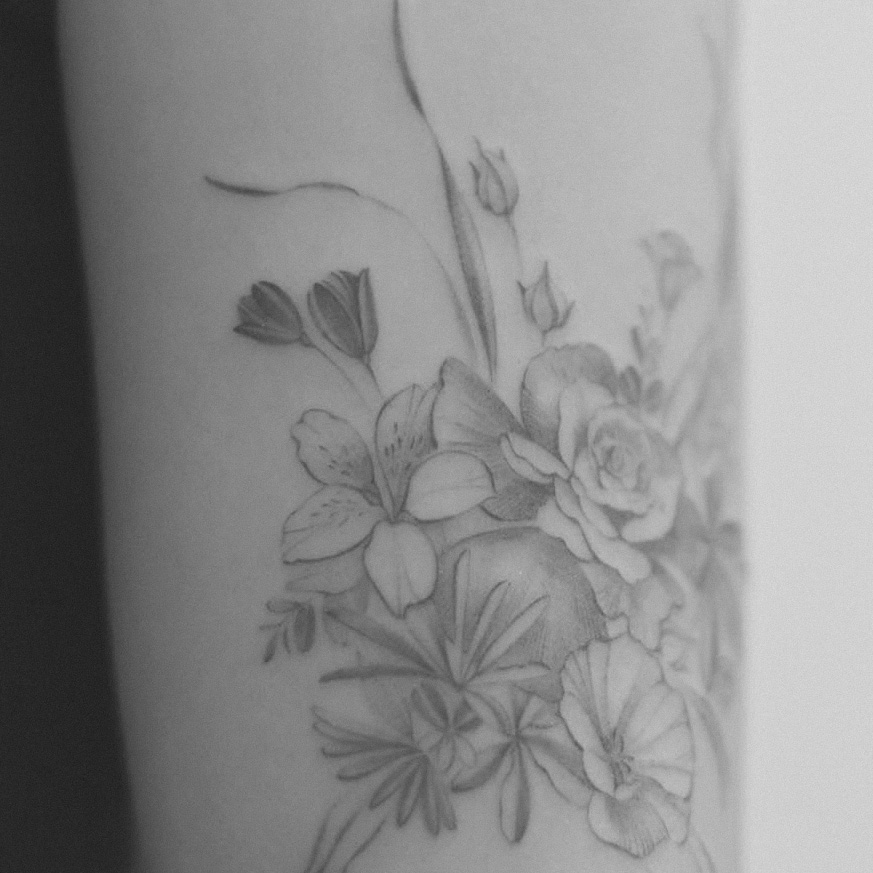
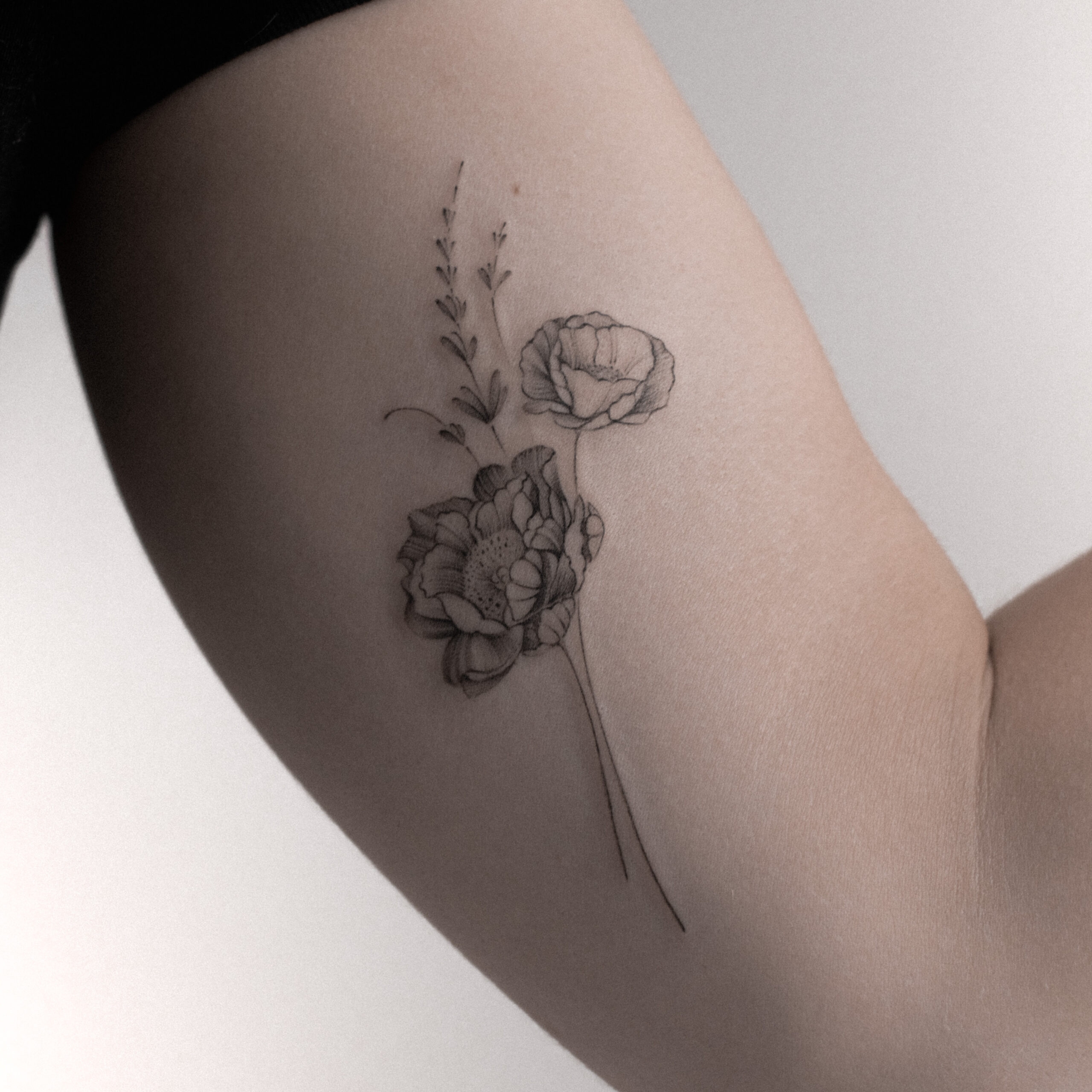
One flower can be beautiful. A composition can be unforgettable. The difference often lies in how individual elements relate to one another. A branch naturally leads the eye. Leaves create rhythm. Flowers become focal points, while negative space gives the composition room to breathe. Every decision influences how the tattoo feels once it becomes part of the body. This is why botanical tattooing is rarely about drawing a single flower in isolation. Instead, it is about creating harmony between the design, the placement, and the anatomy of the person wearing it. Sometimes adding another flower improves the balance. Sometimes removing one creates a stronger composition. The most successful botanical tattoos are not necessarily the most detailed—they are the most thoughtfully composed.
.
A Style That Evolves With You
One reason botanical tattoos continue to age beautifully is that they rarely compete with the person wearing them. Instead of dominating the body, they often become integrated into it. Over time, people change. Our interests evolve, our style develops, and different chapters of life shape who we become. Botanical designs tend to accommodate those changes remarkably well because they are rooted in something universal. Nature continues to feel relevant regardless of age. A carefully designed floral composition rarely feels tied to a particular decade or fashion movement. Instead, it becomes part of the wearer’s own story. Perhaps this is why many people who return for additional tattoos naturally choose to expand existing botanical compositions rather than replace them with something entirely different. A well-designed botanical tattoo has room to grow—both visually and emotionally.
.
The Vadelma Approach
At Vadelma Tattoo, botanical tattooing is approached much like creating a piece of fine art. The process begins with listening. Every project starts by understanding the person behind the tattoo—their ideas, preferences, and the story they want the artwork to tell. From there, attention turns to composition. Rather than simply placing a flower on the skin, we consider how the design will interact with the natural movement of the body. Scale, spacing, flow, and balance all become part of the creative process. Fine line tattooing rewards thoughtful decisions. Sometimes simplifying a composition creates a stronger result than adding more detail. Sometimes leaving empty space allows the artwork to breathe. These choices are rarely dramatic, but together they shape a tattoo that feels elegant both today and many years from now. If you would like to explore available botanical concepts and future tattoo ideas, you can browse our AVAILABLE Projects on the Vadelma Tattoo website.
.
Beyond Tattooing
Our appreciation for botanical forms extends beyond tattooing itself. Many of the same ideas that influence our tattoo work—balance, observation, and a respect for nature—also inspire the artwork created by Natalie Vadelma. Through Vadelma Prints, you can explore original botanical illustrations and museum-quality fine art prints designed to bring the same quiet elegance into your home. If you enjoy the artistic language behind botanical tattooing, you may also enjoy discovering these works.
Botanical tattoos have remained relevant for generations because they are built upon something far deeper than changing fashion. They draw inspiration from nature—a source of beauty that has fascinated artists, scientists, and storytellers for centuries. A carefully designed botanical tattoo does not rely on trends to remain meaningful. It relies on thoughtful composition. It respects the body. It embraces simplicity without becoming empty. And perhaps most importantly, it leaves room for personal interpretation. That quiet balance is what allows botanical tattoos to continue feeling timeless. Not because they never change, but because the inspiration behind them never loses its beauty.
Frequently Asked Questions
Do botanical tattoos age well?
When designed with appropriate spacing, thoughtful composition, and good technical execution, botanical tattoos can age beautifully. Their natural forms and balanced compositions often remain visually harmonious for many years.
Are botanical tattoos suitable for fine line tattooing?
Yes. Fine line techniques complement botanical subjects particularly well because they allow delicate details and natural forms to be represented with elegance and precision.
Do flowers always need a symbolic meaning?
Not at all. While many flowers have traditional meanings, the strongest botanical tattoos often carry personal significance rather than universal symbolism.
Can botanical tattoos be expanded later?
Absolutely. Botanical compositions are often well suited for future additions because branches, leaves, and flowers can naturally extend into larger designs when planned carefully.
What makes a botanical tattoo timeless?
Rather than following temporary trends, botanical tattoos are inspired by forms that have fascinated artists for centuries. Their connection with nature gives them a timeless visual language.
Where can I find inspiration for botanical tattoos?
You can explore available tattoo concepts through our Available Projects, browse our blog for educational articles, or discover botanical artwork through Vadelma Prints.
We use cookies to ensure that we give you the best experience on our website. If you continue to use this site we will assume that you are happy with it.