Amsterdam’s Bookstores and the Culture of Reading
.
Amsterdam’s Bookstores and the Culture of Reading
.
Why Some of the City’s Most Inspiring Places Are Filled with Books
When people think about Amsterdam, they often picture canals, bicycles, museums, and historic architecture. These symbols have become part of the city’s identity, attracting millions of visitors from around the world each year. Yet beyond the famous landmarks lies another side of Amsterdam that is easy to overlook.
It is a city of readers.
Tucked between canal houses, hidden along quiet streets, and scattered throughout historic neighbourhoods are countless bookstores, libraries, and literary spaces. Some are small and independent, others occupy grand historic buildings, but all contribute to a culture that has valued books, ideas, and learning for centuries. In a world increasingly dominated by screens, notifications, and endless streams of information, Amsterdam remains a place where reading still feels important.
.
A City Built on Ideas
Amsterdam’s relationship with books is deeply connected to its history. During the Dutch Golden Age, the city became one of Europe’s most important centres of trade, knowledge, and publishing. Books, maps, scientific discoveries, and works of philosophy moved through Amsterdam alongside goods arriving from every corner of the world. Printers and publishers flourished here. Scholars, artists, and thinkers exchanged ideas in a city known for its relative openness and intellectual curiosity. This tradition never completely disappeared. Even today, Amsterdam retains a strong connection to culture, education, and creative thinking. Reading is not simply treated as a hobby. It remains part of the city’s broader appreciation for learning and personal growth.
.
Why Bookstores Still Matter
At first glance, bookstores may seem like businesses struggling against the convenience of online shopping and digital media. Yet many of Amsterdam’s bookshops continue to thrive. The reason may be simple. People are not only looking for books. They are looking for experiences. A good bookstore offers something the internet cannot easily replicate. It creates opportunities for unexpected discoveries. A visitor arrives searching for one title and leaves fascinated by another. A conversation with a bookseller leads to a new author. A beautifully designed cover catches someone’s attention from across the room. The experience is slower, more personal, and often more memorable. In many ways, bookstores encourage the kind of curiosity that modern life sometimes makes difficult.
.
The Pleasure of Slowing Down
Reading asks something unusual of us. It asks us to focus. Unlike social media, videos, or endless scrolling, books require sustained attention. They encourage patience. They invite people to spend time with a single idea rather than constantly moving to the next one. Perhaps this is why reading continues to feel valuable despite technological change. The act of sitting with a book creates a different relationship with information. Instead of consuming content quickly, readers engage with it deeply. They reflect, imagine, and absorb ideas at their own pace. Amsterdam’s bookstores seem perfectly suited to this philosophy. Like the city’s hidden courtyards, canals, and museums, they offer spaces where people can step away from noise and reconnect with something quieter.
.
Books as Objects of Design
There is another reason bookstores remain fascinating. Books themselves are beautiful objects. Typography, paper quality, cover design, illustration, and binding all contribute to the experience of reading. Long before someone turns the first page, a book communicates through visual design. This connection between literature and aesthetics has always been particularly interesting to artists, designers, and creative people. A well-designed book demonstrates many of the same principles found in architecture, graphic design, and fine art. Balance, composition, proportion, and attention to detail all play a role. Perhaps that is why wandering through a bookstore often feels inspiring even when you are not looking for a specific title. Every shelf contains hundreds of examples of creative thinking brought into physical form.
.
Amsterdam’s Creative Spirit
One reason Amsterdam continues attracting artists from around the world is that creativity is woven into everyday life. Inspiration can be found almost anywhere. A museum gallery. A historic canal. A quiet café. A hidden courtyard. Or a small bookstore tucked away on a side street. These places encourage observation rather than speed. They remind us that creativity often grows from curiosity. The more we read, explore, and engage with different ideas, the richer our own creative lives become. Books have always played a role in that process. They allow us to travel through history, experience different perspectives, and encounter ideas that challenge or inspire us.
.
Reading in a Digital World
The rise of digital technology has changed many aspects of daily life, but it has not diminished the value of reading. If anything, books have become more important. As information becomes increasingly abundant, attention becomes increasingly valuable. Reading remains one of the most effective ways to develop concentration, critical thinking, and imagination. This may explain why independent bookstores continue finding loyal audiences. People are not simply purchasing books. They are investing in a different pace of life. One that values depth over speed and reflection over distraction.
.
A Connection to the Vadelma Philosophy
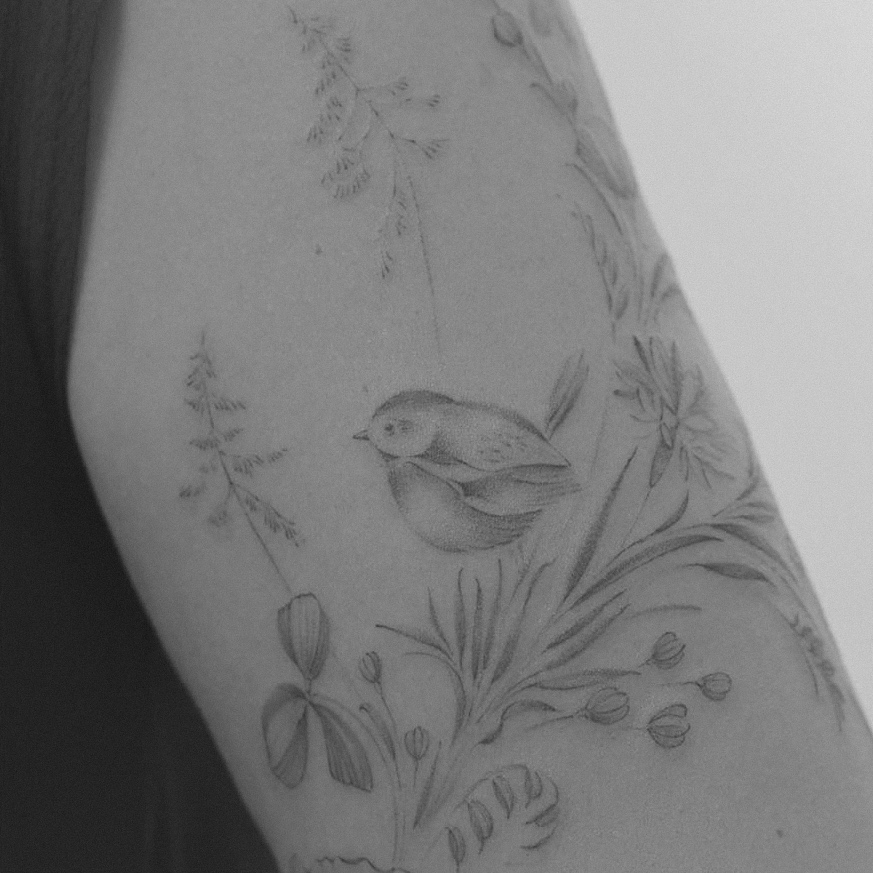
At Vadelma Tattoo in Amsterdam, we often appreciate experiences that encourage people to slow down and engage more intentionally with the world around them. Reading shares many qualities with meaningful tattooing. Neither should be rushed. Both involve personal stories, careful consideration, and long-term value. A good book stays with us long after we finish reading it. A meaningful tattoo becomes part of our story for years to come. Perhaps that is why bookstores continue to feel so relevant. They remind us that some things become more valuable when we spend time with them. If you are visiting Amsterdam and considering a tattoo, you can explore available projects here:
https://vadelma.eu/available-projects
And for those who appreciate art, design, and visual storytelling beyond tattooing, you can also discover Vadelma Prints, featuring original artworks and museum-quality prints created by Natalie Vadelma:
.
Final Thoughts
Amsterdam is often celebrated for its canals, museums, and architecture, but its bookstores deserve recognition as well. They represent something increasingly rare in the modern world: places dedicated to curiosity, learning, and thoughtful exploration. Whether you are searching for a specific title or simply wandering among the shelves, a bookstore offers more than books. It offers the possibility of discovery. And perhaps that is why Amsterdam remains such an inspiring city. Not because it encourages people to move faster, but because it continues providing places where they can slow down, pay attention, and think.
.
FAQ
Is Amsterdam a good city for book lovers?
Absolutely. Amsterdam has a rich literary history and is home to many independent bookstores, libraries, and cultural institutions that celebrate reading and learning.
Why are independent bookstores important?
Independent bookstores provide curated selections, personal recommendations, and a unique atmosphere that online retailers cannot easily replicate.
Does Amsterdam have English-language bookstores?
Yes. Many bookstores in Amsterdam offer extensive collections of English-language books alongside Dutch and international titles.
Why is reading still important in the digital age?
Reading helps develop concentration, critical thinking, creativity, and imagination while offering a deeper form of engagement than many digital media formats.
How does reading support creativity?
Books expose readers to new ideas, perspectives, stories, and ways of thinking, all of which can inspire creative work across many disciplines.
.
Amsterdam’s Bookstores and the Culture of Reading
.
Why Some of the City’s Most Inspiring Places Are Filled with Books
When people think about Amsterdam, they often picture canals, bicycles, museums, and historic architecture. These symbols have become part of the city’s identity, attracting millions of visitors from around the world each year. Yet beyond the famous landmarks lies another side of Amsterdam that is easy to overlook.
It is a city of readers.
Tucked between canal houses, hidden along quiet streets, and scattered throughout historic neighbourhoods are countless bookstores, libraries, and literary spaces. Some are small and independent, others occupy grand historic buildings, but all contribute to a culture that has valued books, ideas, and learning for centuries. In a world increasingly dominated by screens, notifications, and endless streams of information, Amsterdam remains a place where reading still feels important.
.
A City Built on Ideas
Amsterdam’s relationship with books is deeply connected to its history. During the Dutch Golden Age, the city became one of Europe’s most important centres of trade, knowledge, and publishing. Books, maps, scientific discoveries, and works of philosophy moved through Amsterdam alongside goods arriving from every corner of the world. Printers and publishers flourished here. Scholars, artists, and thinkers exchanged ideas in a city known for its relative openness and intellectual curiosity. This tradition never completely disappeared. Even today, Amsterdam retains a strong connection to culture, education, and creative thinking. Reading is not simply treated as a hobby. It remains part of the city’s broader appreciation for learning and personal growth.
.
Why Bookstores Still Matter
At first glance, bookstores may seem like businesses struggling against the convenience of online shopping and digital media. Yet many of Amsterdam’s bookshops continue to thrive. The reason may be simple. People are not only looking for books. They are looking for experiences. A good bookstore offers something the internet cannot easily replicate. It creates opportunities for unexpected discoveries. A visitor arrives searching for one title and leaves fascinated by another. A conversation with a bookseller leads to a new author. A beautifully designed cover catches someone’s attention from across the room. The experience is slower, more personal, and often more memorable. In many ways, bookstores encourage the kind of curiosity that modern life sometimes makes difficult.
.
The Pleasure of Slowing Down
Reading asks something unusual of us. It asks us to focus. Unlike social media, videos, or endless scrolling, books require sustained attention. They encourage patience. They invite people to spend time with a single idea rather than constantly moving to the next one. Perhaps this is why reading continues to feel valuable despite technological change. The act of sitting with a book creates a different relationship with information. Instead of consuming content quickly, readers engage with it deeply. They reflect, imagine, and absorb ideas at their own pace. Amsterdam’s bookstores seem perfectly suited to this philosophy. Like the city’s hidden courtyards, canals, and museums, they offer spaces where people can step away from noise and reconnect with something quieter.
.
Books as Objects of Design
There is another reason bookstores remain fascinating. Books themselves are beautiful objects. Typography, paper quality, cover design, illustration, and binding all contribute to the experience of reading. Long before someone turns the first page, a book communicates through visual design. This connection between literature and aesthetics has always been particularly interesting to artists, designers, and creative people. A well-designed book demonstrates many of the same principles found in architecture, graphic design, and fine art. Balance, composition, proportion, and attention to detail all play a role. Perhaps that is why wandering through a bookstore often feels inspiring even when you are not looking for a specific title. Every shelf contains hundreds of examples of creative thinking brought into physical form.
.
Amsterdam’s Creative Spirit
One reason Amsterdam continues attracting artists from around the world is that creativity is woven into everyday life. Inspiration can be found almost anywhere. A museum gallery. A historic canal. A quiet café. A hidden courtyard. Or a small bookstore tucked away on a side street. These places encourage observation rather than speed. They remind us that creativity often grows from curiosity. The more we read, explore, and engage with different ideas, the richer our own creative lives become. Books have always played a role in that process. They allow us to travel through history, experience different perspectives, and encounter ideas that challenge or inspire us.
.
Reading in a Digital World
The rise of digital technology has changed many aspects of daily life, but it has not diminished the value of reading. If anything, books have become more important. As information becomes increasingly abundant, attention becomes increasingly valuable. Reading remains one of the most effective ways to develop concentration, critical thinking, and imagination. This may explain why independent bookstores continue finding loyal audiences. People are not simply purchasing books. They are investing in a different pace of life. One that values depth over speed and reflection over distraction.
.
A Connection to the Vadelma Philosophy
At Vadelma Tattoo in Amsterdam, we often appreciate experiences that encourage people to slow down and engage more intentionally with the world around them. Reading shares many qualities with meaningful tattooing. Neither should be rushed. Both involve personal stories, careful consideration, and long-term value. A good book stays with us long after we finish reading it. A meaningful tattoo becomes part of our story for years to come. Perhaps that is why bookstores continue to feel so relevant. They remind us that some things become more valuable when we spend time with them. If you are visiting Amsterdam and considering a tattoo, you can explore available projects here:
https://vadelma.eu/available-projects
And for those who appreciate art, design, and visual storytelling beyond tattooing, you can also discover Vadelma Prints, featuring original artworks and museum-quality prints created by Natalie Vadelma:
.
Final Thoughts
Amsterdam is often celebrated for its canals, museums, and architecture, but its bookstores deserve recognition as well. They represent something increasingly rare in the modern world: places dedicated to curiosity, learning, and thoughtful exploration. Whether you are searching for a specific title or simply wandering among the shelves, a bookstore offers more than books. It offers the possibility of discovery. And perhaps that is why Amsterdam remains such an inspiring city. Not because it encourages people to move faster, but because it continues providing places where they can slow down, pay attention, and think.
.
FAQ
Is Amsterdam a good city for book lovers?
Absolutely. Amsterdam has a rich literary history and is home to many independent bookstores, libraries, and cultural institutions that celebrate reading and learning.
Why are independent bookstores important?
Independent bookstores provide curated selections, personal recommendations, and a unique atmosphere that online retailers cannot easily replicate.
Does Amsterdam have English-language bookstores?
Yes. Many bookstores in Amsterdam offer extensive collections of English-language books alongside Dutch and international titles.
Why is reading still important in the digital age?
Reading helps develop concentration, critical thinking, creativity, and imagination while offering a deeper form of engagement than many digital media formats.
How does reading support creativity?
Books expose readers to new ideas, perspectives, stories, and ways of thinking, all of which can inspire creative work across many disciplines.