Why Botanical Tattoos Feel Timeless | Fine Line Floral Tattoos Amsterdam
Why Botanical Tattoos Feel Timeless: The Connection Between Nature, Art and Personal Meaning
Introduction
Throughout human history, plants have represented far more than beauty. Flowers, leaves, trees, and herbs have been connected with stories, traditions, emotions, and personal memories for thousands of years. From ancient botanical drawings to historical paintings, plants have always been a way for humans to understand and represent the world around them.
This connection is one of the reasons botanical tattoos continue to feel timeless. While tattoo trends change constantly, botanical designs remain deeply connected to something much older: our relationship with nature.
A botanical tattoo is not simply a decoration placed on the skin. It can represent a personal memory, a connection to a certain place, a meaningful period of life, or simply an appreciation for the natural forms that surround us.
At Vadelma Tattoo in Amsterdam, botanical tattooing is approached through the same principles found in illustration, architecture, and fine art: balance, composition, and attention to detail. Instead of creating designs that follow temporary trends, the focus is on creating artwork that feels natural on the body and meaningful over time.
.
Why Humans Have Always Been Drawn to Plants
The relationship between humans and plants is much older than modern tattoo culture. Plants have always been part of our survival, but they have also been part of our imagination. Flowers have been used as symbols of love, remembrance, transformation, beauty, and resilience. Trees have represented strength and continuity. Herbs and plants have carried cultural meanings passed through generations.
This emotional connection explains why botanical imagery appears throughout art history. From Renaissance paintings to scientific illustrations, artists have studied plants not only because of their appearance but because of what they represent.
You can explore this deeper connection in our article WHY HUMANS HAVE ALWAYS DECORATED THEIR BODIES where we look at the history of body art and why humans have always searched for ways to express identity and meaning.
.
Botanical Tattoos and the Art of Observation
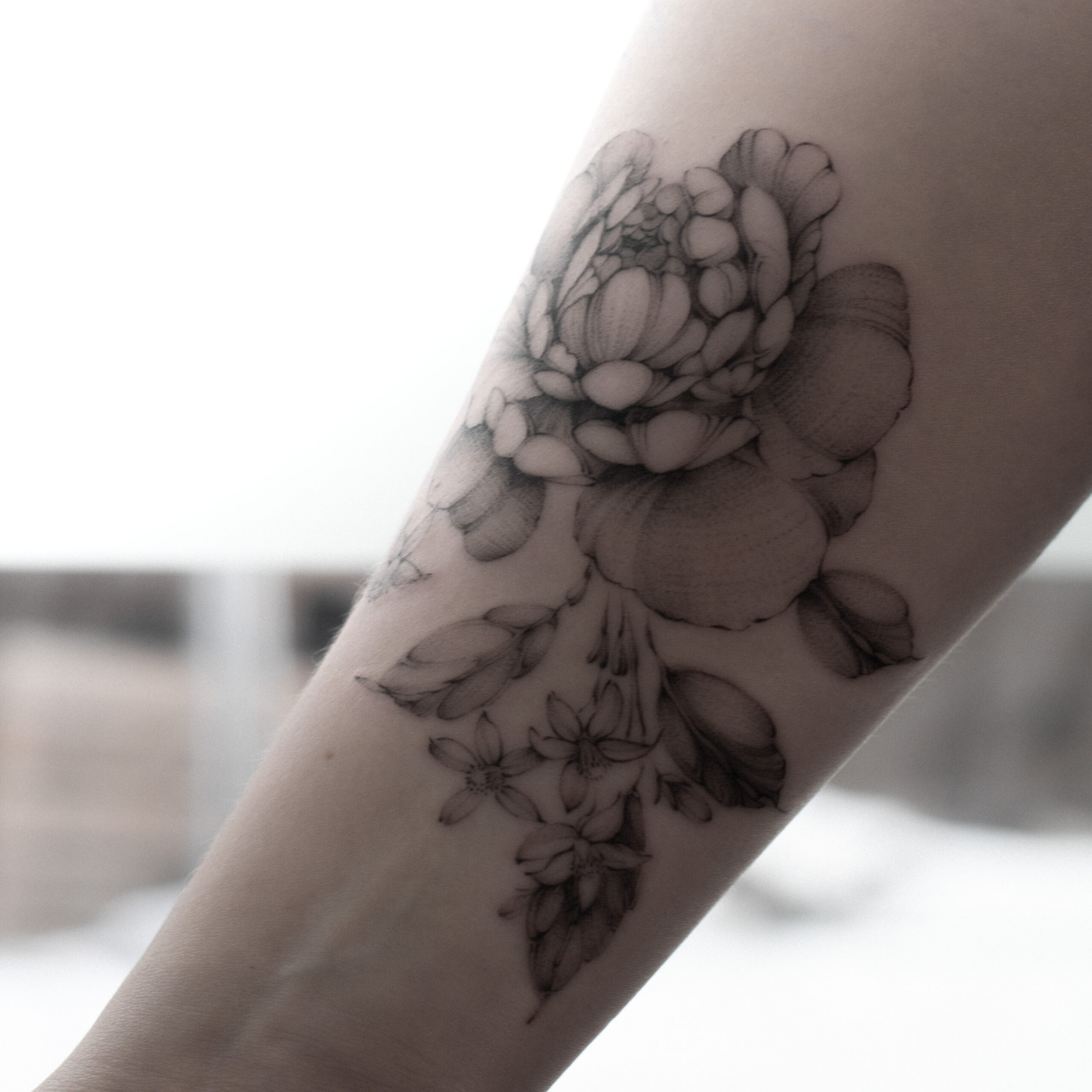
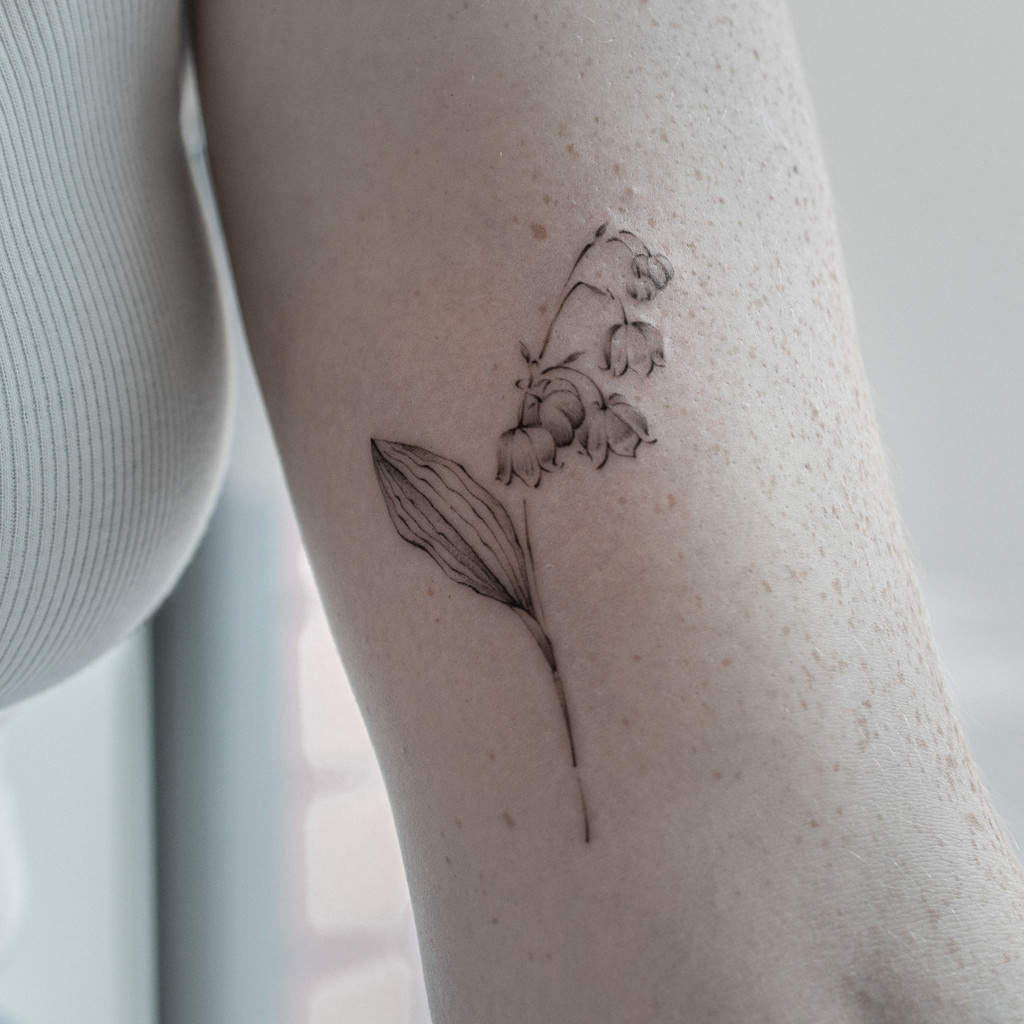
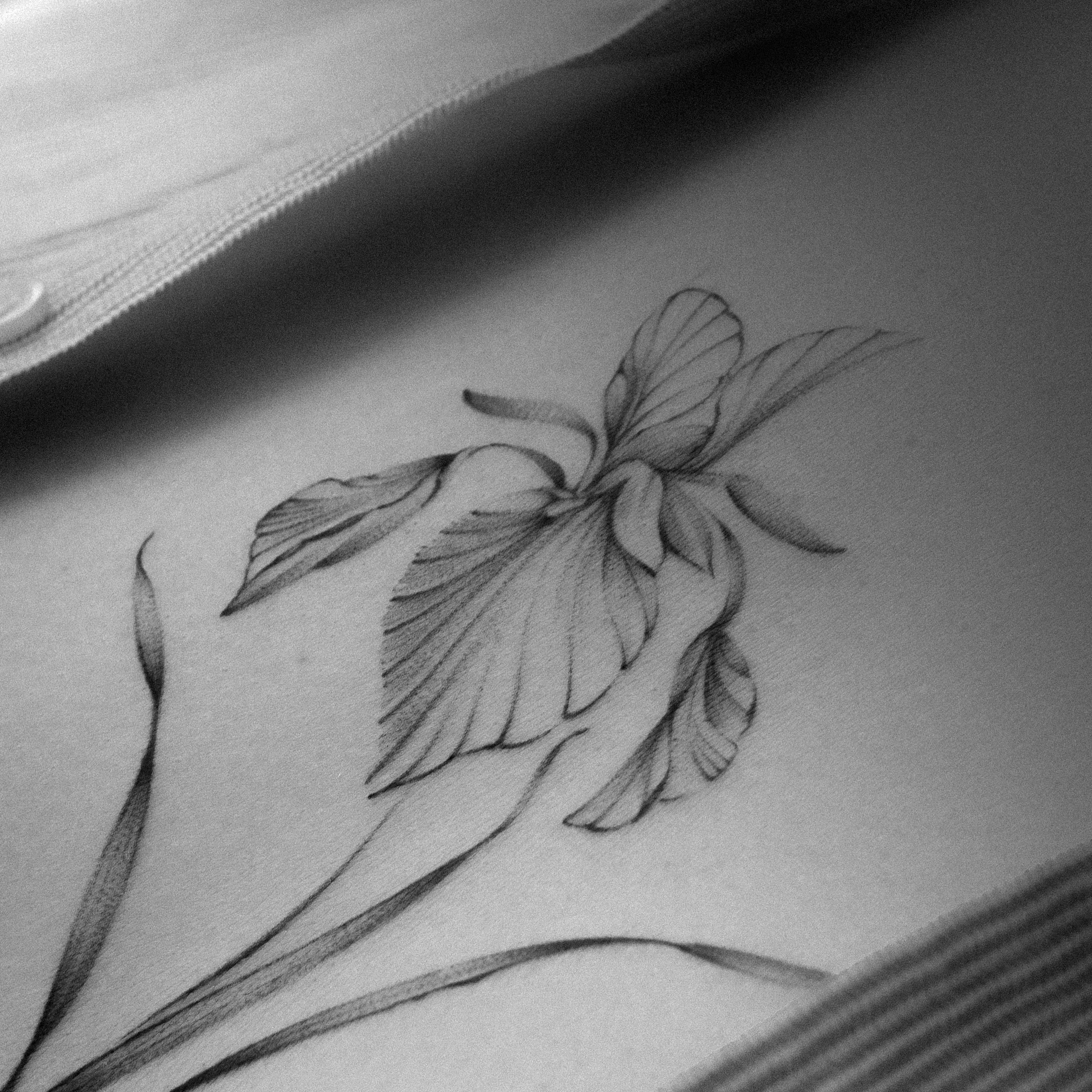
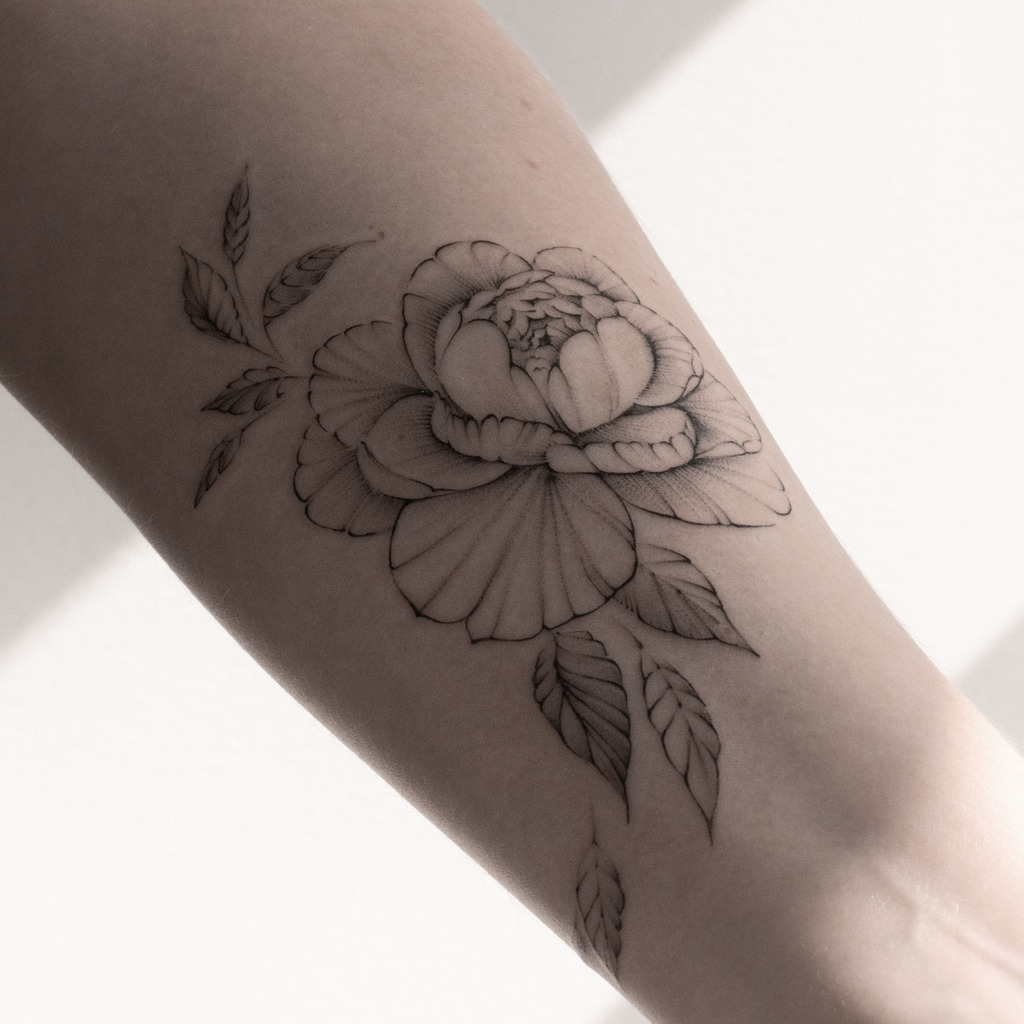
Creating a botanical tattoo begins with observation. A flower is not simply a collection of petals. It has rhythm, movement, structure, and character. Every plant has its own unique shape: the curve of a leaf, the direction of a stem, the relationship between different elements.
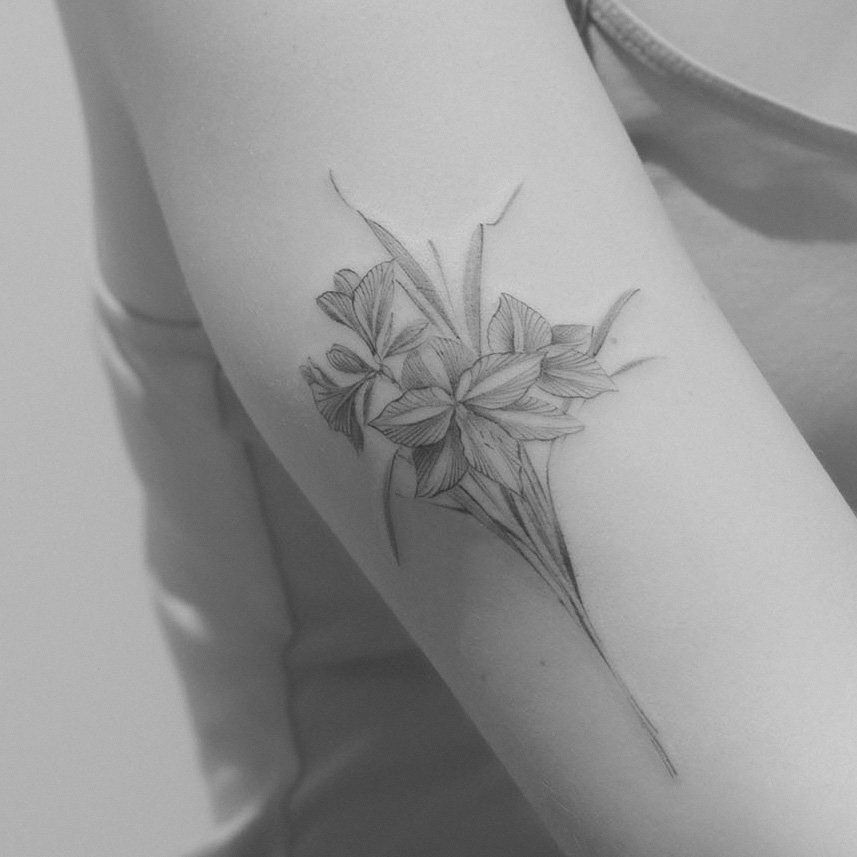
This is one of the reasons botanical tattooing works so beautifully with fine line techniques. Fine line allows the artist to focus on these subtle details without overwhelming the natural form of the subject.
The goal is not always to copy nature exactly. Instead, it is about understanding the essence of the plant and translating it into a composition that works on the human body.
In many ways, botanical tattooing shares similarities with botanical illustration, where patience and precision are essential. The same principles of balance and harmony appear in both disciplines.
For those who appreciate this aesthetic beyond tattooing, you can also explore Vadelma Prints, where Natalie Vadelma creates original artworks and museum-quality fine art prints inspired by artistic observation and natural forms:
.
Why Botanical Tattoos Age Beautifully as a Style
Trends in tattooing come and go. Certain styles become popular for a few years and later become strongly connected with a specific period of time. Botanical tattoos often feel different because their foundation is not based on a trend. Their strength comes from timeless visual elements: natural shapes, organic movement, and classical artistic principles.
A carefully designed botanical tattoo does not need to rely on excessive decoration. The beauty comes from the subject itself.
This is similar to architecture and design. Some buildings remain inspiring decades or even centuries after they were created because they are based on proportion, balance, and thoughtful decisions rather than temporary fashion.
The same idea applies to tattoos. A design created with intention can continue to feel personal many years after the day it was made.
.
The Influence of Botanical Illustration and Dutch Art
The Netherlands has a particularly rich connection with botanical art.
During the Dutch Golden Age, artists and scientists developed a fascination with studying and documenting the natural world. Botanical illustrations became important not only for scientific purposes but also as works of art.
The Dutch tradition of careful observation can still be seen today in museums, gardens, architecture, and design. Places such as Amsterdam’s botanical gardens and historical collections continue to reflect this appreciation for nature and detail.
This connection between art, science, and nature feels especially relevant in Amsterdam, a city where creativity has always been influenced by observation and curiosity.
For visitors interested in the artistic side of the city, you may also enjoy our articles about WHY DUTCH DESIGN FEELS SO TIMELESS and WHY AMSTERDAM INSPIRED SO MANY ARTISTS
.
Botanical Tattoos as Personal Stories
One of the most beautiful aspects of botanical tattoos is that the meaning does not always have to be obvious to everyone else.
A flower does not need a universal definition to become meaningful. Sometimes the importance comes from a personal memory: a plant from someone’s childhood garden, a flower connected with a loved one, a symbol of a new beginning, or simply a reminder of something important in life.
This is what makes botanical tattoos so personal. The same flower can represent completely different things for different people.
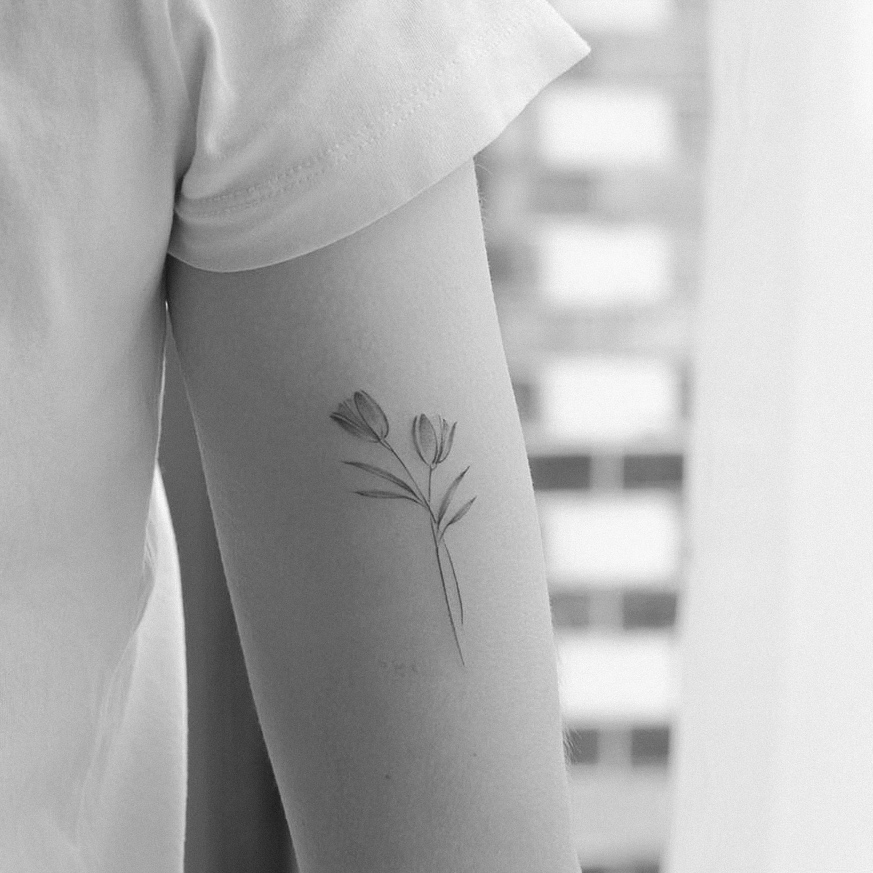
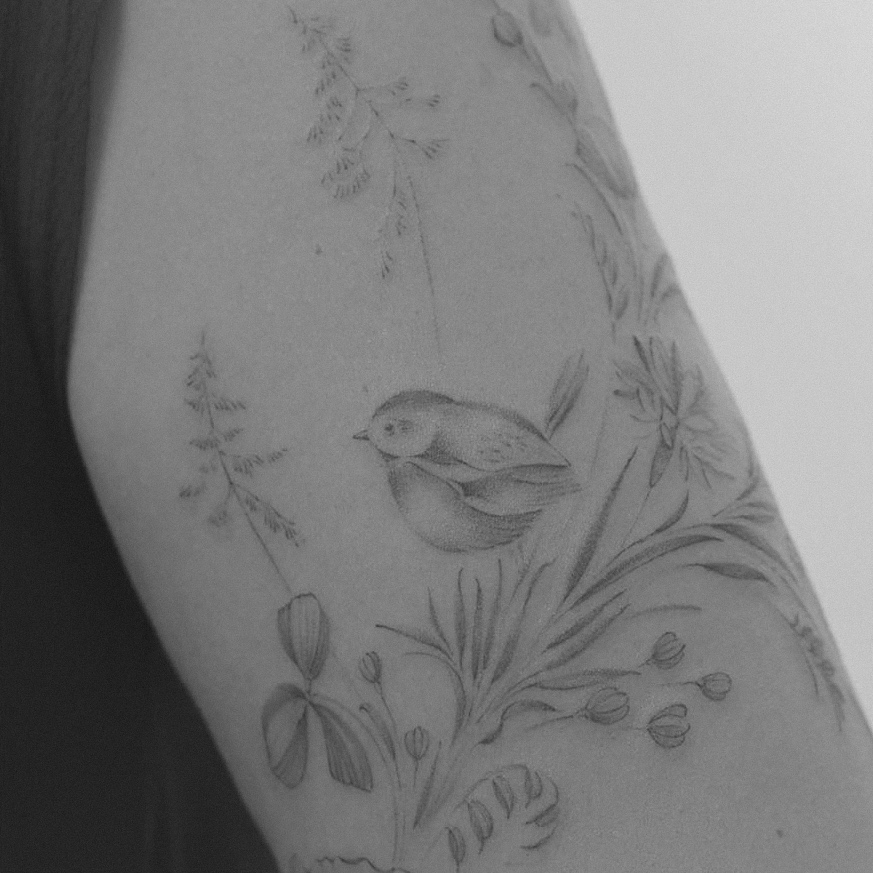
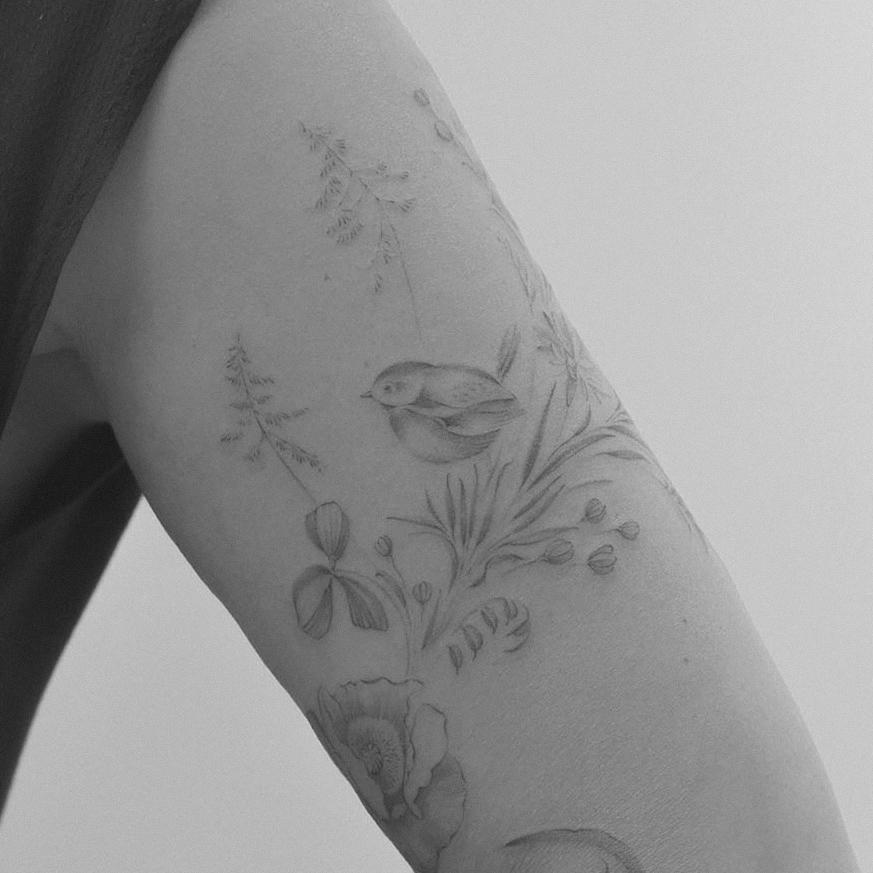
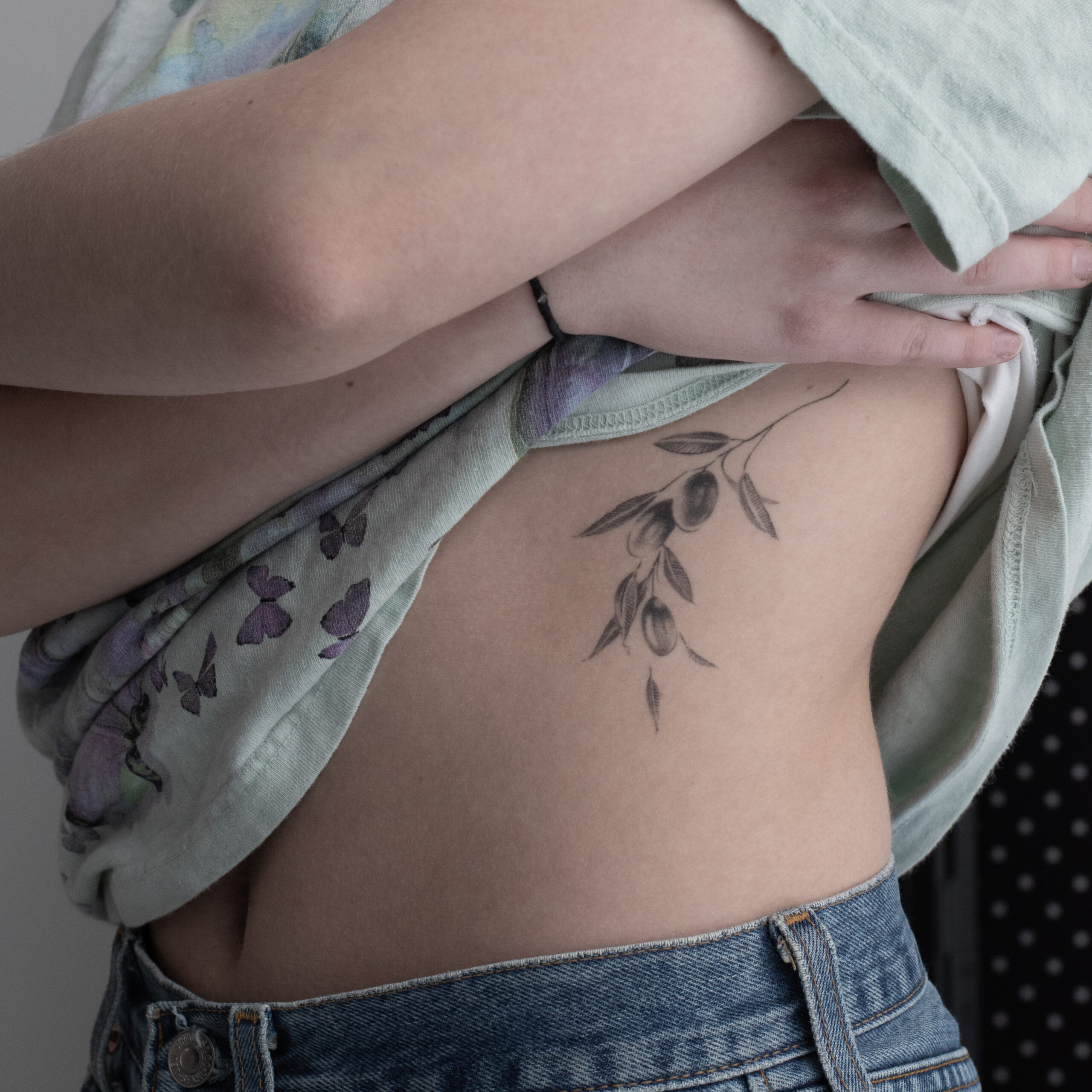
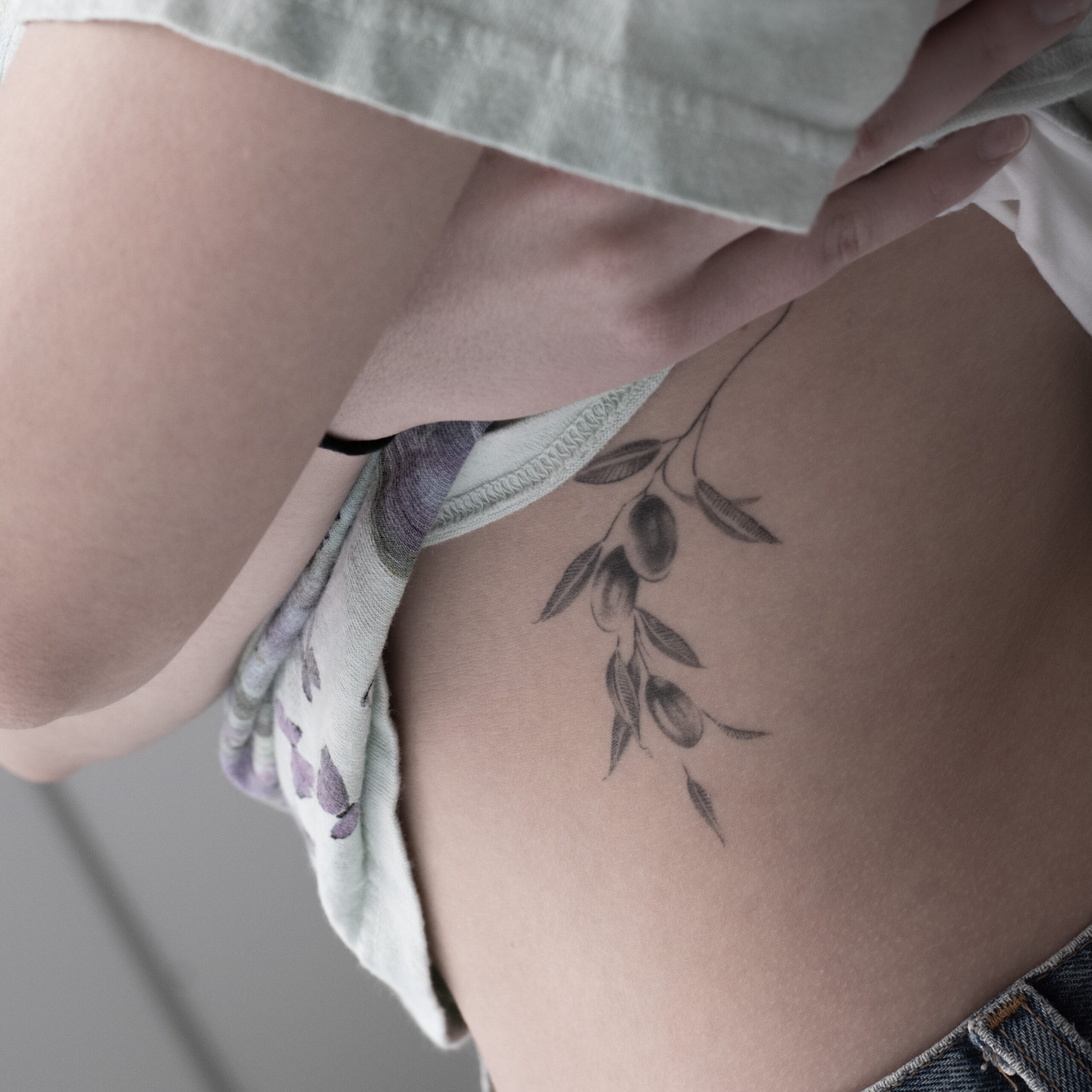
A small branch, a delicate stem, or a carefully designed botanical composition can carry memories without needing to explain itself. The tattoo becomes something private, something that belongs to the person wearing it.
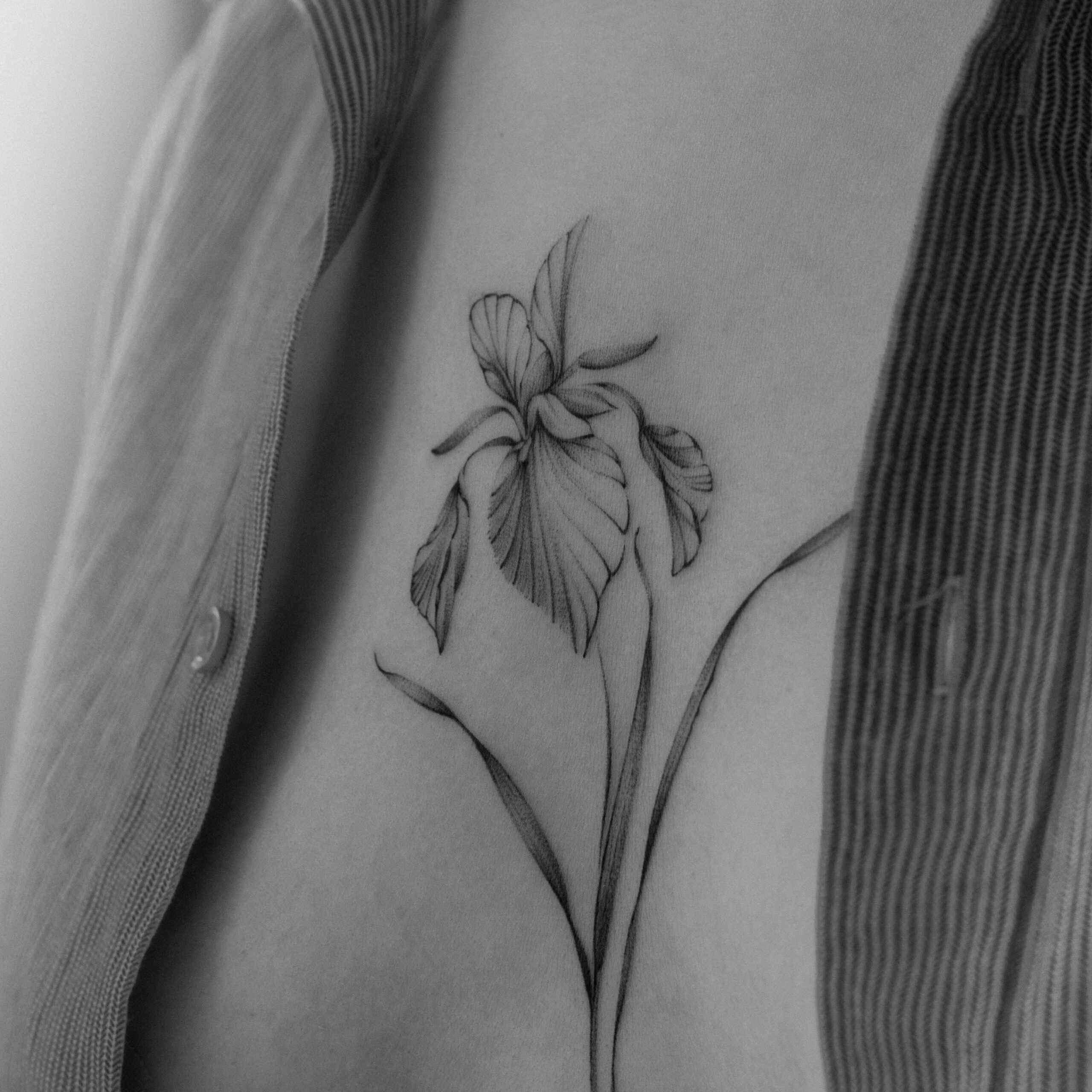
This is also why botanical designs work so naturally with fine line tattooing. Their meaning is often found in subtle details rather than bold statements.
.
Why Flowers Continue to Inspire People
Flowers have always had a special place in human culture because they represent something universal: change. A flower grows, transforms, blooms, and eventually changes again. This natural cycle has made flowers powerful symbols across many different cultures.
People often choose floral tattoos during important moments of transition. A tattoo can mark personal growth, a new chapter, a relationship, a memory, or a connection with someone or something that shaped their life.
However, botanical tattoos do not always need a deep symbolic explanation. Sometimes someone chooses a flower simply because they find its shape beautiful. Appreciating beauty is also a meaningful reason. Art does not always need to represent a specific story. Sometimes it exists simply because something speaks to us.
.
Fine Line Botanical Tattoos and the Importance of Balance
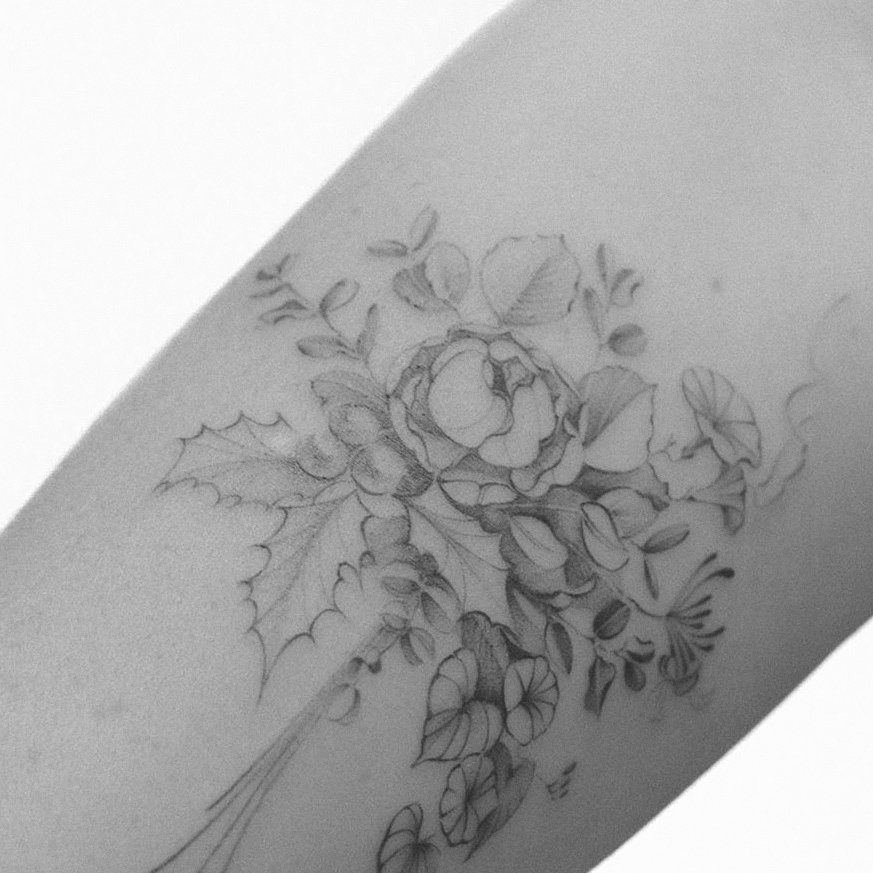
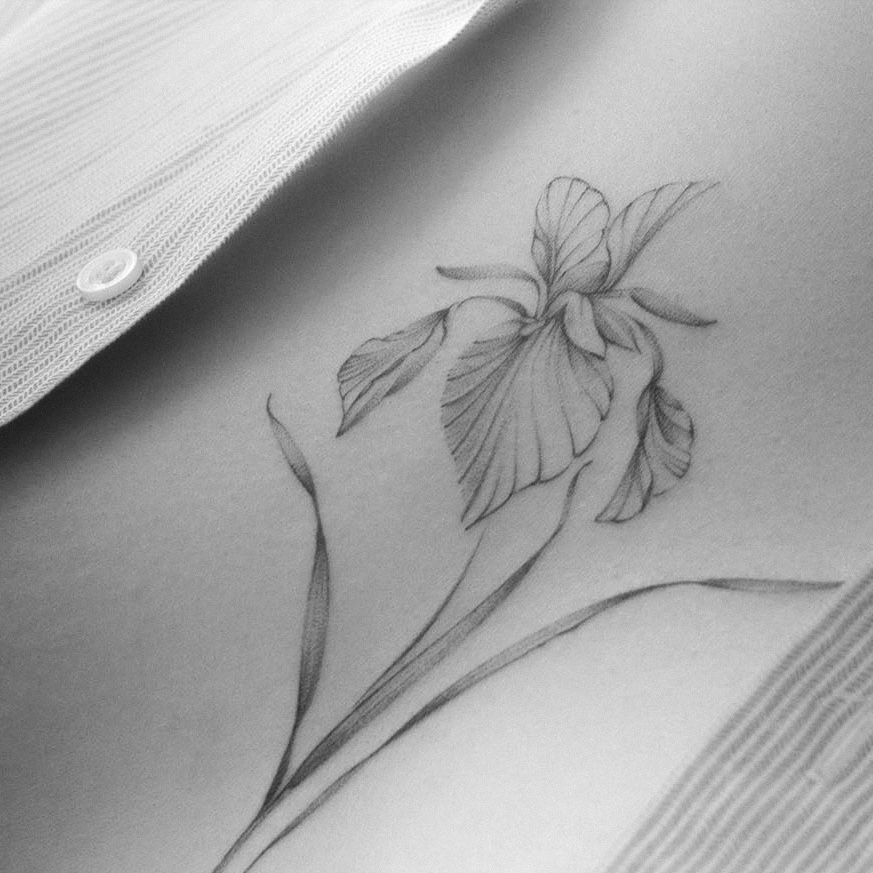
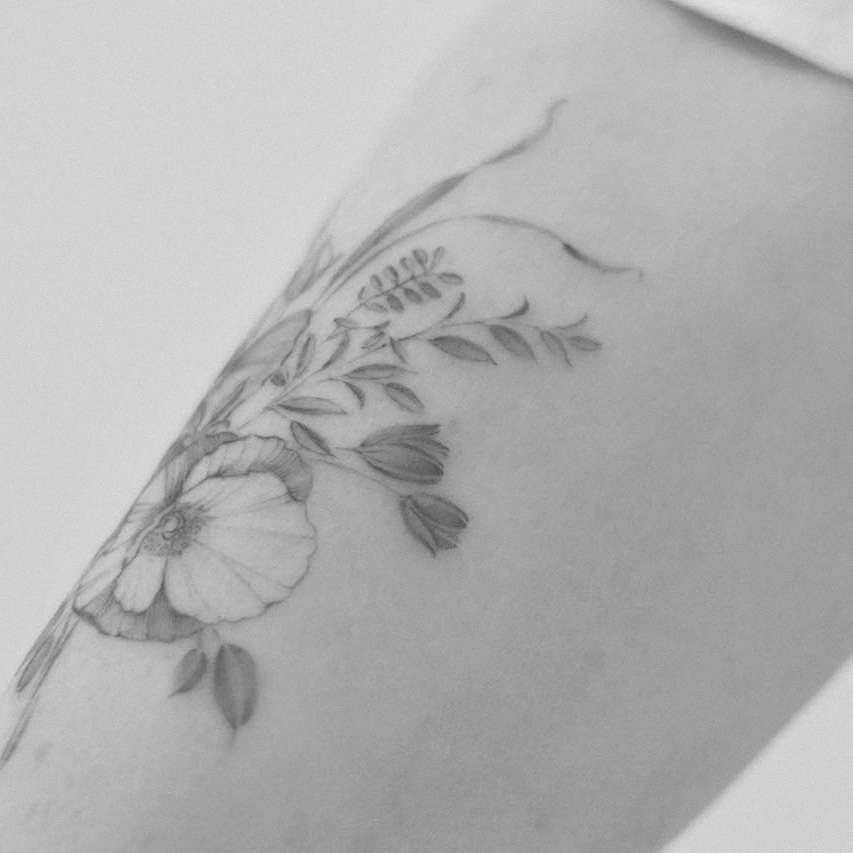
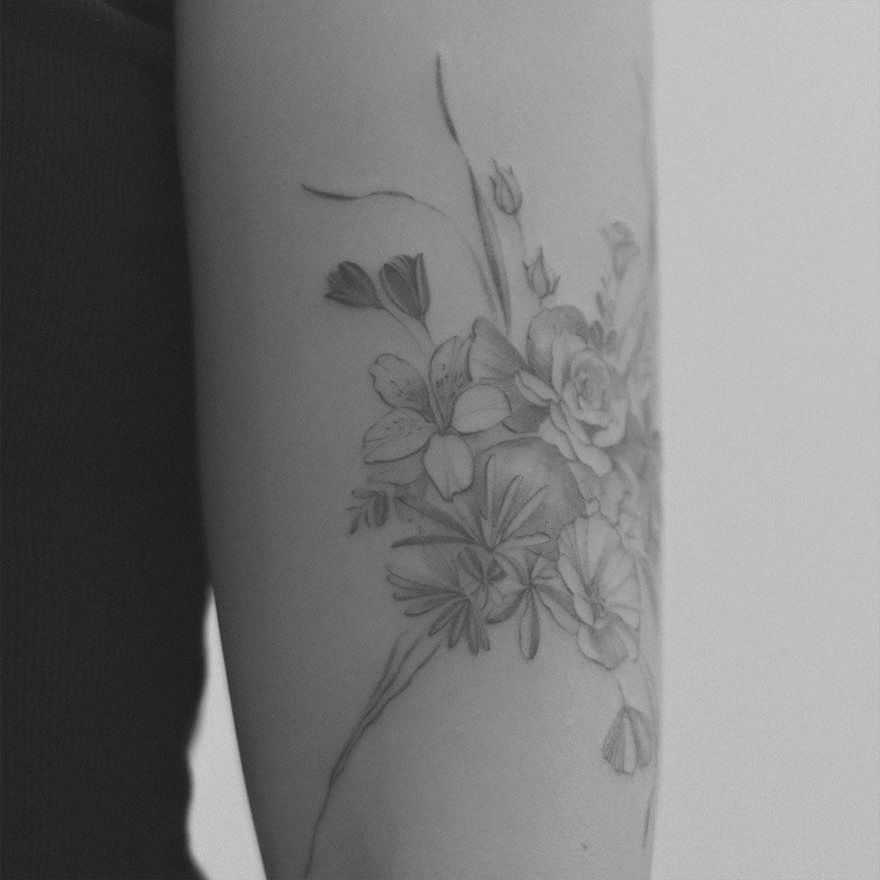
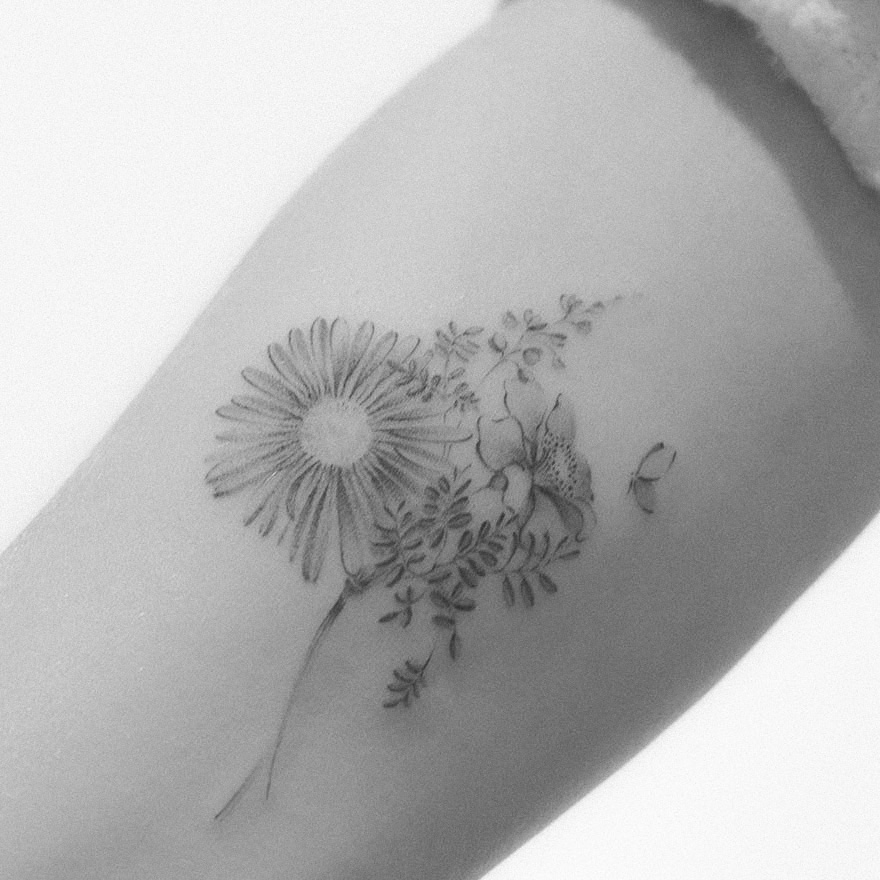
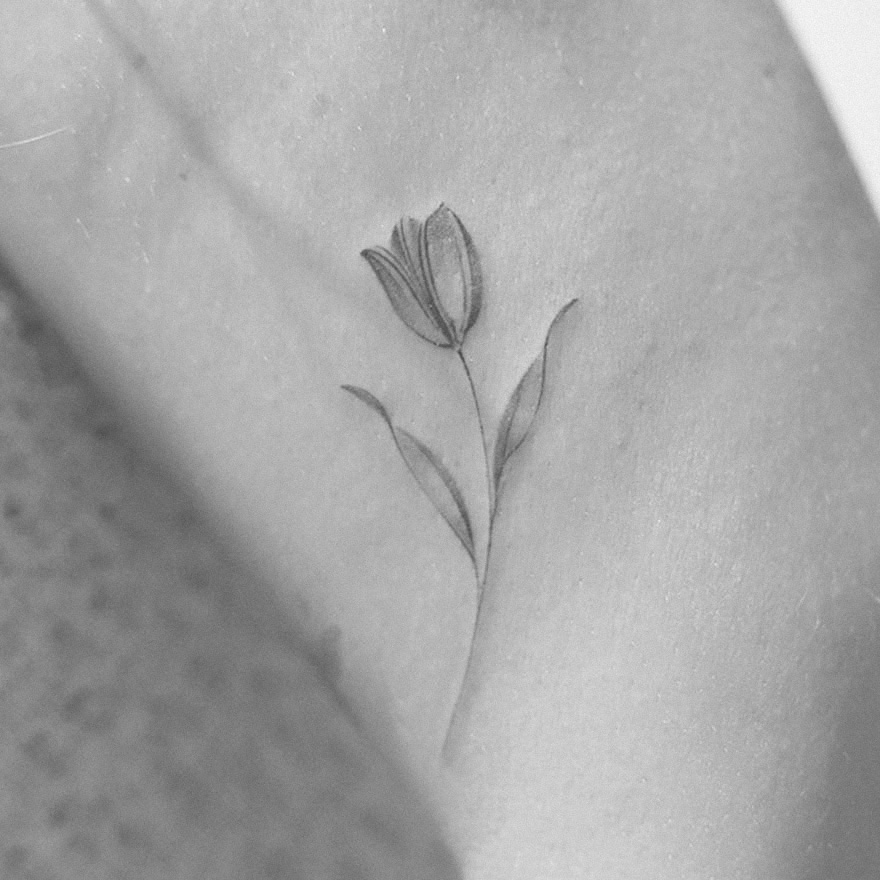
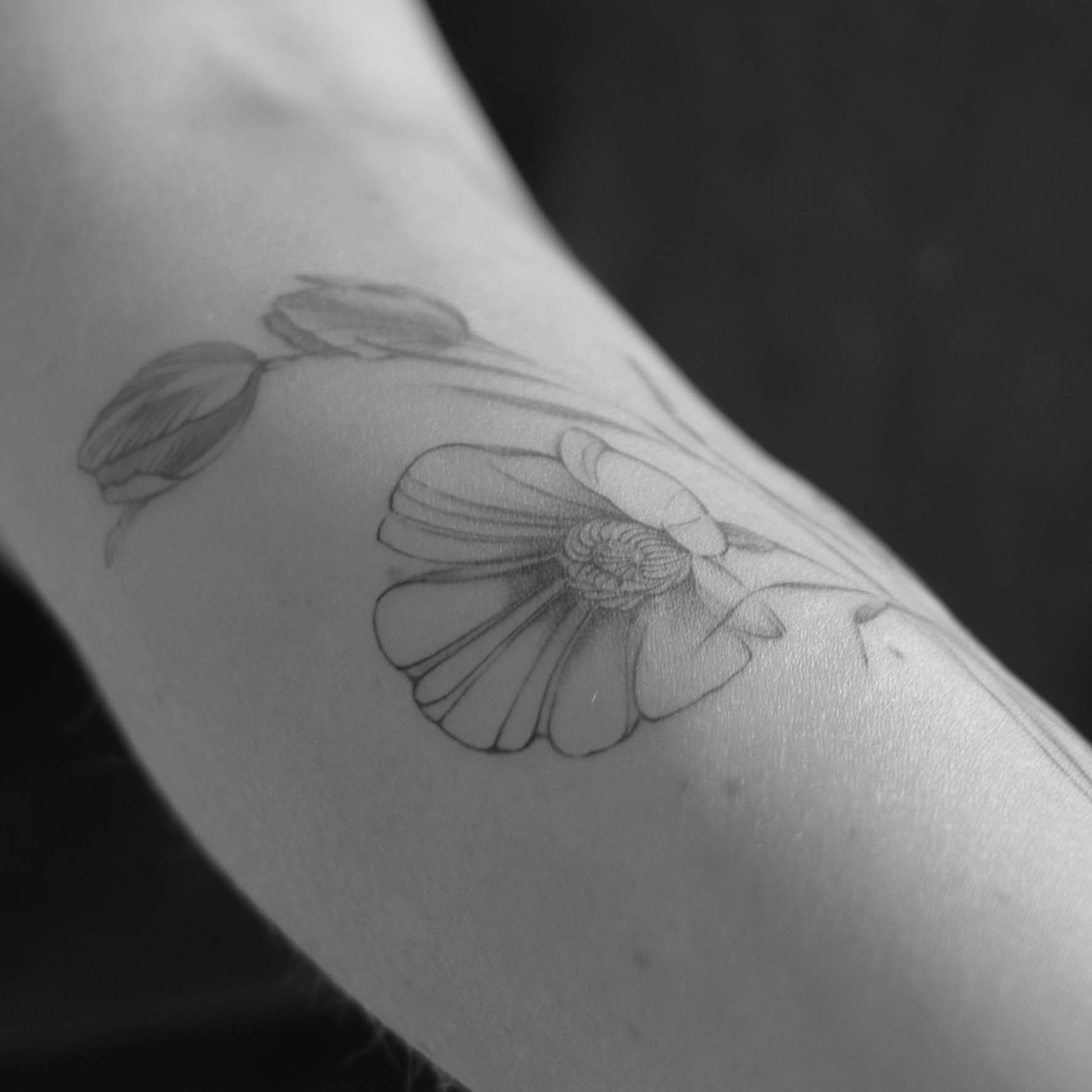
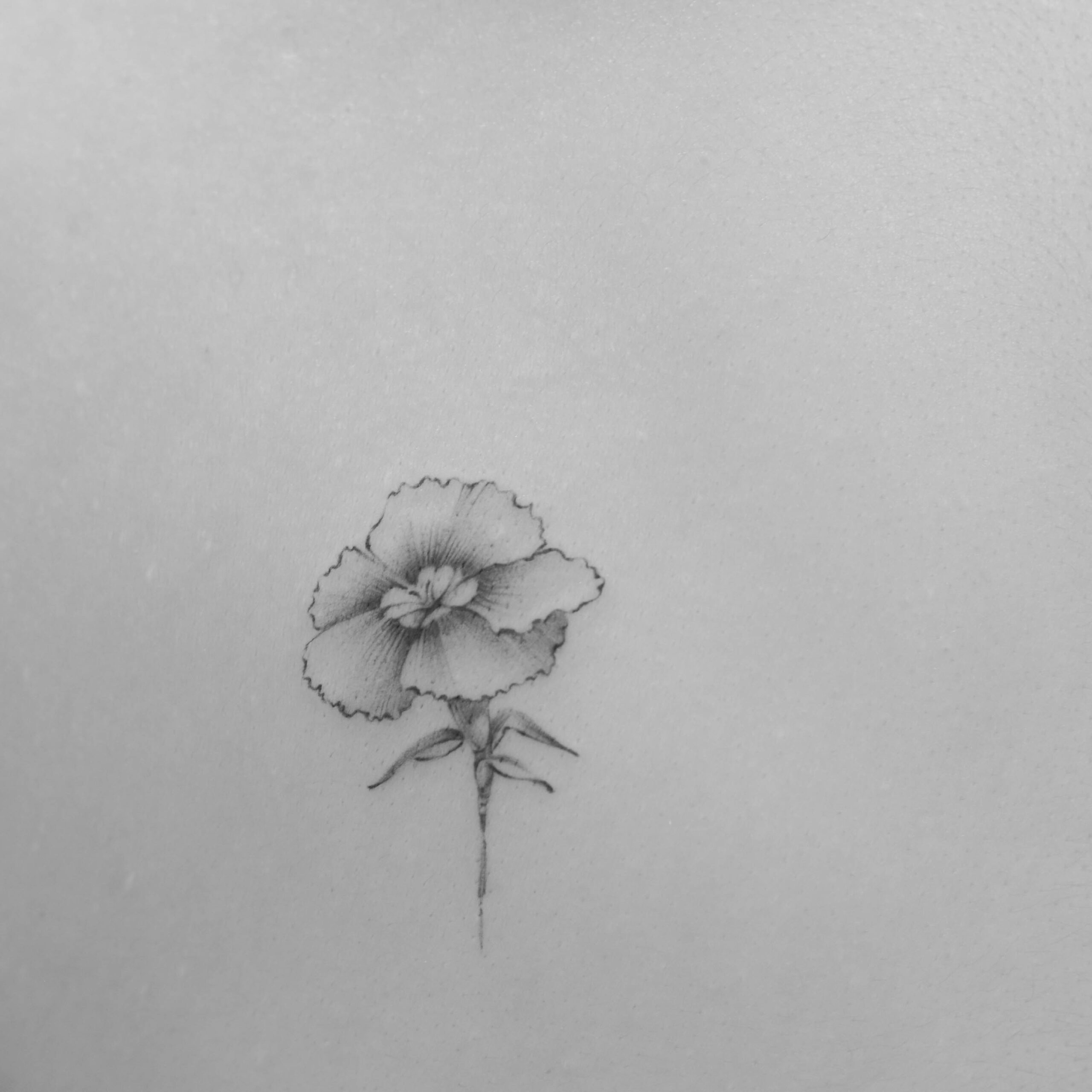
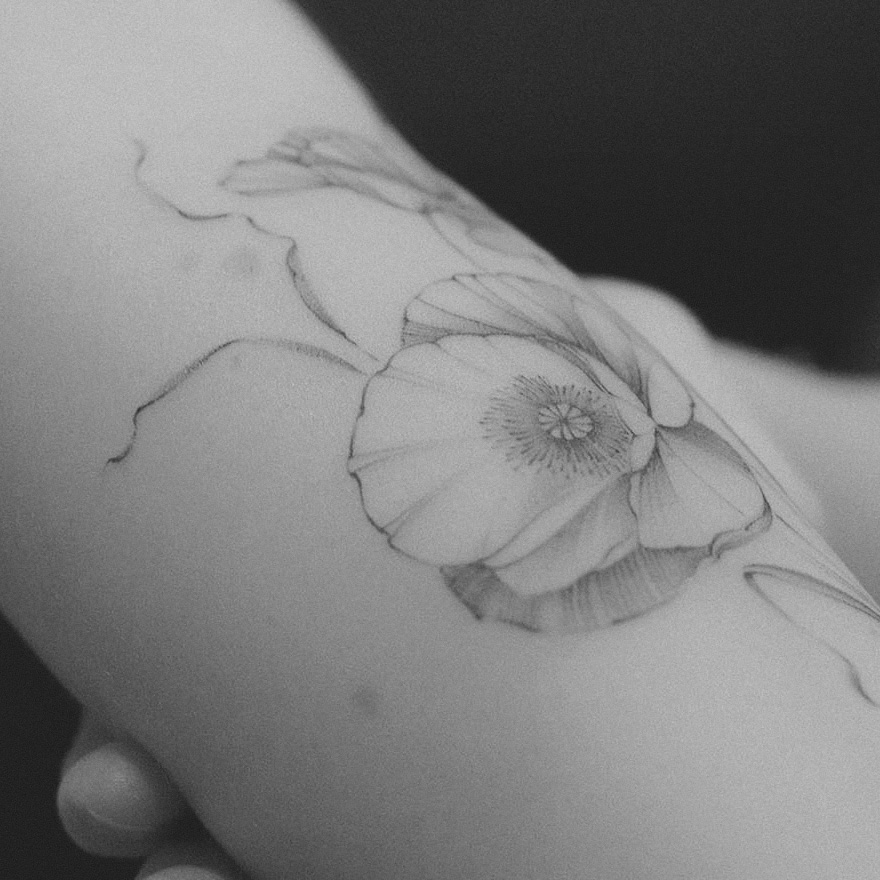
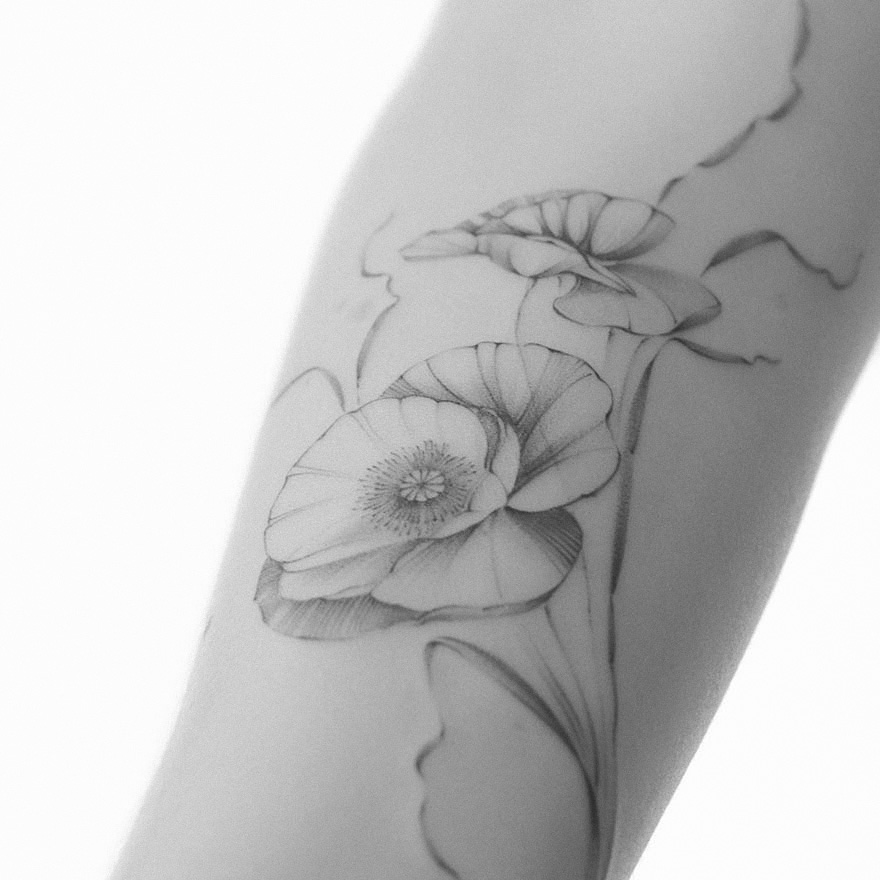
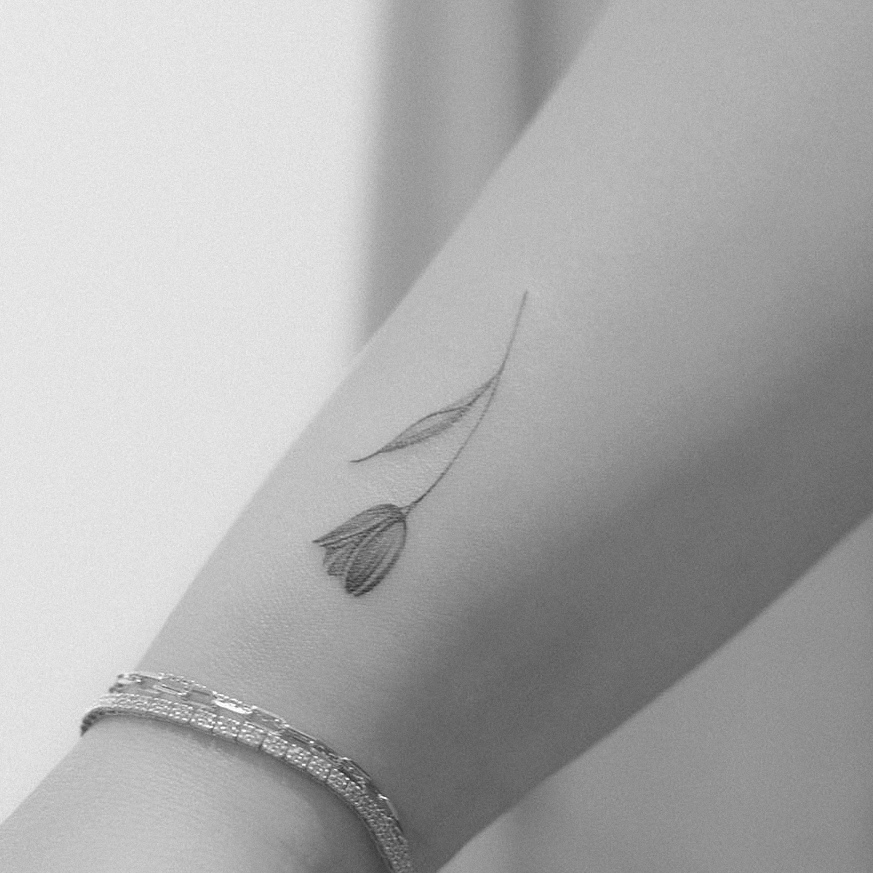
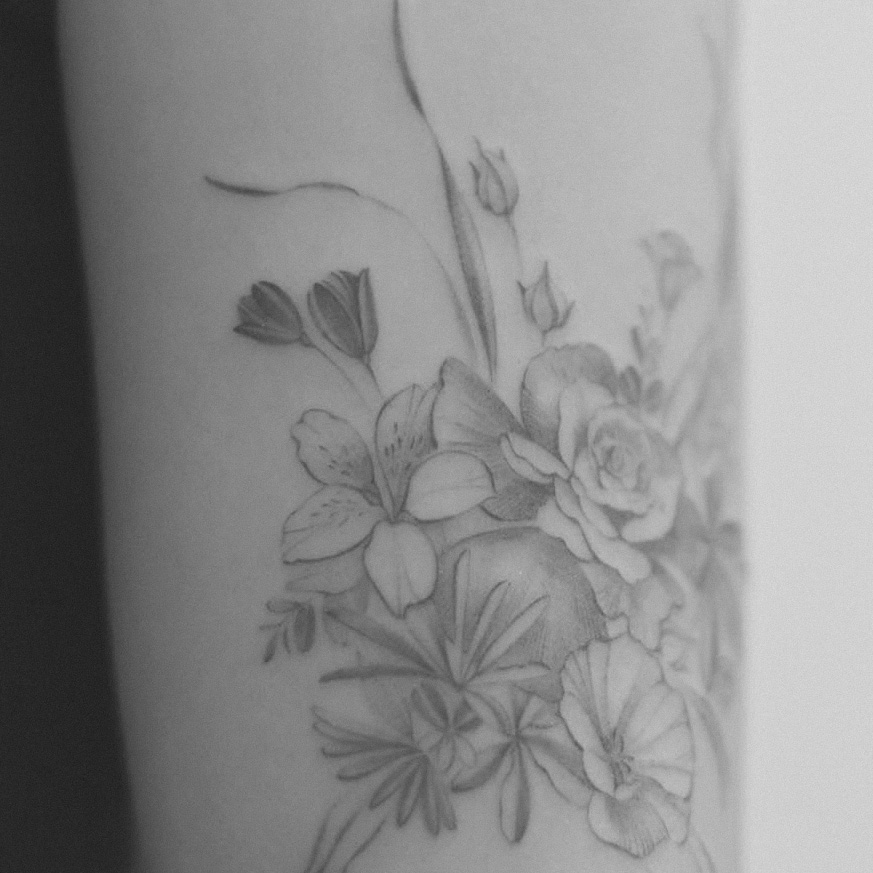
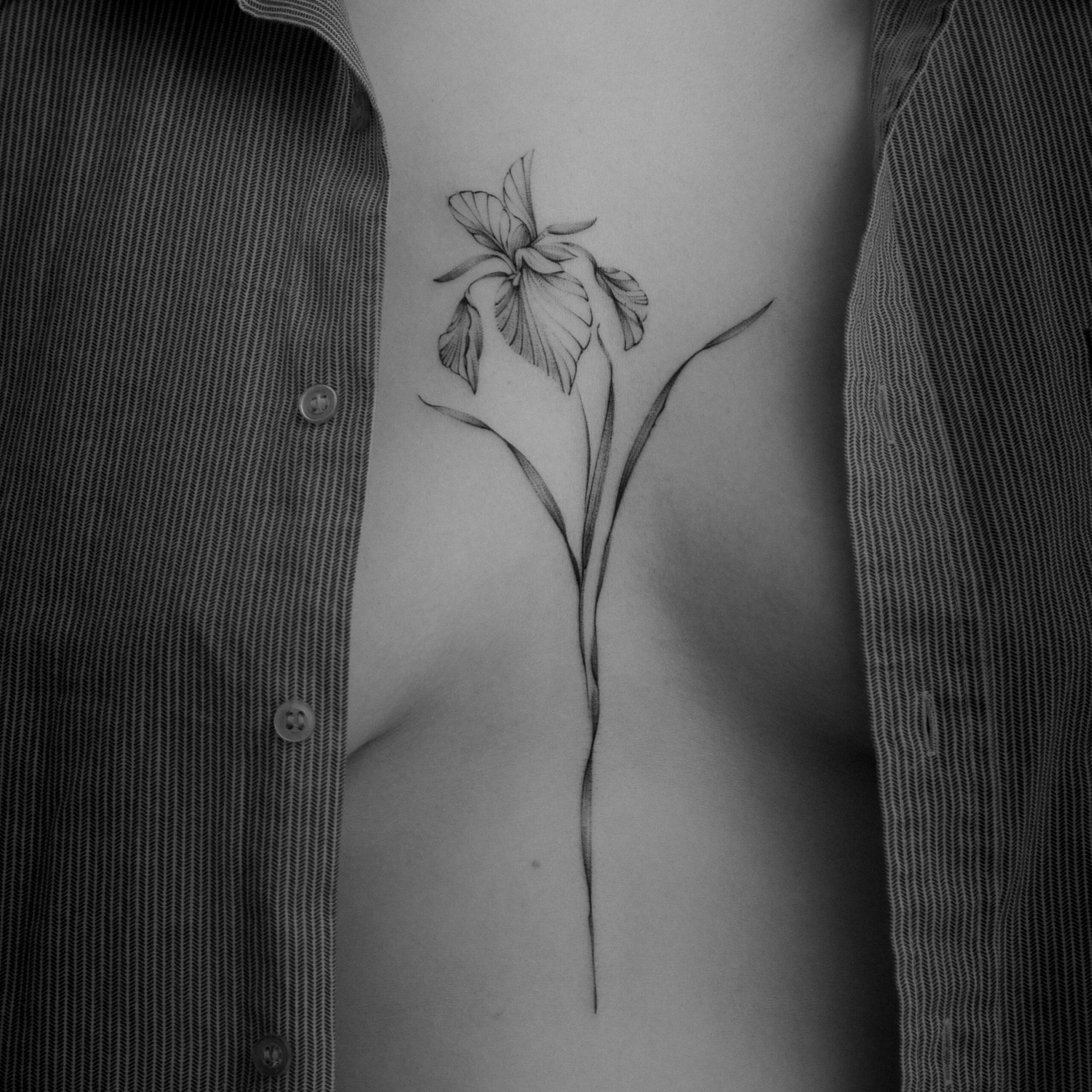
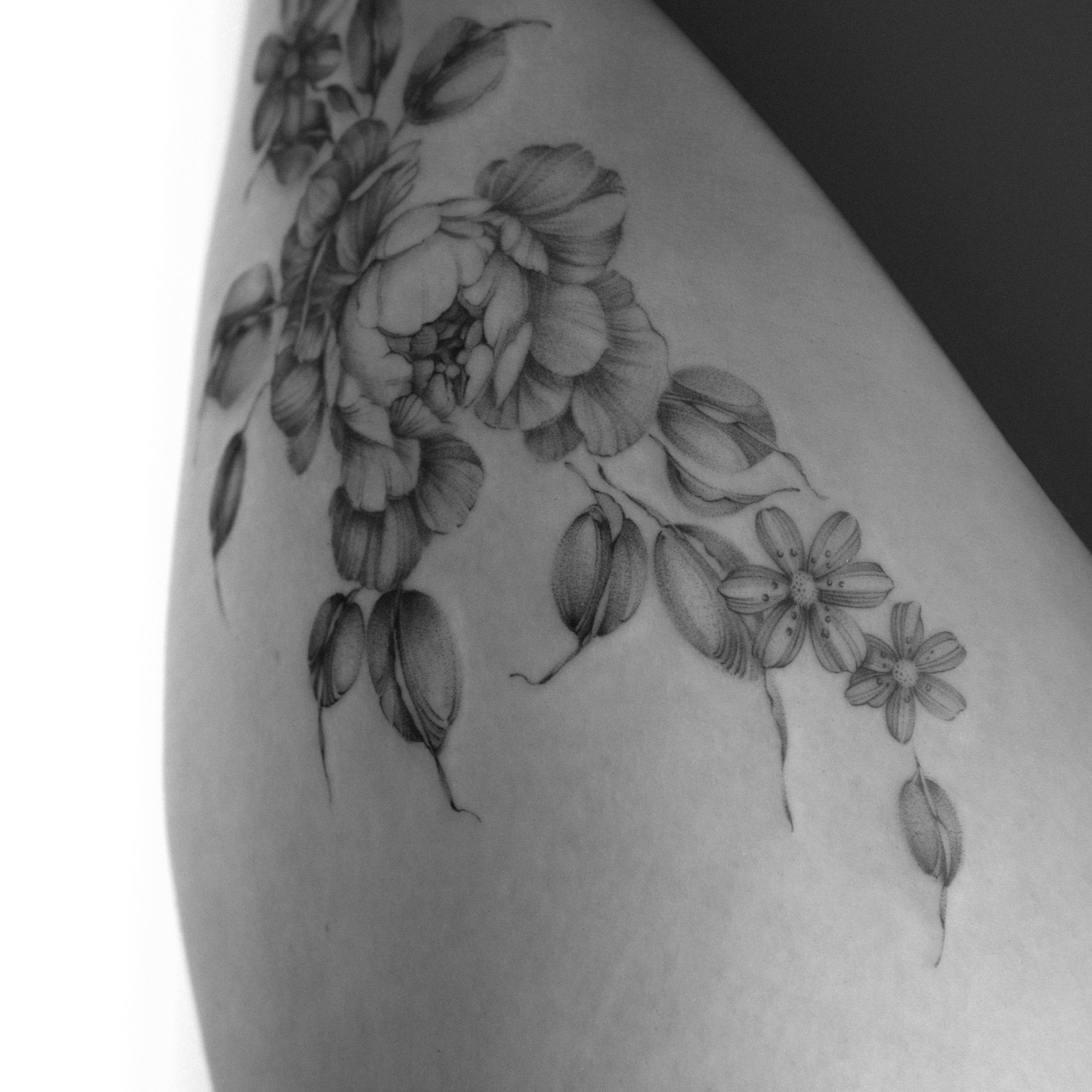
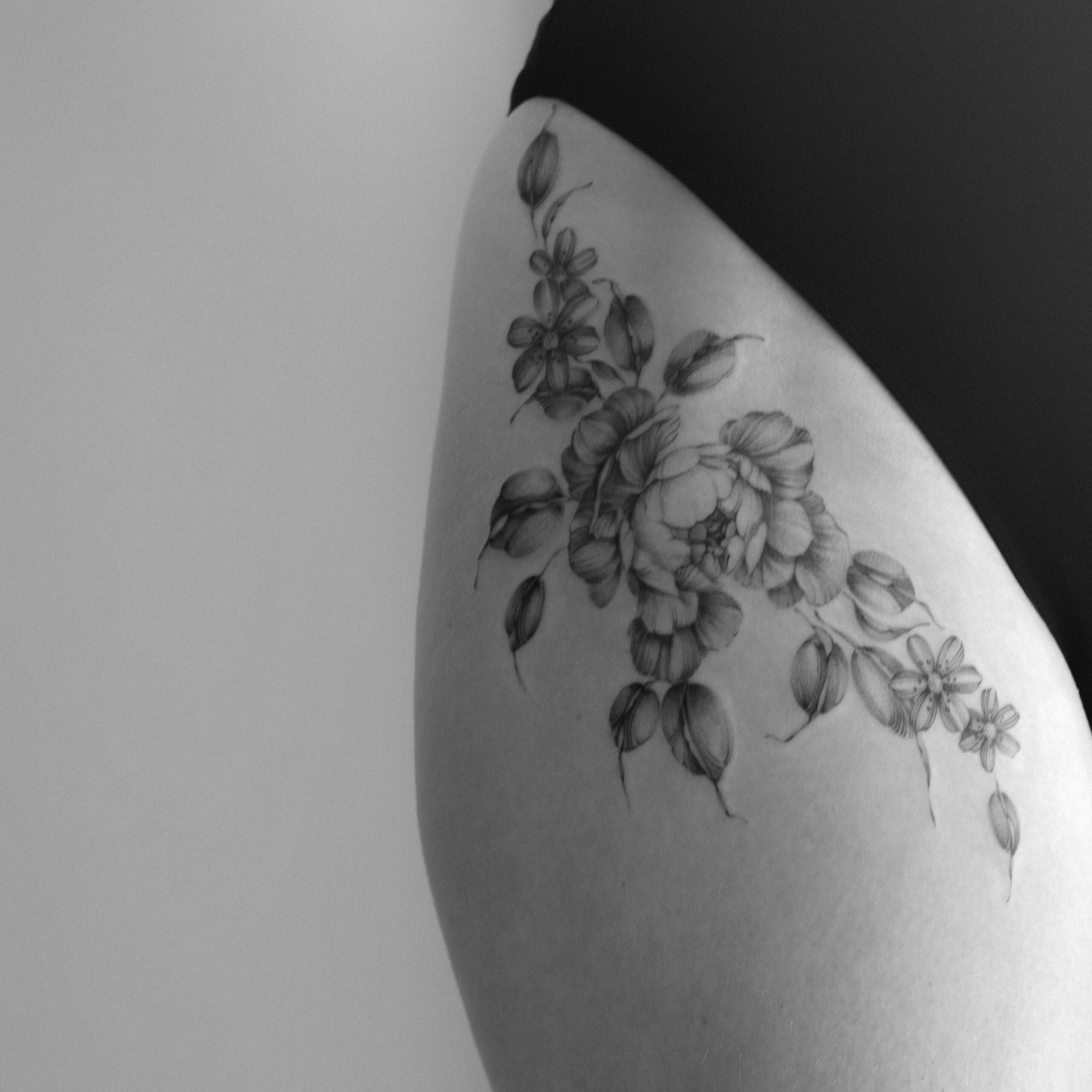
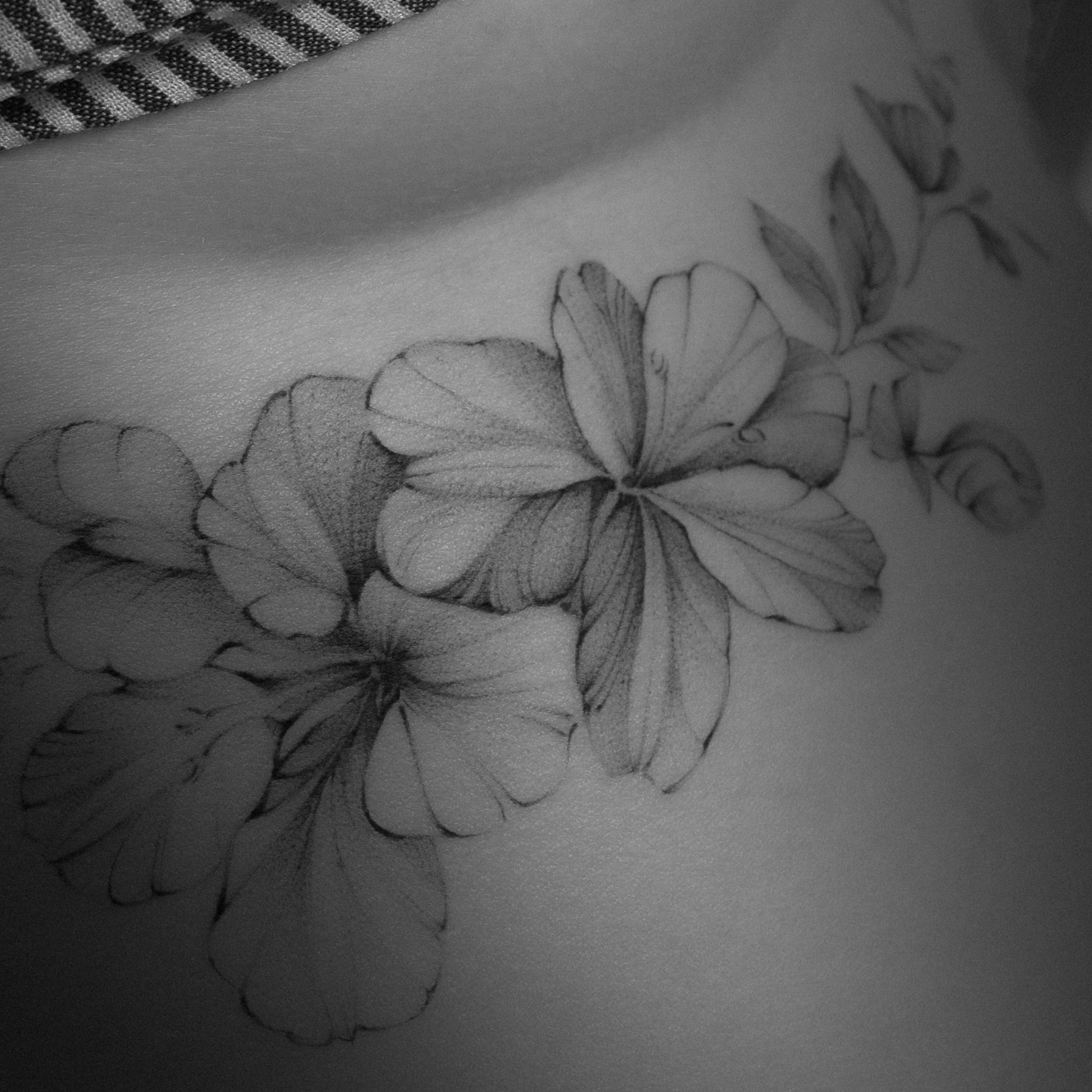
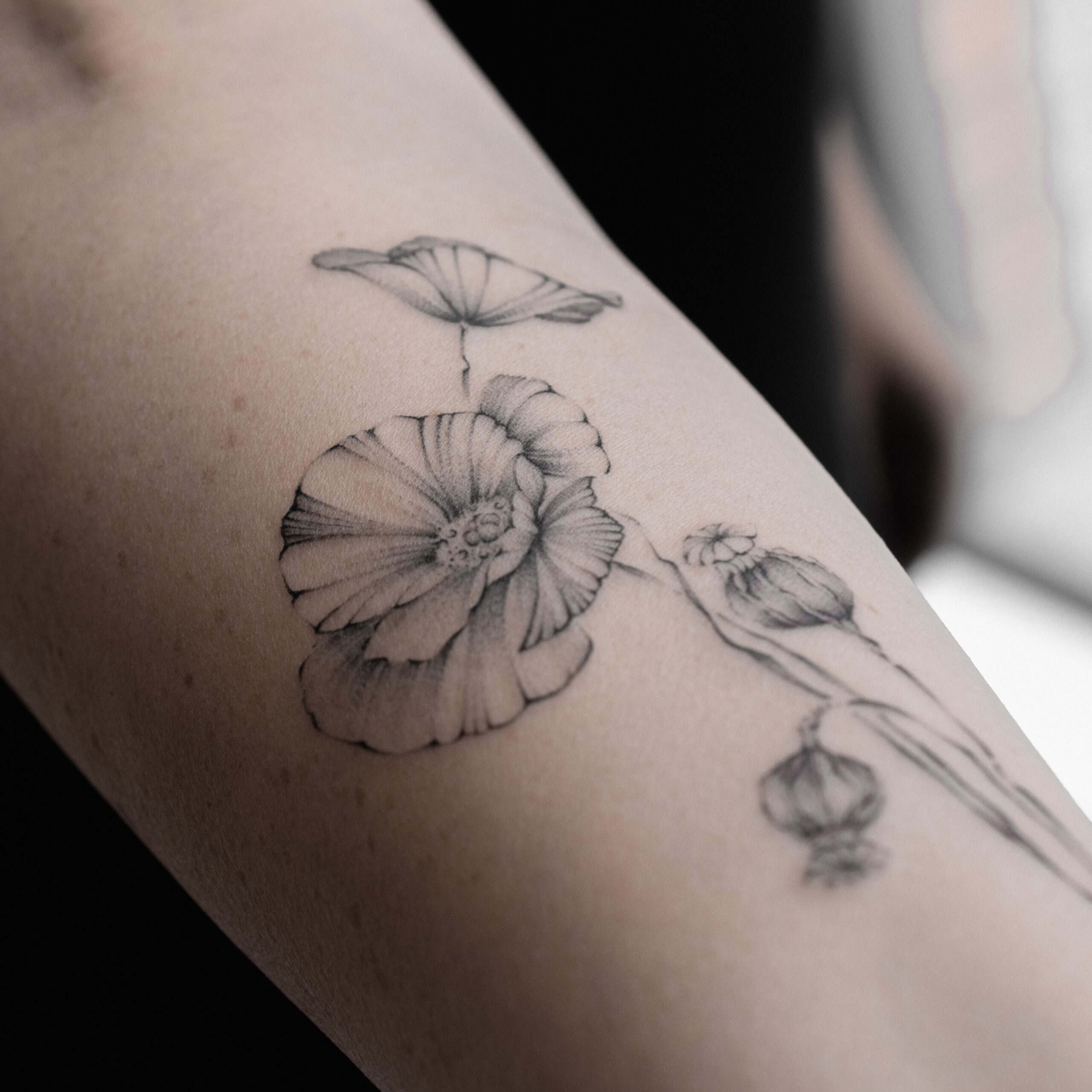
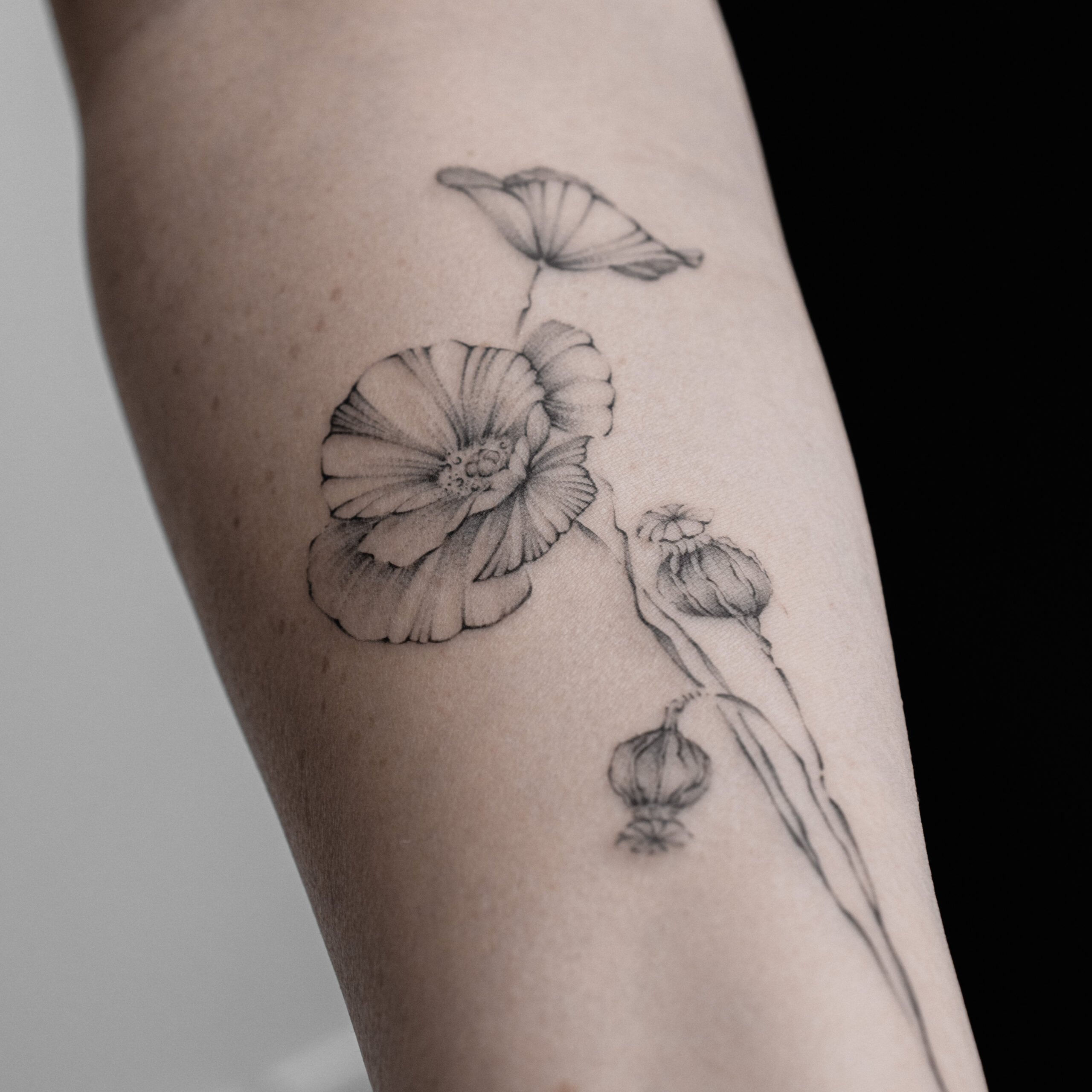
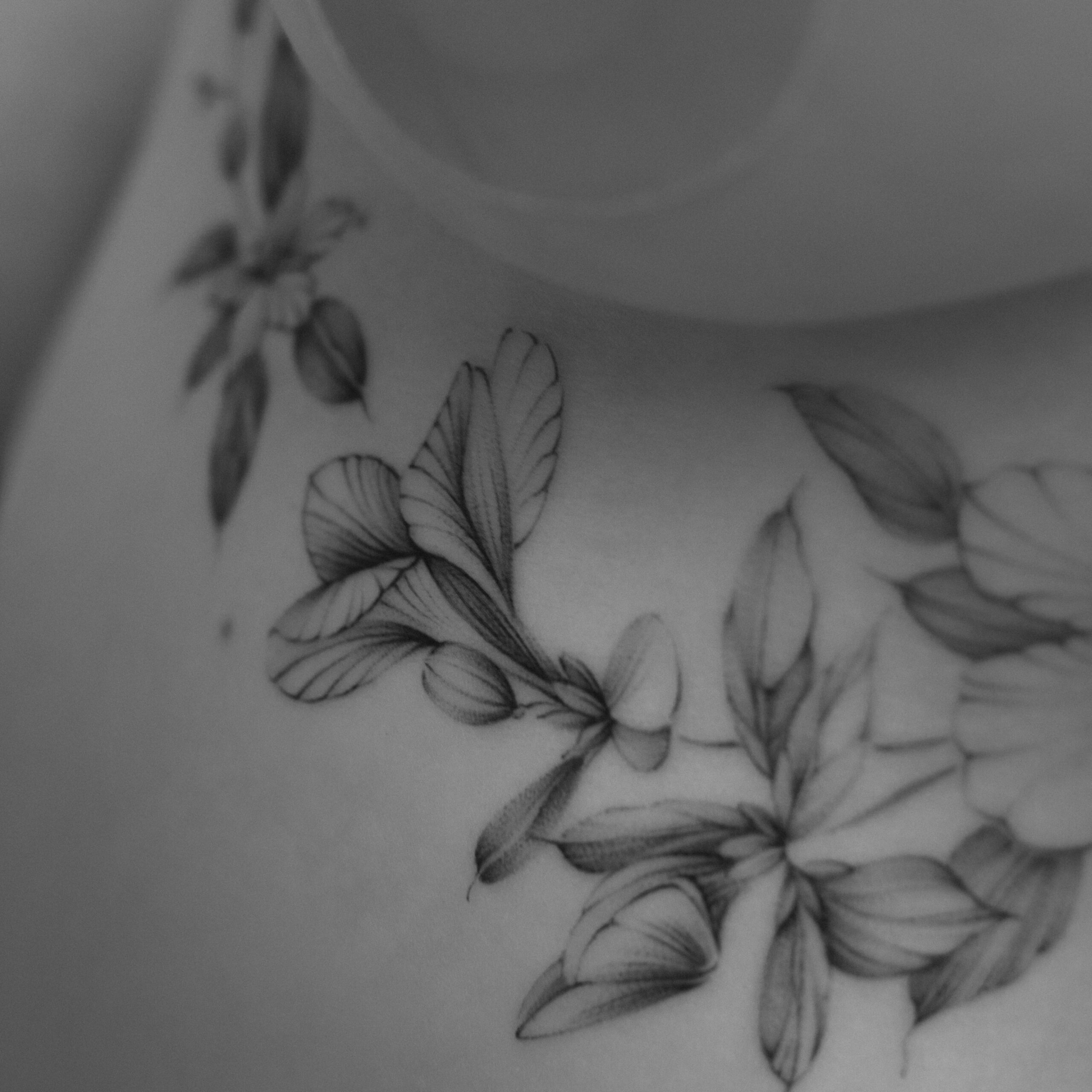
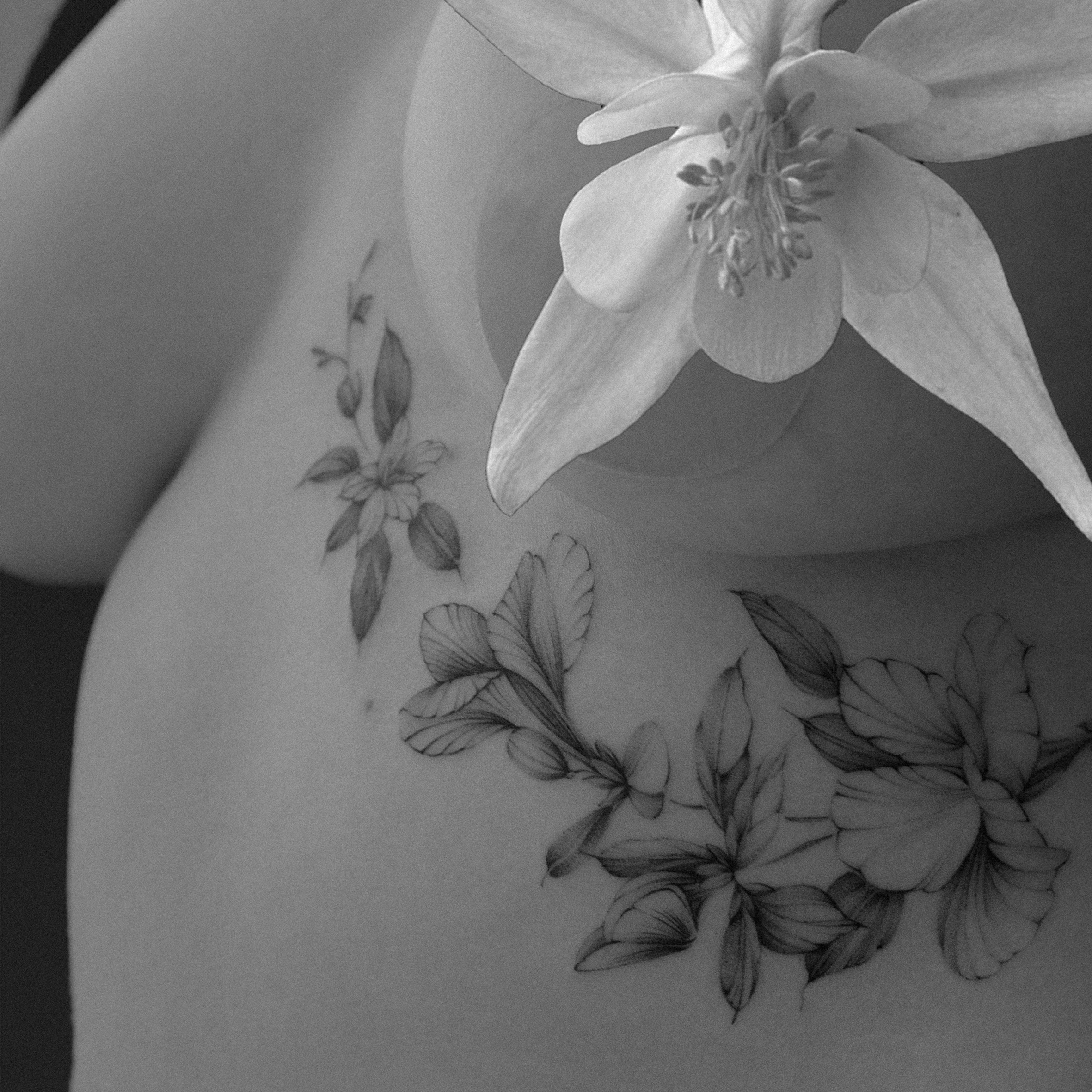
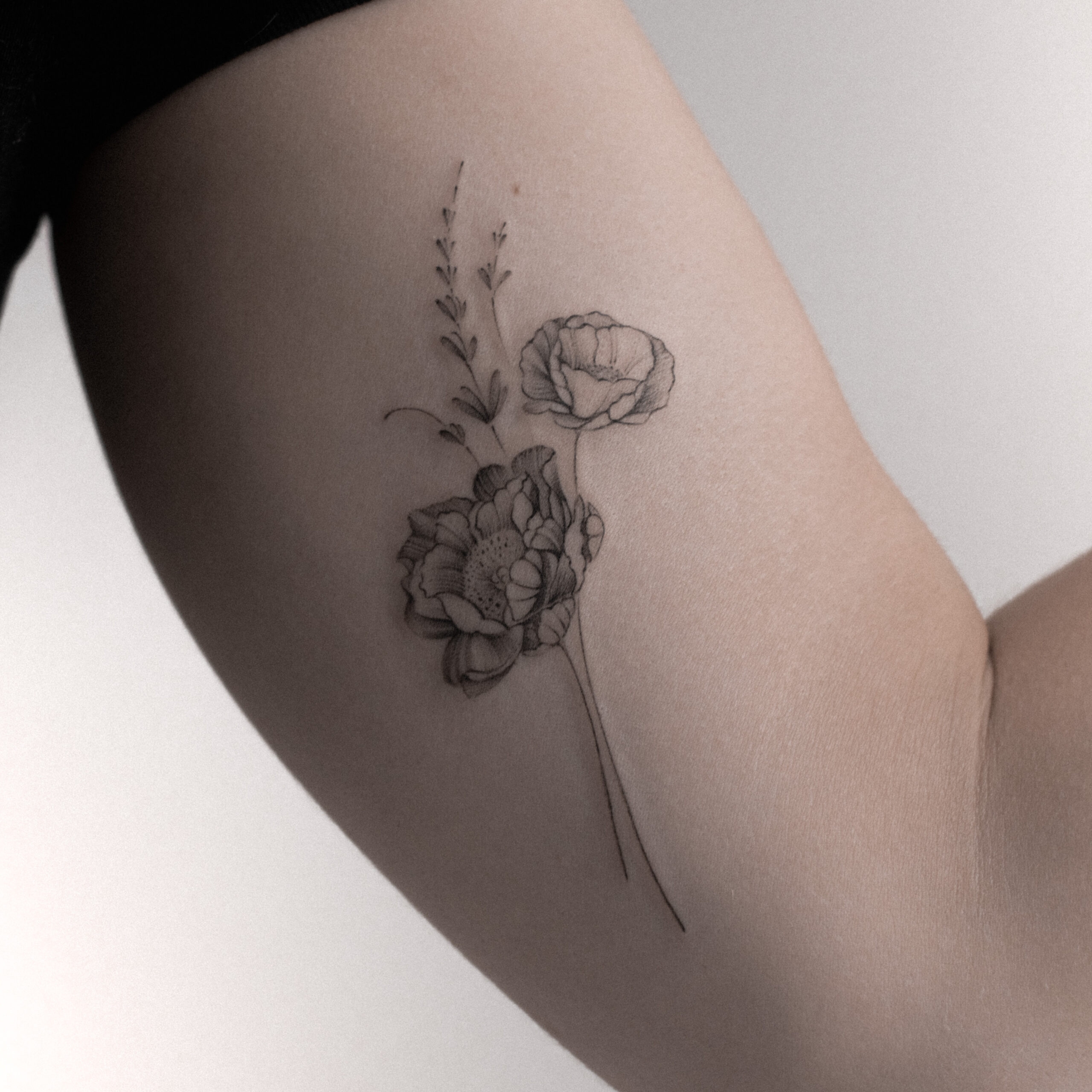
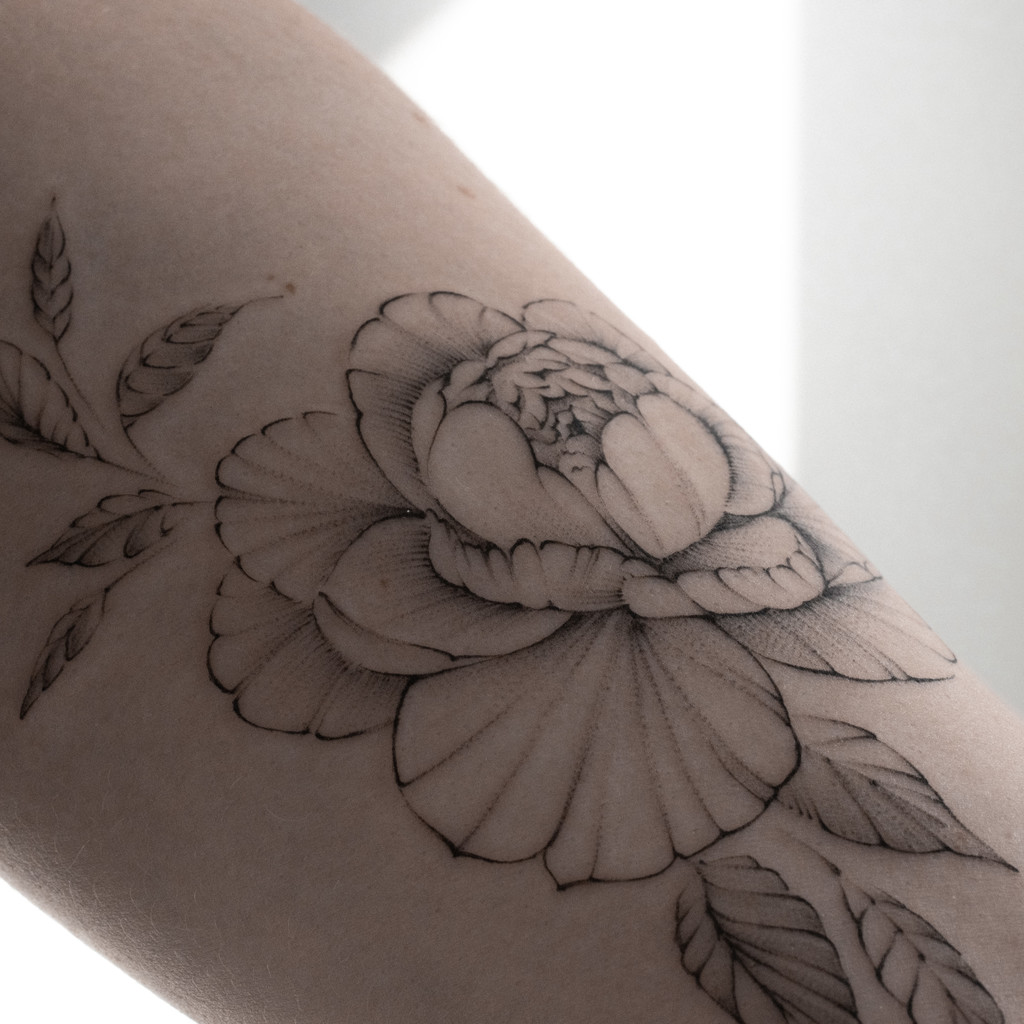
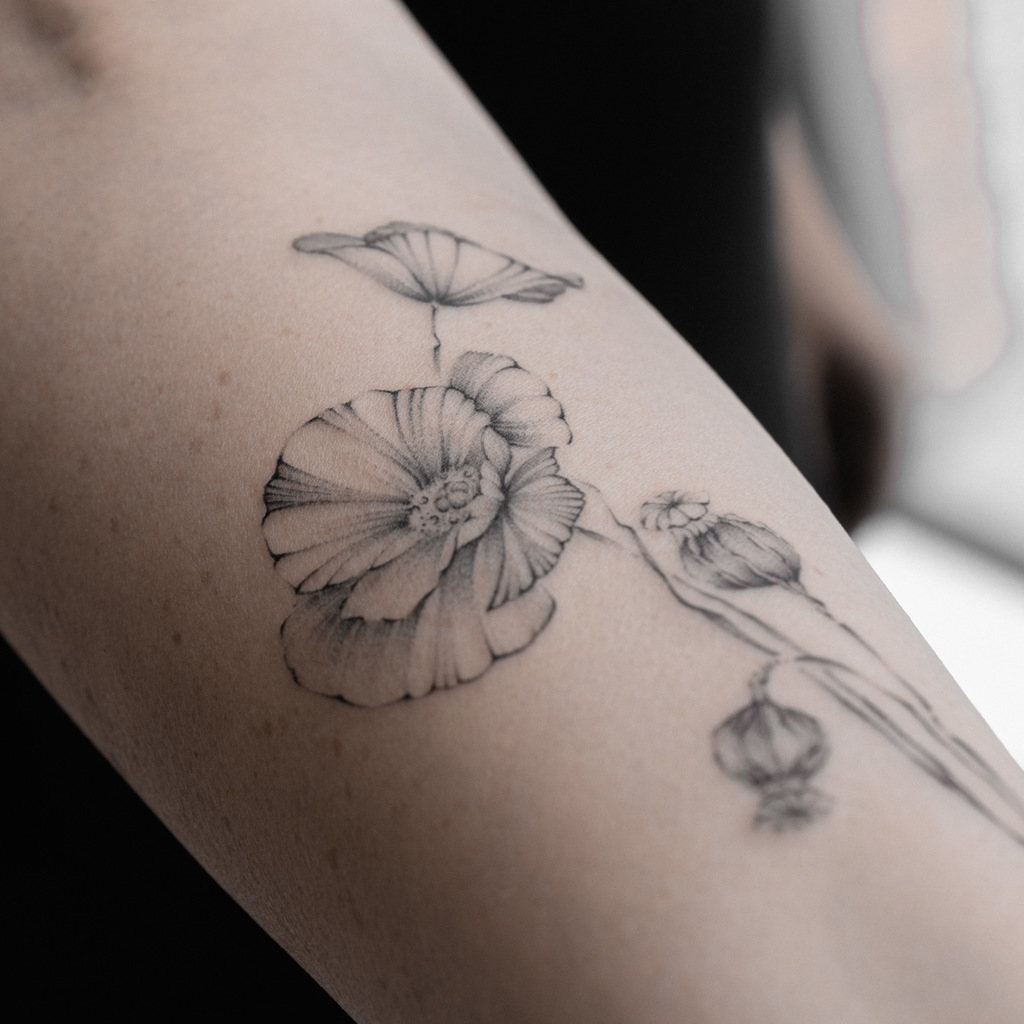
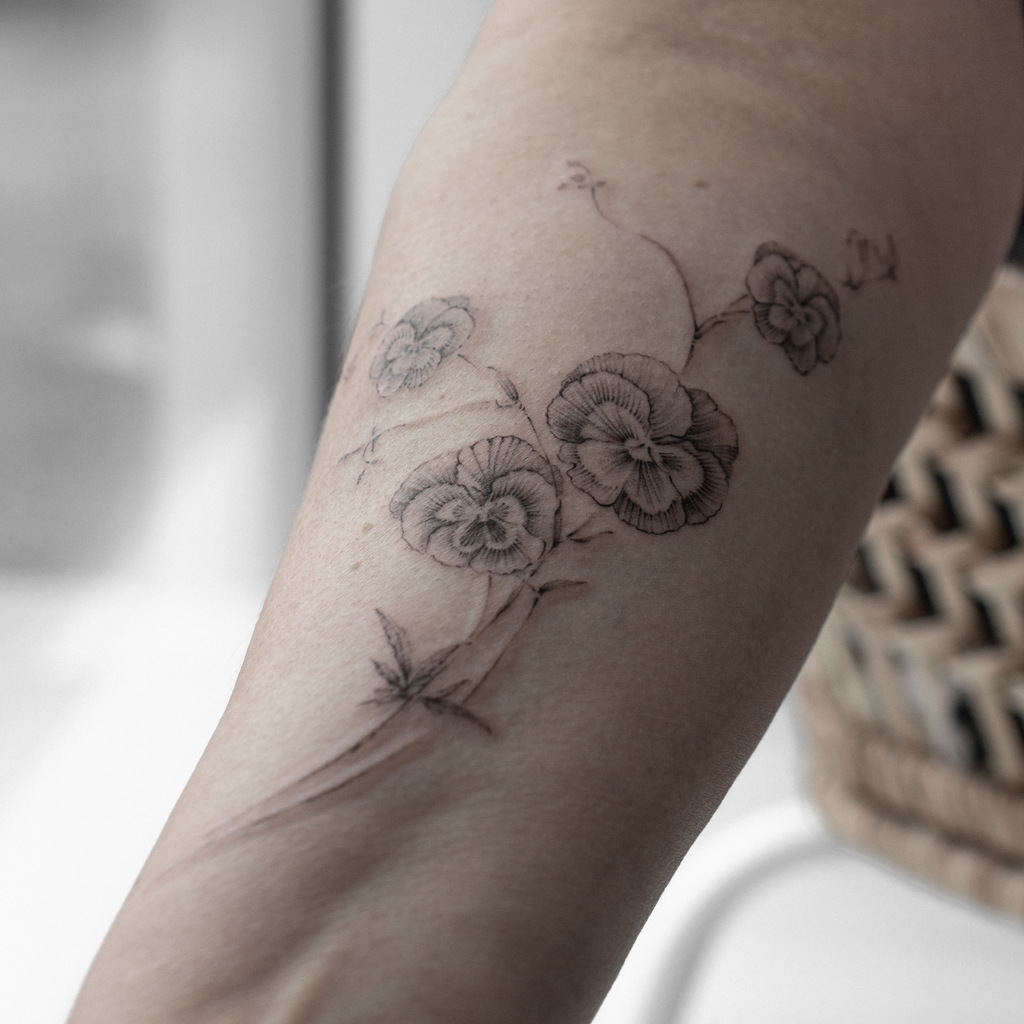
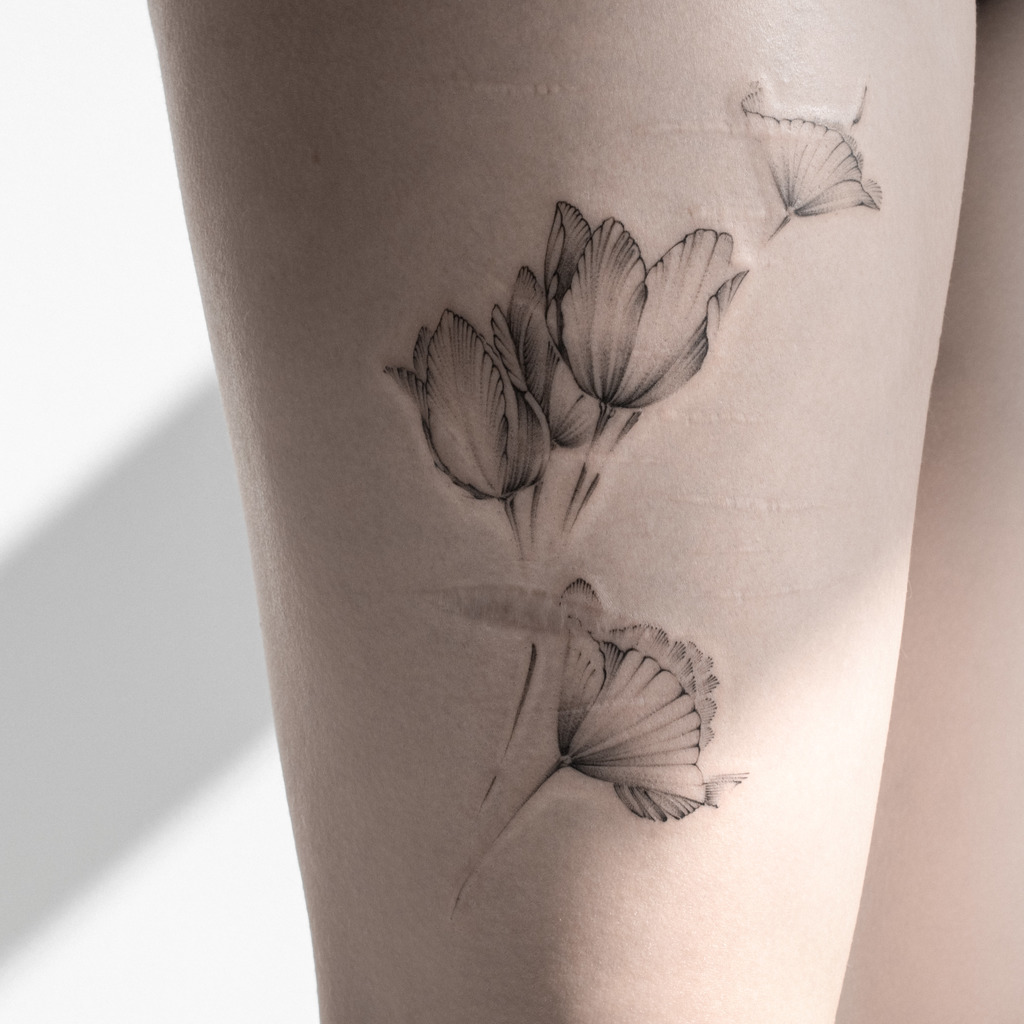
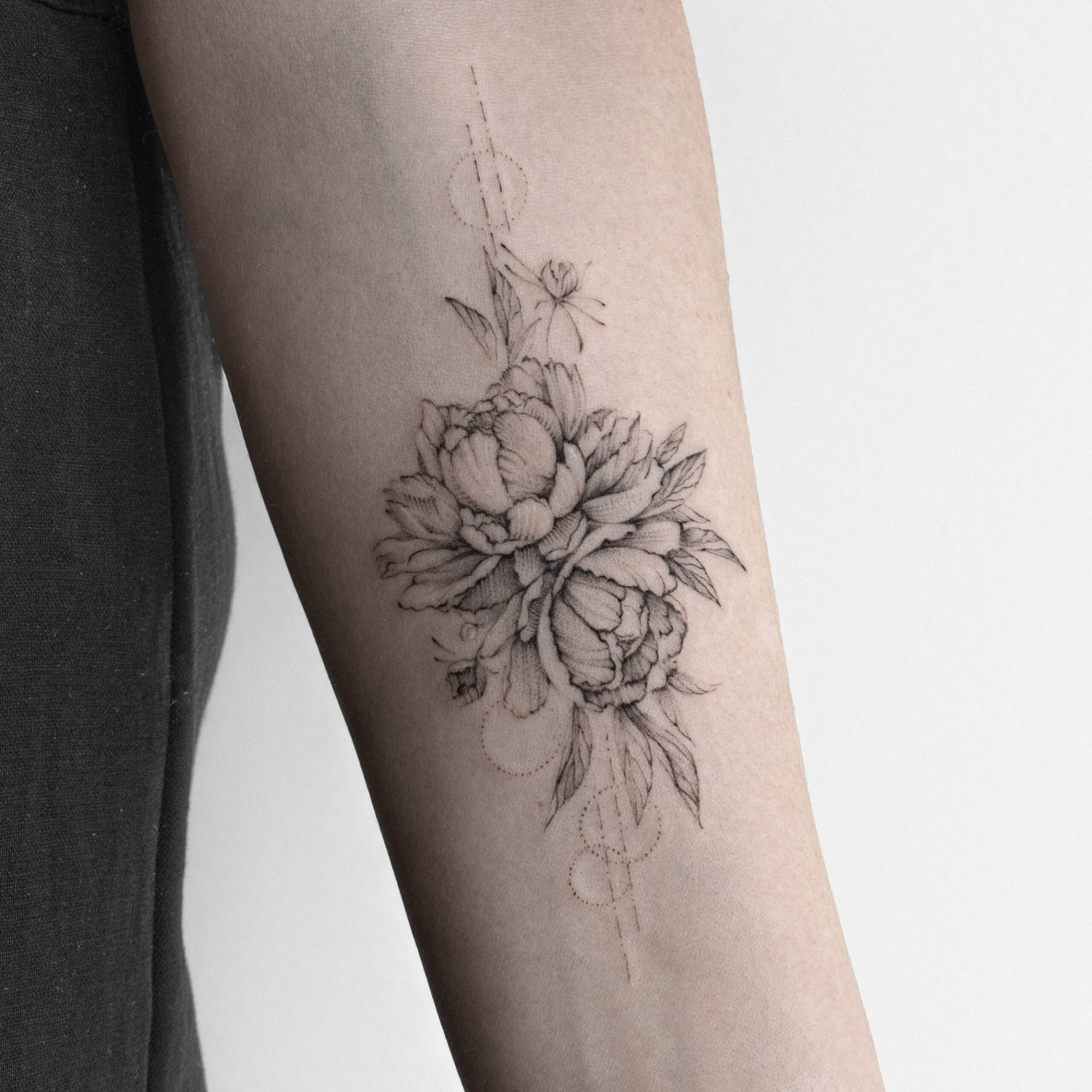
Botanical tattoos are a perfect example of why fine line tattooing requires careful composition. Nature itself is balanced. Leaves, branches, and flowers have their own natural rhythm. When translated into tattoo design, this balance becomes an important part of the creative process.
.
The artist needs to consider:
.
- how the design follows the body,
- how different elements interact,
- how much detail is necessary,
- and how the tattoo will feel years later.
.
A botanical tattoo should not only look beautiful as a drawing. It should feel like it belongs on the person wearing it. This is one of the reasons why at Vadelma Tattoo we approach each project individually. Instead of simply placing a popular flower design onto the skin, we focus on creating something that feels connected to the person, the placement, and the overall composition.
If you are interested in how personal style influences tattoo choices, you can also read our article The Difference Between a TATTOO STYLE AND TATTOO TREND
.
The Vadelma Approach to Botanical Tattooing
At Vadelma Tattoo, botanical tattoos are approached with the same mindset as other forms of visual art: with patience, observation, and respect for the process. A tattoo session is not only about applying an image to the skin. The creative process begins much earlier, through understanding the idea, discussing placement, refining the composition, and finding the right balance between the original inspiration and the final design.
Because every body is different, every botanical tattoo should also be different.
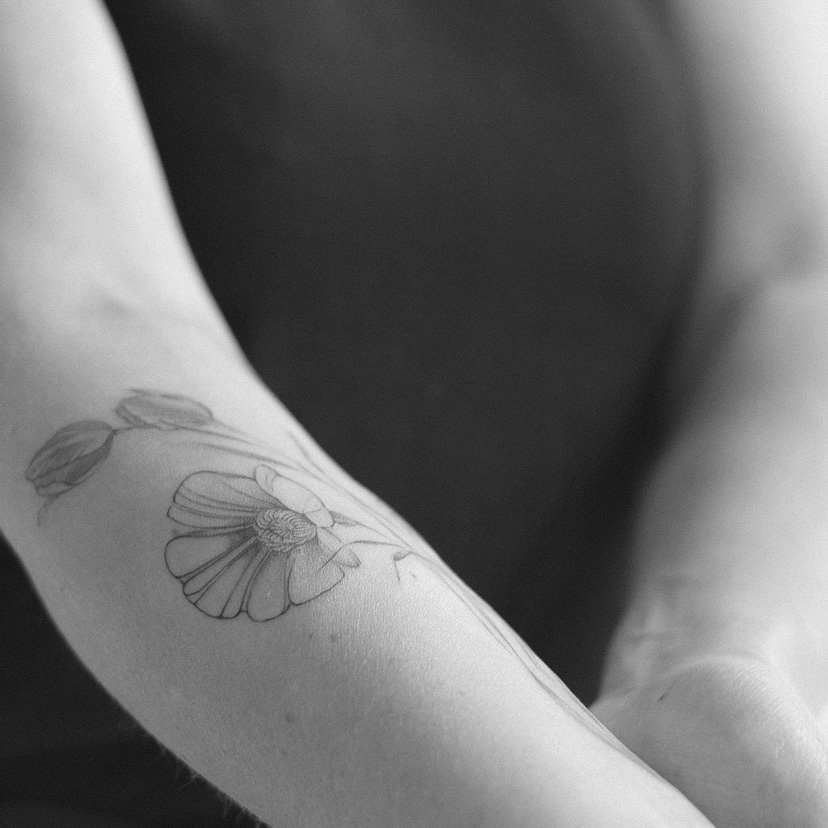
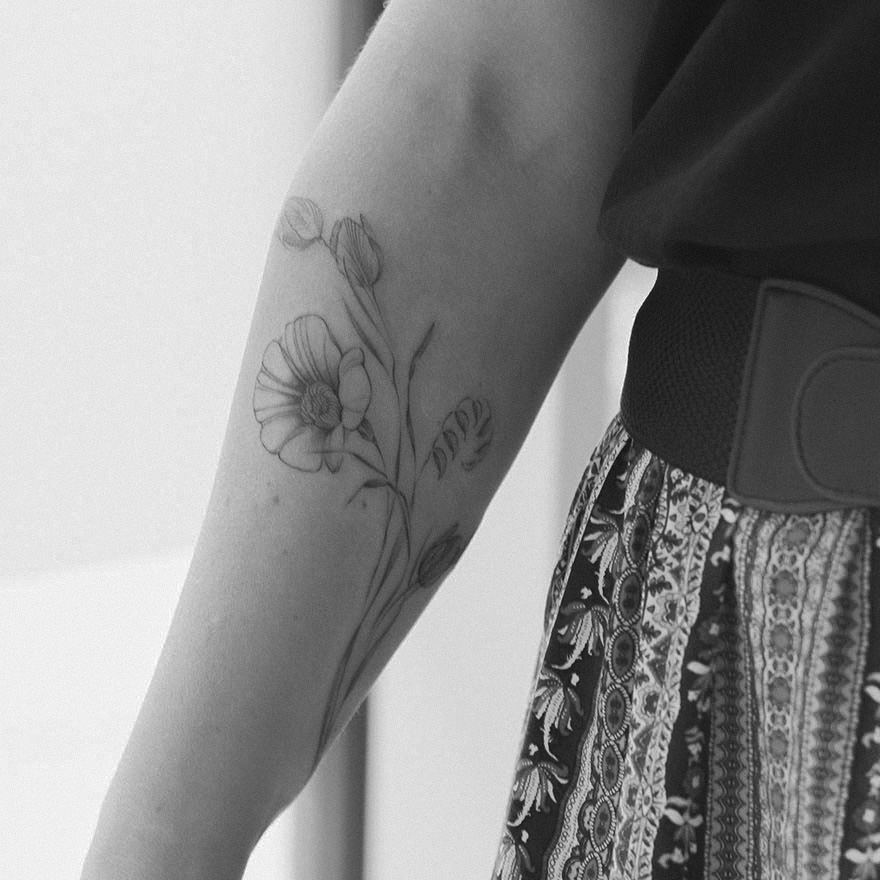
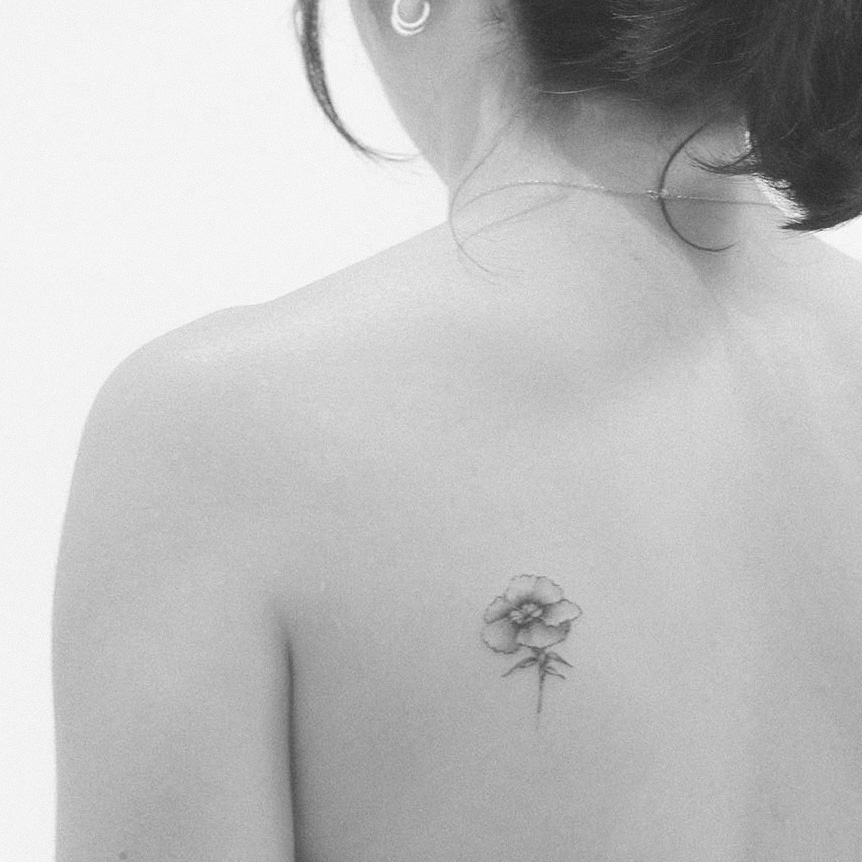
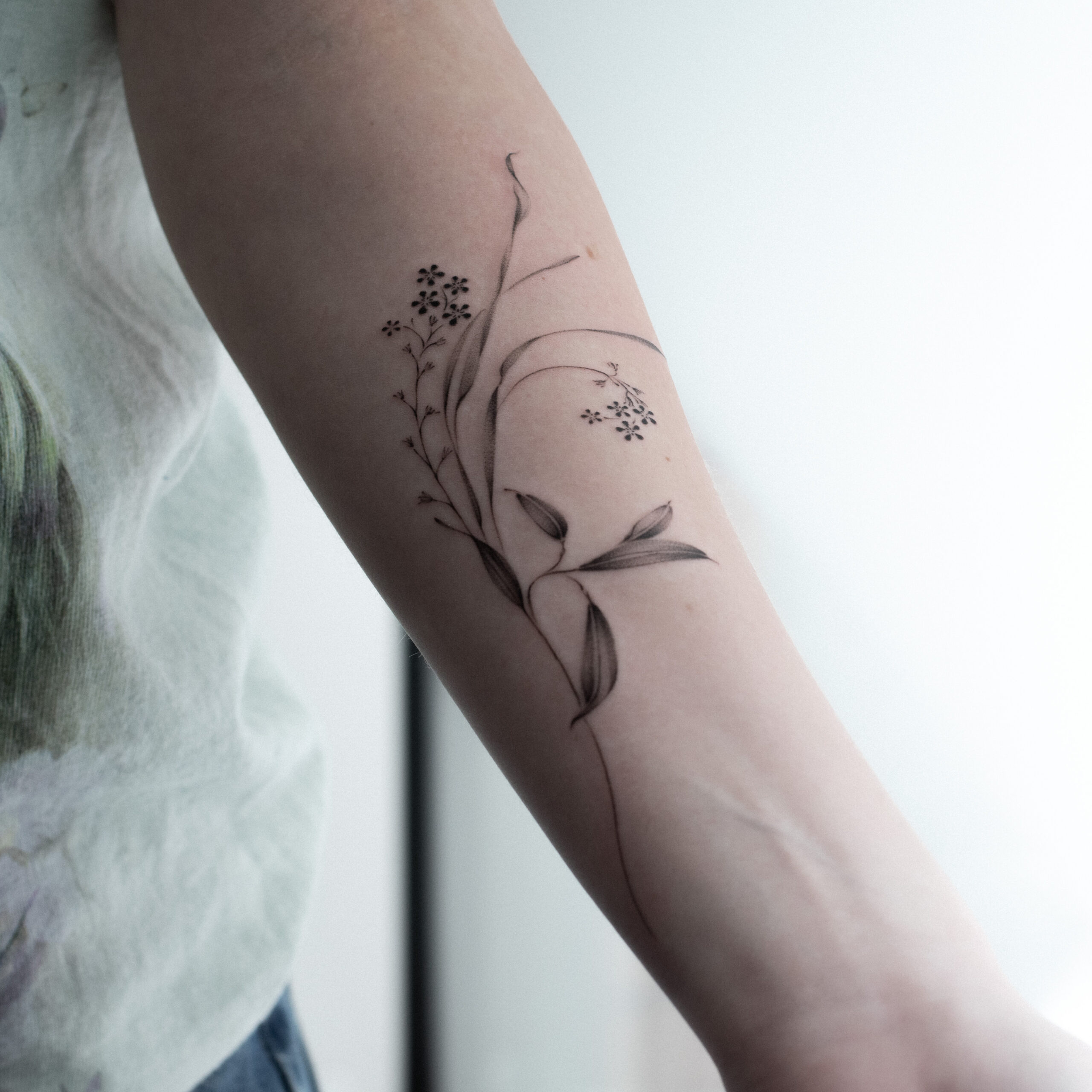
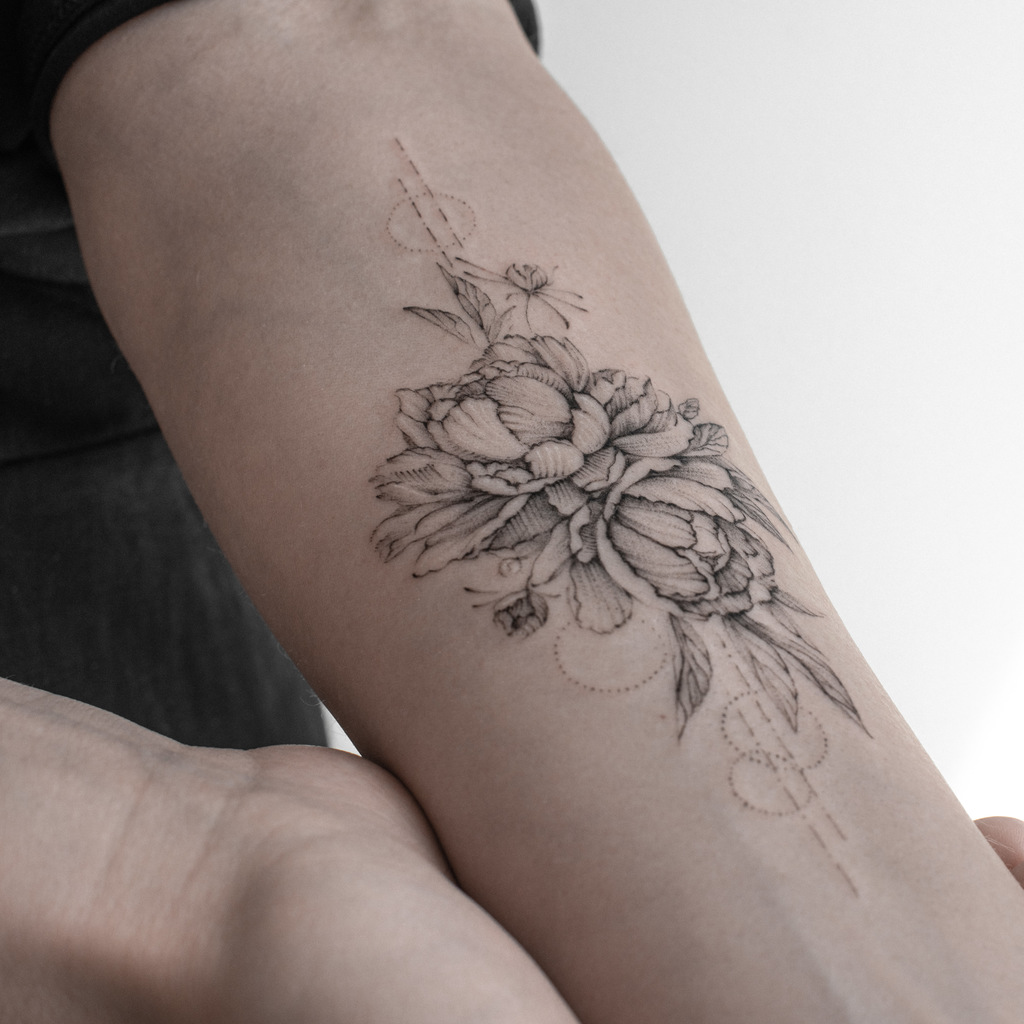
A design that works beautifully on one person may need adjustments for another. The curve of an arm, the movement of a shoulder, or the natural shape of a wrist can all influence how the artwork develops.
This slower and more personal approach is part of what defines a private tattoo studio experience. If you would like to learn more about this concept, you can read our article WHY MORE PEOPLE ARE CHOOSING PRIVATE TATTOO STUDIOS
.
Beyond Decoration: Tattoos as Small Pieces of Art
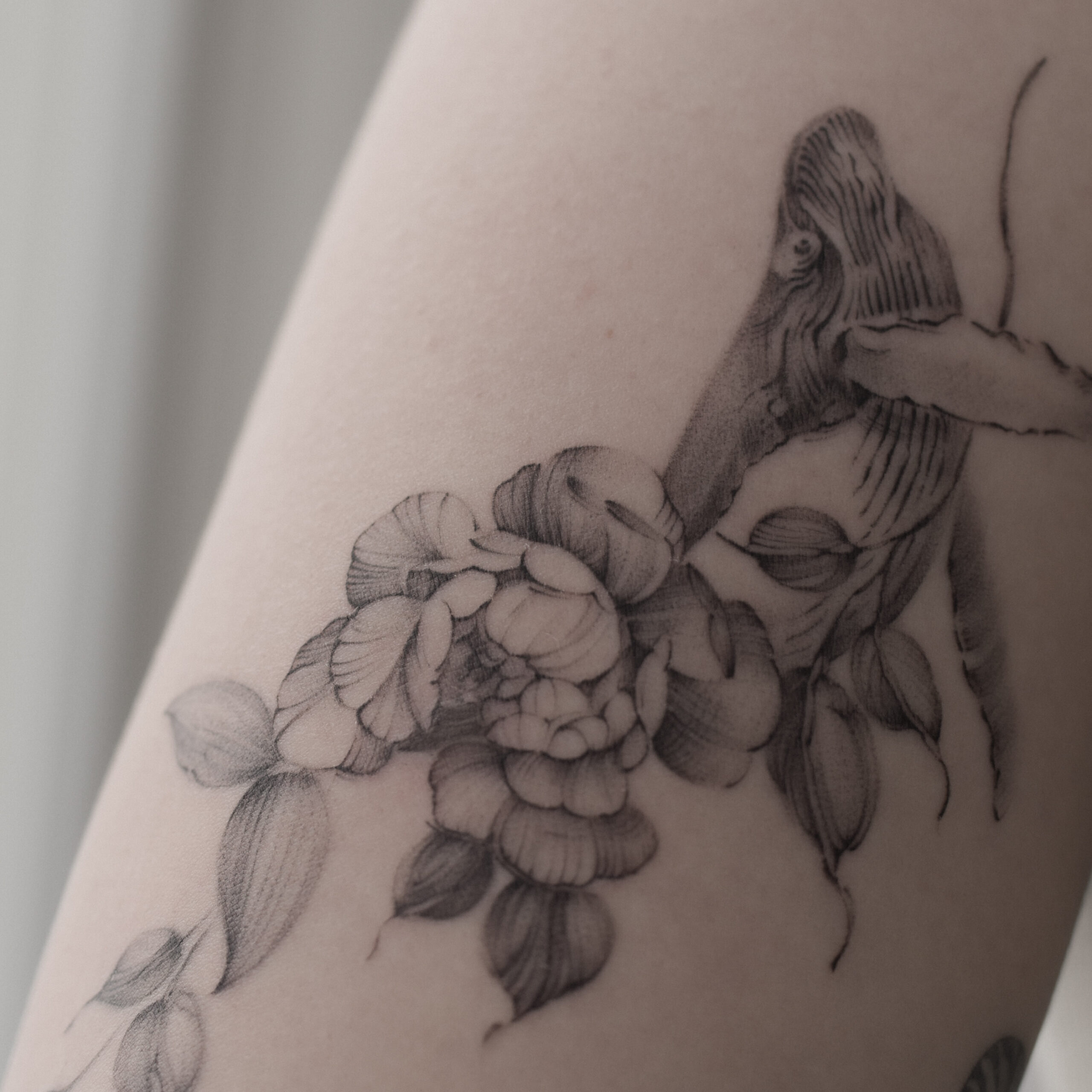
A well-designed botanical tattoo exists somewhere between illustration and personal expression. It is not exactly the same as a painting, because it becomes part of someone’s body and personal story. It is not simply decoration, because the process behind it involves intention, craftsmanship, and meaning.
This connection between tattoos and fine art is something that has always interested us at Vadelma. The same attention to composition, line, and balance that exists in drawings, prints, and architecture can also exist in tattooing.
For those who enjoy exploring art beyond tattoos, you can discover more of Natalie Vadelma’s original artwork and museum-quality prints at:
.
Final Thoughts
Botanical tattoos continue to feel timeless because they are connected to something much older than trends. They are connected to nature, observation, art, and the human desire to preserve meaningful moments. A beautifully designed botanical tattoo does not need to be loud to be powerful. Sometimes the smallest details—the curve of a leaf, the movement of a stem, or the delicate structure of a flower—are what make a design memorable. Perhaps this is why botanical tattoos remain so popular today. They are not only images of plants. They are reminders of growth, change, beauty, and our connection with the natural world.
FAQ – Botanical Tattoos
Why are botanical tattoos so popular?
Botanical tattoos remain popular because they combine natural beauty with personal meaning. Plants and flowers have been used as symbols throughout history, making them designs that often feel timeless rather than connected to a temporary trend.
What flowers work best for fine line tattoos?
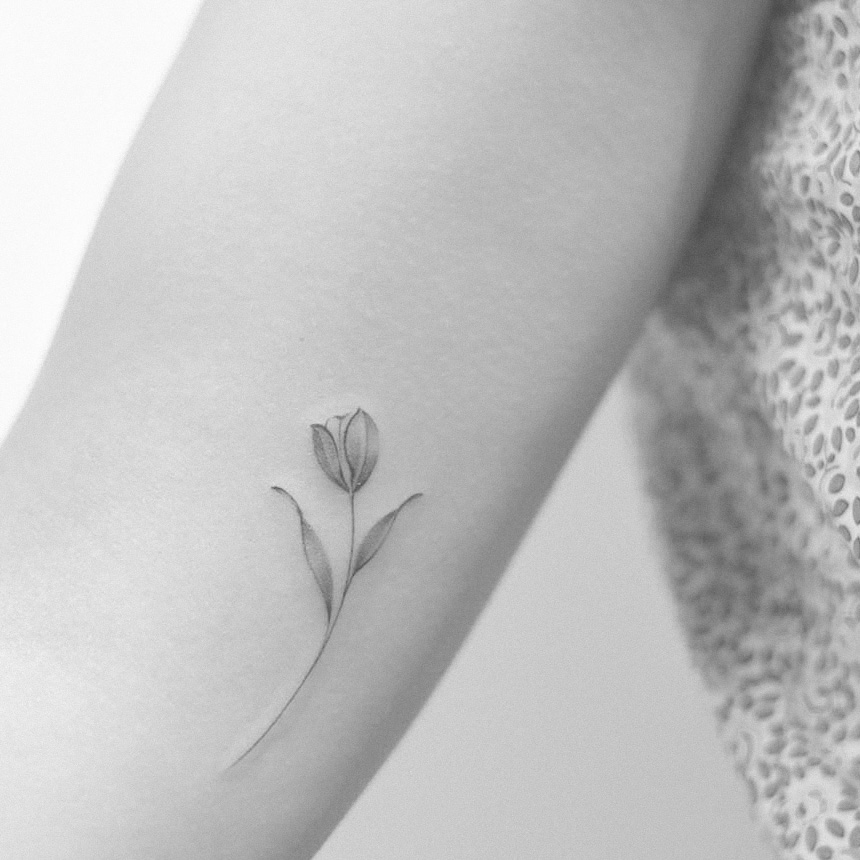
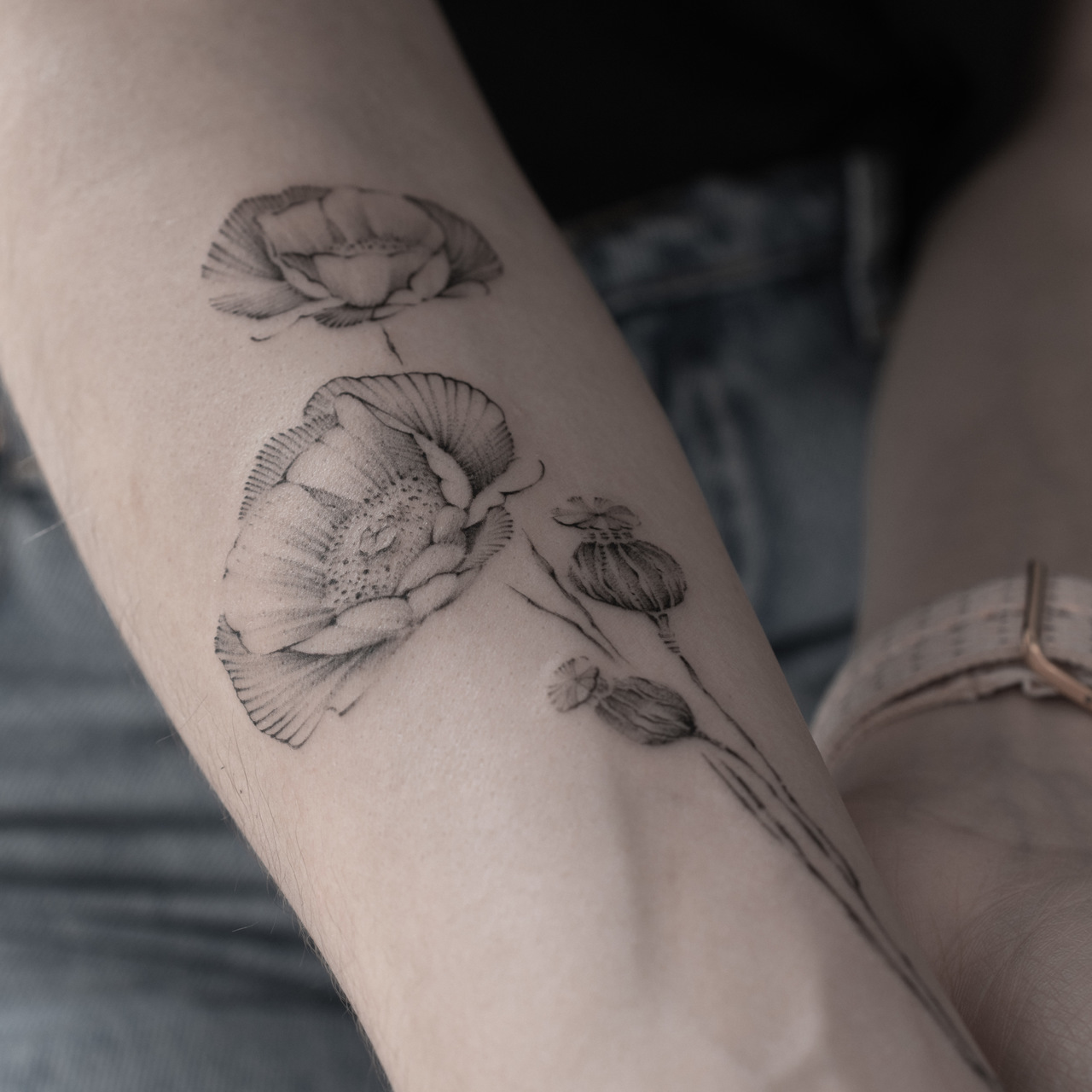
Many flowers can work beautifully as fine line tattoos, including tulips, roses, lilies, lavender, poppies, and many botanical species. The best choice depends on the desired style, meaning, and placement.
Are botanical tattoos only suitable for women?
No. Botanical tattoos are chosen by people of all genders. The style is not defined by gender but by appreciation for nature, design, and personal expression.
Do fine line botanical tattoos age well?
A well-designed and correctly placed fine line tattoo can age beautifully. The design, size, placement, and tattooing technique all influence how it develops over time.
Can I create a custom botanical tattoo based on a personal flower?
Yes. Many botanical tattoos are created around a specific flower, plant, or memory that has personal meaning. Placement depends on the size, composition, and movement of the design. Areas with natural curves often allow botanical compositions to flow beautifully with the body.
Why Botanical Tattoos Feel Timeless: The Connection Between Nature, Art and Personal Meaning
Introduction
Throughout human history, plants have represented far more than beauty. Flowers, leaves, trees, and herbs have been connected with stories, traditions, emotions, and personal memories for thousands of years. From ancient botanical drawings to historical paintings, plants have always been a way for humans to understand and represent the world around them.
This connection is one of the reasons botanical tattoos continue to feel timeless. While tattoo trends change constantly, botanical designs remain deeply connected to something much older: our relationship with nature.
A botanical tattoo is not simply a decoration placed on the skin. It can represent a personal memory, a connection to a certain place, a meaningful period of life, or simply an appreciation for the natural forms that surround us.
At Vadelma Tattoo in Amsterdam, botanical tattooing is approached through the same principles found in illustration, architecture, and fine art: balance, composition, and attention to detail. Instead of creating designs that follow temporary trends, the focus is on creating artwork that feels natural on the body and meaningful over time.
.
Why Humans Have Always Been Drawn to Plants
The relationship between humans and plants is much older than modern tattoo culture. Plants have always been part of our survival, but they have also been part of our imagination. Flowers have been used as symbols of love, remembrance, transformation, beauty, and resilience. Trees have represented strength and continuity. Herbs and plants have carried cultural meanings passed through generations.
This emotional connection explains why botanical imagery appears throughout art history. From Renaissance paintings to scientific illustrations, artists have studied plants not only because of their appearance but because of what they represent.
You can explore this deeper connection in our article WHY HUMANS HAVE ALWAYS DECORATED THEIR BODIES where we look at the history of body art and why humans have always searched for ways to express identity and meaning.
.
Botanical Tattoos and the Art of Observation
Creating a botanical tattoo begins with observation. A flower is not simply a collection of petals. It has rhythm, movement, structure, and character. Every plant has its own unique shape: the curve of a leaf, the direction of a stem, the relationship between different elements.
This is one of the reasons botanical tattooing works so beautifully with fine line techniques. Fine line allows the artist to focus on these subtle details without overwhelming the natural form of the subject.
The goal is not always to copy nature exactly. Instead, it is about understanding the essence of the plant and translating it into a composition that works on the human body.
In many ways, botanical tattooing shares similarities with botanical illustration, where patience and precision are essential. The same principles of balance and harmony appear in both disciplines.
For those who appreciate this aesthetic beyond tattooing, you can also explore Vadelma Prints, where Natalie Vadelma creates original artworks and museum-quality fine art prints inspired by artistic observation and natural forms:
.
Why Botanical Tattoos Age Beautifully as a Style
Trends in tattooing come and go. Certain styles become popular for a few years and later become strongly connected with a specific period of time. Botanical tattoos often feel different because their foundation is not based on a trend. Their strength comes from timeless visual elements: natural shapes, organic movement, and classical artistic principles.
A carefully designed botanical tattoo does not need to rely on excessive decoration. The beauty comes from the subject itself.
This is similar to architecture and design. Some buildings remain inspiring decades or even centuries after they were created because they are based on proportion, balance, and thoughtful decisions rather than temporary fashion.
The same idea applies to tattoos. A design created with intention can continue to feel personal many years after the day it was made.
.
The Influence of Botanical Illustration and Dutch Art
The Netherlands has a particularly rich connection with botanical art.
During the Dutch Golden Age, artists and scientists developed a fascination with studying and documenting the natural world. Botanical illustrations became important not only for scientific purposes but also as works of art.
The Dutch tradition of careful observation can still be seen today in museums, gardens, architecture, and design. Places such as Amsterdam’s botanical gardens and historical collections continue to reflect this appreciation for nature and detail.
This connection between art, science, and nature feels especially relevant in Amsterdam, a city where creativity has always been influenced by observation and curiosity.
For visitors interested in the artistic side of the city, you may also enjoy our articles about WHY DUTCH DESIGN FEELS SO TIMELESS and WHY AMSTERDAM INSPIRED SO MANY ARTISTS
.
Botanical Tattoos as Personal Stories
One of the most beautiful aspects of botanical tattoos is that the meaning does not always have to be obvious to everyone else.
A flower does not need a universal definition to become meaningful. Sometimes the importance comes from a personal memory: a plant from someone’s childhood garden, a flower connected with a loved one, a symbol of a new beginning, or simply a reminder of something important in life.
This is what makes botanical tattoos so personal. The same flower can represent completely different things for different people.
A small branch, a delicate stem, or a carefully designed botanical composition can carry memories without needing to explain itself. The tattoo becomes something private, something that belongs to the person wearing it.
This is also why botanical designs work so naturally with fine line tattooing. Their meaning is often found in subtle details rather than bold statements.
.
Why Flowers Continue to Inspire People
Flowers have always had a special place in human culture because they represent something universal: change. A flower grows, transforms, blooms, and eventually changes again. This natural cycle has made flowers powerful symbols across many different cultures.
People often choose floral tattoos during important moments of transition. A tattoo can mark personal growth, a new chapter, a relationship, a memory, or a connection with someone or something that shaped their life.
However, botanical tattoos do not always need a deep symbolic explanation. Sometimes someone chooses a flower simply because they find its shape beautiful. Appreciating beauty is also a meaningful reason. Art does not always need to represent a specific story. Sometimes it exists simply because something speaks to us.
.
Fine Line Botanical Tattoos and the Importance of Balance
Botanical tattoos are a perfect example of why fine line tattooing requires careful composition. Nature itself is balanced. Leaves, branches, and flowers have their own natural rhythm. When translated into tattoo design, this balance becomes an important part of the creative process.
.
The artist needs to consider:
.
- how the design follows the body,
- how different elements interact,
- how much detail is necessary,
- and how the tattoo will feel years later.
.
A botanical tattoo should not only look beautiful as a drawing. It should feel like it belongs on the person wearing it. This is one of the reasons why at Vadelma Tattoo we approach each project individually. Instead of simply placing a popular flower design onto the skin, we focus on creating something that feels connected to the person, the placement, and the overall composition.
If you are interested in how personal style influences tattoo choices, you can also read our article The Difference Between a TATTOO STYLE AND TATTOO TREND
.
The Vadelma Approach to Botanical Tattooing
At Vadelma Tattoo, botanical tattoos are approached with the same mindset as other forms of visual art: with patience, observation, and respect for the process. A tattoo session is not only about applying an image to the skin. The creative process begins much earlier, through understanding the idea, discussing placement, refining the composition, and finding the right balance between the original inspiration and the final design.
Because every body is different, every botanical tattoo should also be different.
A design that works beautifully on one person may need adjustments for another. The curve of an arm, the movement of a shoulder, or the natural shape of a wrist can all influence how the artwork develops.
This slower and more personal approach is part of what defines a private tattoo studio experience. If you would like to learn more about this concept, you can read our article WHY MORE PEOPLE ARE CHOOSING PRIVATE TATTOO STUDIOS
.
Beyond Decoration: Tattoos as Small Pieces of Art
A well-designed botanical tattoo exists somewhere between illustration and personal expression. It is not exactly the same as a painting, because it becomes part of someone’s body and personal story. It is not simply decoration, because the process behind it involves intention, craftsmanship, and meaning.
This connection between tattoos and fine art is something that has always interested us at Vadelma. The same attention to composition, line, and balance that exists in drawings, prints, and architecture can also exist in tattooing.
For those who enjoy exploring art beyond tattoos, you can discover more of Natalie Vadelma’s original artwork and museum-quality prints at:
.
Final Thoughts
Botanical tattoos continue to feel timeless because they are connected to something much older than trends. They are connected to nature, observation, art, and the human desire to preserve meaningful moments. A beautifully designed botanical tattoo does not need to be loud to be powerful. Sometimes the smallest details—the curve of a leaf, the movement of a stem, or the delicate structure of a flower—are what make a design memorable. Perhaps this is why botanical tattoos remain so popular today. They are not only images of plants. They are reminders of growth, change, beauty, and our connection with the natural world.
FAQ – Botanical Tattoos
Why are botanical tattoos so popular?
Botanical tattoos remain popular because they combine natural beauty with personal meaning. Plants and flowers have been used as symbols throughout history, making them designs that often feel timeless rather than connected to a temporary trend.
What flowers work best for fine line tattoos?
Many flowers can work beautifully as fine line tattoos, including tulips, roses, lilies, lavender, poppies, and many botanical species. The best choice depends on the desired style, meaning, and placement.
Are botanical tattoos only suitable for women?
No. Botanical tattoos are chosen by people of all genders. The style is not defined by gender but by appreciation for nature, design, and personal expression.
Do fine line botanical tattoos age well?
A well-designed and correctly placed fine line tattoo can age beautifully. The design, size, placement, and tattooing technique all influence how it develops over time.
Can I create a custom botanical tattoo based on a personal flower?
Yes. Many botanical tattoos are created around a specific flower, plant, or memory that has personal meaning. Placement depends on the size, composition, and movement of the design. Areas with natural curves often allow botanical compositions to flow beautifully with the body.